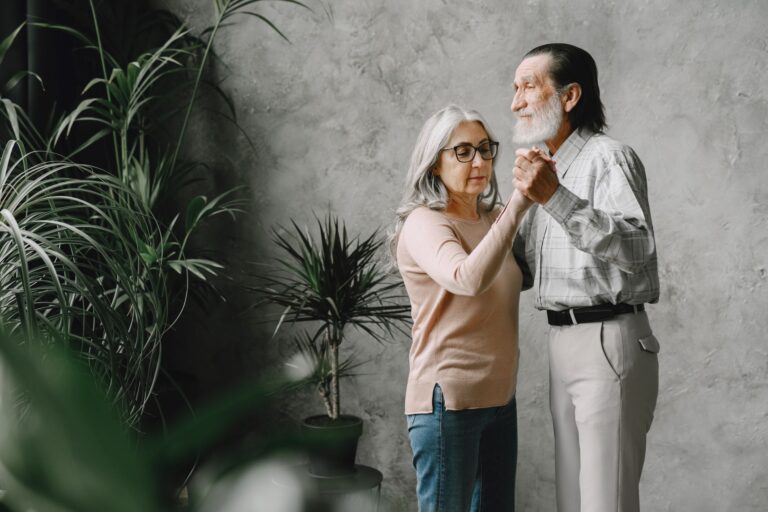
Track dancing for brain health after age 65 by logging weekly minutes against an aerobic target, recording balance and function tests, and reviewing thinking changes with your clinician. Tracking progress means combining daily activity records with periodic physical and cognitive checks. Dancing counts as moderate aerobic activity when it raises breathing and heart rate. A steady log shows whether sessions add up, whether movement is improving, and when to ask for clinical follow-up.
Medical information disclaimer: This article is for general educational purposes only and does not provide medical advice, diagnosis, or treatment. Always consult a physician or other qualified health professional about symptoms, medications, tests, or treatment decisions.
Table of Contents
- What weekly target should you log?
- How should you record activity and habits?
- Which movement signs show progress?
- What thinking changes should you discuss with your clinician?
- When should you adjust your dance plan?
What weekly target should you log?
The Centers for Disease Control and Prevention sets the weekly benchmark at at least 150 minutes of moderate aerobic activity or 75 minutes of vigorous activity, plus muscle-strengthening on 2 or more days and balance activities, described in the CDC activity guidance for older adults. Use that total as your dancing-activity target to track. Record minutes, days, and effort for each dance session.
Add strength and balance notes beside minutes. Note which days included leg, core, or resistance work and which dances challenged balance. A complete week shows aerobic time plus strength and balance coverage.
How should you record activity and habits?
The Alzheimer's Association advises exercisers to try using an exercise tracker to see current activity and where to improve, and it lists dancing as an option. Pick one tracker, paper or digital, and use it every week. Log date, dance style, minutes, and how hard the session felt. The same Association offers a free Brain Health Habit Builder to check habits and make a plan.
Use it to set a dance schedule, sleep and activity habits, and a review date. In the 2-year U.S. POINTER trial in more than 2,000 older adults at risk for decline, both lifestyle programs improved cognition, while structured support and accountability produced larger global-cognition gains lasting up to 2 years, according to the AAIC report on U.S. POINTER results. Ask a friend, class leader, or clinician to review your log.
- Write the weekly minute goal at the top of the log
- Enter each dance session the same day
- Mark strength and balance sessions with a check
- Review totals every Sunday and plan next week
Which movement signs show progress?
An 18-month randomized trial in healthy adults ages 63 to 80 found dance and fitness training both increased hippocampal volume, but only dance significantly improved balance, reported in the Frontiers trial on dance, fitness, and hippocampal volume. Better balance is therefore a useful dance-specific signal. Track steadier turns, fewer stumbles, longer single-leg stands, and easier rises from a chair.
Pair observations with simple function tests named in aging research: one-leg stance, five-time sit-to-stand, and gait speed. Do the same tests monthly under the same conditions. Record repetitions, time, or distance plus falls, near-falls, and joint pain.
What thinking changes should you discuss with your clinician?
Clinician-administered scales such as MoCA and MMSE are the appropriate tools for cognitive change after 65. Do not use a home tracker score to diagnose improvement or decline. Bring your activity log to appointments and describe attention, memory, word-finding, and planning in daily tasks.
Evidence for dance and cognition is promising but uneven across programs. A 2025 Bayesian network meta-analysis of 28 studies with 1,967 adults age 60 and older found only ballroom dancing significantly improved cognitive function versus control. An umbrella review found a moderate average MoCA gain with high heterogeneity across studies. Single-person changes do not prove dementia prevention.
When should you adjust your dance plan?
Give a new routine about 12 weeks before judging it. A 12-week Kyoto University study in 53 adults ages 65 to 84 with subjective cognitive decline found dance lessons increased oxytocin and altered default-mode brain connectivity. Behavior and biology can shift together over that period.
Adjust when minutes fall short, balance stalls, or thinking concerns grow. Increase sessions, try ballroom styles for cognitive challenge, add strength days, or seek medical review for dizziness, falls, chest pain, or worsening memory. Keep the log continuous so your clinician sees the full pattern.