Simple knitting can suit middle-stage dementia, a phase when memory and thinking have declined but familiar activities are still possible with help, when the task stays very easy. Engagement shows as steady attention, active hands, and pleasure, while distress shows as restlessness, withdrawal, crying, shouting, or pushing help away. Keep sessions short, predictable, and calm. Repetitive handwork can give absorbing focus and a sense of purpose, but only when the caregiver removes pressure for a neat result.
Medical information disclaimer: This article is for general educational purposes only and does not provide medical advice, diagnosis, or treatment. Always consult a physician or other qualified health professional about symptoms, medications, tests, or treatment decisions.
Table of Contents
- How do you set up simple knitting?
- What does engagement look like?
- What does distress look like?
- When should you simplify or stop?
How do you set up simple knitting?
Choose the alert time of day and keep the same place, chair, and routine. The Alzheimer's Association advises caregivers to keep a predictable routine, schedule demanding tasks when the person is most alert, and simplify activities that have become too hard, as described in its daily care plan.
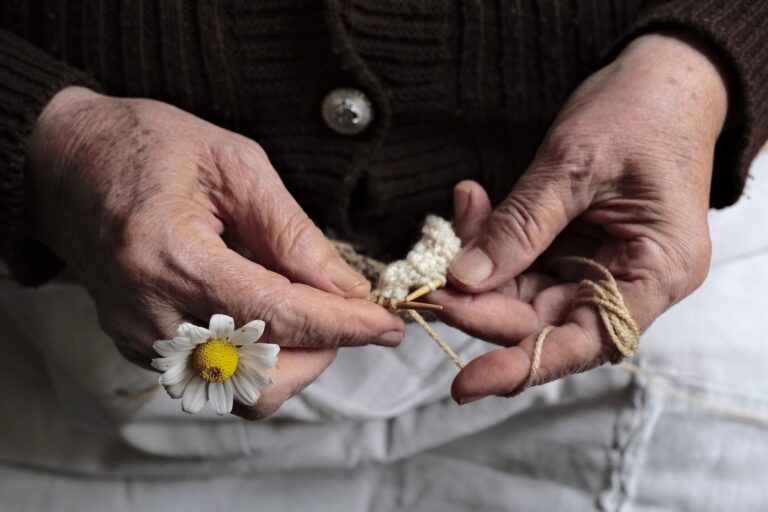
Use thick, brightly colored yarn with large-gauge needles and one very simple stitch. DailyCaring recommends this setup and notes that even snarled or oddly shaped scarves count as successful soothing participation, as explained in its busy-hands guide.
- Offer one short row or loop at a time.
- Show the motion hand-over-hand rather than explaining.
- Leave yarn where it is easy to reach and see.
- Stop while the mood is still good.
What does engagement look like?
Engaged knitters look toward the yarn, needles, and people nearby. They sit upright, hold and move the materials, smile, laugh, speak, or answer.
Researchers describe these signs — sustained gaze, attentive posture, active handling, pleasure, and social responses — as observable engagement during nursing-home group activities. Heritage Senior Communities notes that absorbing repetitive crafts such as knitting and crocheting can calm adults with Alzheimer's by supporting self-esteem, purpose, and normalcy. Watch for longer focus, relaxed shoulders, humming, naming colors, or handing yarn to a neighbor.
What does distress look like?
Distress often starts small. Look for frowning, sighing, fidgeting, hand-wringing, restlessness, pacing, pushing yarn away, crying, shouting, hitting, or resisting help. The Alzheimer's Association lists anxiety and agitation with these behaviors as common in dementia, as detailed in its behaviors guide.
Common triggers include confusion, discomfort, noise, fatigue, and frustration at a step that feels too hard. Israel's health ministry likewise links boredom, agitation, anxiety, and loss of control to repetitive behavior and urges redirection into meaningful repetitive activity. A sudden change from handling yarn to rubbing, pulling, or dropping it is a cue to pause.
When should you simplify or stop?
Simplify at the first frown, withdrawal, or rise in restlessness. Demonstrate one step at a time, swap to winding yarn, stroking fabric, sorting colors, or singing together, and respond calmly without correcting.
Knitting that needs concentration or fine skill can frustrate a person in middle-stage dementia. Put needles down for the day if agitation, crying, shouting, pushing, or resistance continues, and try fresh air, a drink, rest, or another familiar comfort instead.