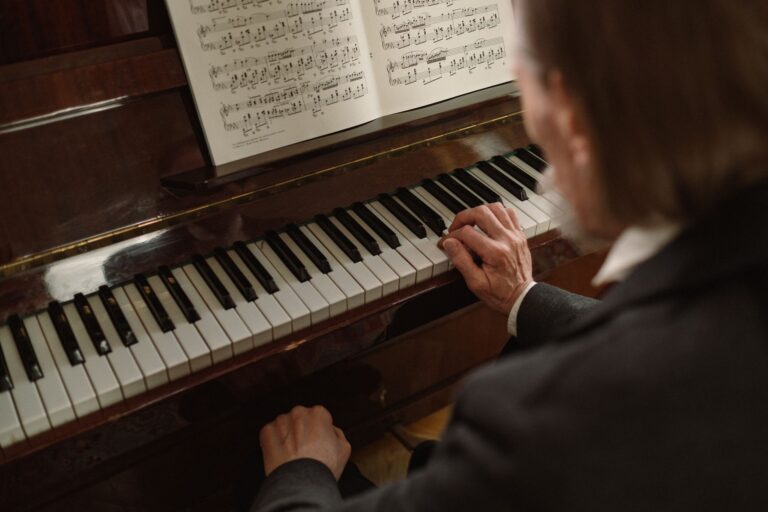
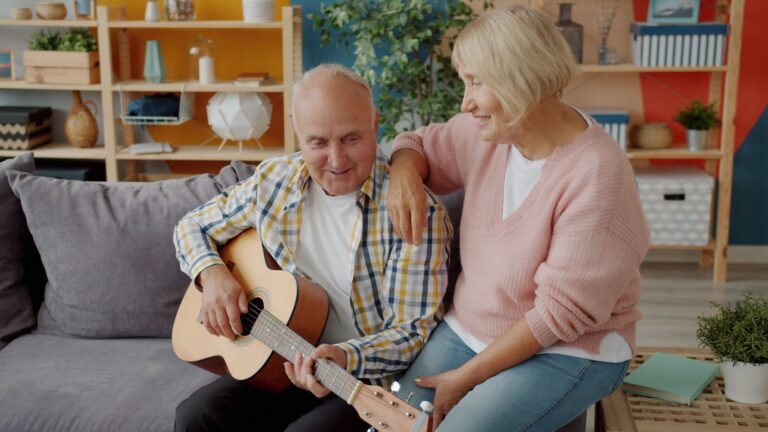
Start seated in a sturdy chair, keep sessions short and gentle, and protect your hearing and joints from the first day. Ask your doctor about limits from chronic conditions, then build gradually from your current fitness. Music practice here means active listening, singing, clapping rhythm, or playing a simple instrument. Seated routines suit limited mobility because they lower fall risk while keeping attention, memory, and mood engaged.
Medical information disclaimer: This article is for general educational purposes only and does not provide medical advice, diagnosis, or treatment. Always consult a physician or other qualified health professional about symptoms, medications, tests, or treatment decisions.
Table of Contents
- What can music do for aging brains?
- How do you set up a safe seated space?
- How do you protect hearing and joints?
- What does a safe first week look like?
What can music do for aging brains?
Monash University researchers followed 10,893 Australian adults age 70 and older without dementia Monash cohort findings. Always listening, compared with never, rarely, or sometimes listening, was linked with 39% lower dementia risk and 17% lower risk of cognitive impairment-no dementia.
Cognitive impairment-no dementia means measurable thinking changes that do not meet dementia criteria. The National Center for Complementary and Integrative Health says increasing evidence suggests music may help health conditions across ages, but much research is preliminary. NIH also describes promise for symptom management in brain disorders of aging, while noting large rigorous studies are still needed on brain networks.
How do you set up a safe seated space?
The National Institute on Aging advises older adults to start from current fitness and build gradually, because overdoing activity can cause injury and quitting NIA starting guide. It also advises asking a doctor about limits tied to chronic conditions.
For seated work, NIA Go4Life guidance recommends a stable, sturdy chair with arms, nearby support, low starting intensity, and regular breathing during effort Go4Life workout safety. Place feet flat, keep the instrument or speaker within easy reach, and keep a walker or table close for transfers.
How do you protect hearing and joints?
The CDC NIOSH standard sets 85 dBA, a measure of sound loudness, averaged over 8 hours as the hazardous-noise threshold CDC noise limits. WHO warns exposure above 85 dB for 8 hours or 100 dB for 15 minutes is unsafe, with safe time halving as volume rises. Baylor University School of Music notes incorrect posture, poor technique, excess force, overuse, stress, and little rest can contribute to hand and joint injuries.
These include carpal tunnel syndrome, tendinitis, and bursitis, which cause pain, numbness, or swelling. Its guidance urges posture checks, micro-breaks, about 10 minutes of rest per hour, and no playing longer than 45 minutes without a break. Keep wrists straight, shoulders relaxed, and volume low enough to hear conversation.
What does a safe first week look like?
Pick one activity you can do seated without pain, such as singing, tapping rhythm, or learning three chords. Schedule two or three short sessions, then add time only if you recover well.
End each session with slow breathing and a quick posture reset. Keep instruments light, straps supportive, and the room clear of cords and clutter.
- Use sturdy chair with arms, feet flat, support nearby.
- Warm up hands, neck, and shoulders for two minutes.
- Keep volume conversational and take posture breaks.
- Stop for pain, numbness, dizziness, or shortness of breath.
- Write down what felt easy and what needs change.