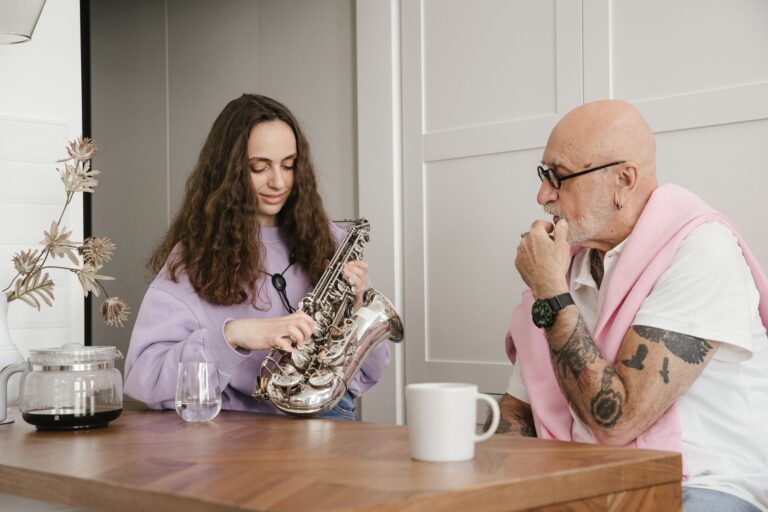
Ask your care team about activity type, weekly time, program length, likely benefits, and how to track response. Mild cognitive impairment means memory or thinking changes beyond normal aging that do not prevent daily independence. Music practice here means regular listening, singing, playing an instrument, or moving to music. Bring current medicines, hearing concerns, and daily schedule to the visit.
Medical information disclaimer: This article is for general educational purposes only and does not provide medical advice, diagnosis, or treatment. Always consult a physician or other qualified health professional about symptoms, medications, tests, or treatment decisions.
Table of Contents
- Which type of music activity fits best?
- How long should the program last?
- What thinking and mood changes may follow?
- What are the limits and safety checks?
Which type of music activity fits best?
Active music-making and listening support different needs. According to the Journal of the American Geriatrics Society, active music-making trials in older adults with probable mild cognitive impairment or dementia showed a small positive effect on thinking plus emotional and social benefits in its systematic review of active music trials.
Ask whether singing, dancing, instrument practice, or guided listening fits ability and interest. Singing or dancing groups may suit people who want social contact and mood support.
- Do you recommend active playing, singing, dancing, or listening for my situation?
- What skill level is needed to start?
- Group or one-on-one sessions?
- What hearing, movement, or mood issues should shape the choice?
How long should the program last?
Consistency matters more than a short trial. According to Frontiers in Public Health, a 2025 meta-analysis of 14 studies found music therapy improved Mini-Mental State Examination scores overall, and listening programs longer than 3 months showed larger gains in its Frontiers in Public Health meta-analysis. Ask how many weeks to commit before judging benefit.
Ask how often to practice each week and for how many minutes per session. Plan a clear review date with the clinician. Bring a simple log of days practiced, mood after practice, and sleep or focus changes.
What thinking and mood changes may follow?
Reviews of recent randomized trials report gains in general cognition, executive function, and episodic memory on standard tests. Executive function means planning and shifting tasks, while episodic memory means recall of recent events. Active approaches with singing or dancing have been linked to better post-program thinking scores and less depression and anxiety.
Instrument practice also appears protective in reviews focused on mild cognitive impairment. Ask which outcome matters most for daily life. Examples include following recipes, managing appointments, staying engaged in conversation, or feeling calmer in the evening.
What are the limits and safety checks?
Playing history does not prove prevention. In 157 twin pairs with different outcomes, the twin who played an instrument was 64% less likely to develop mild cognitive impairment or dementia, yet the authors warned samples were small and the link may reflect reverse causation, as described by Aging and Mental Health in its twin study on instrument playing.
According to the National Institute on Aging, definitive health conclusions await more research while it funds trials comparing 12-week music programs. Ask about realistic goals, other brain-health steps, and when to stop or change course.
- What change would show the program is helping?
- What warning signs mean pause and call, such as frustration, fatigue, or low mood?
- How does music fit with exercise, sleep care, hearing care, and social activity?
- When should we repeat thinking or mood checks?