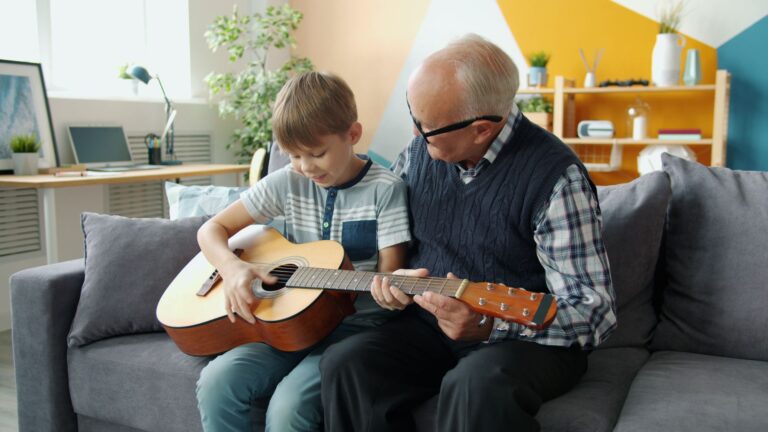
After age 65, regular music practice is linked to lower dementia risk, but it is not proven to prevent Alzheimer's. Alzheimer's disease is a progressive brain disorder that impairs memory and thinking, and current evidence supports risk reduction rather than guaranteed prevention. Many older adults wonder whether starting lessons late still helps the brain. Recent studies in adults over 70 offer the clearest answer so far.
Medical information disclaimer: This article is for general educational purposes only and does not provide medical advice, diagnosis, or treatment. Always consult a physician or other qualified health professional about symptoms, medications, tests, or treatment decisions.
Table of Contents
- What the study after age 70 found
- Does playing add more than listening?
- Why this is not proof of prevention
- How to use music wisely after 65
- What stronger trials will test
What the study after age 70 found
Monash University followed 10,893 dementia-free Australians aged 70 and older. Those who said they always listened to music had 39% lower dementia incidence.
They also had 17% lower cognitive-impairment incidence and higher scores for global cognition and episodic memory, according to the Monash University news report. The comparison was between habitual listening patterns, not assigned music doses. People reported their own habits and researchers tracked later diagnoses and test scores.
Does playing add more than listening?
Playing an instrument showed its own link in the same older cohort. People who often or always played had 35% lower dementia risk, according to the Monash University research record.
People who regularly both listened and played had 33% lower dementia risk and 22% lower cognitive-impairment risk. The pattern favors active engagement, with combined habits linked to benefits on both outcomes.
Why this is not proof of prevention
The Monash authors caution that the design was observational and cannot establish causation. Music may support brain health, but it is not proven to prevent dementia.
That caution matches broader prevention guidance. The Alzheimer's Association states that prevention has no definitive answers, while physical activity and cognitively stimulating habits can help reduce risk, says the Alzheimer's Association prevention page.
How to use music wisely after 65
Treat music as one healthy habit among others, not a shield. Keep medical care, movement, sleep, social contact, and hearing care in place. Practical ways to start include:.
- choose an instrument you enjoy enough to repeat, such as piano, guitar, or drums
- pair short regular practice with regular listening
- join a group class, choir, or ensemble for social and mental engagement
- protect hearing and pace practice to avoid pain or fatigue
What stronger trials will test
For adults 65 and older with mild cognitive impairment, a Rice University five-year randomized trial will enroll 210 participants. It will test whether actively creating music improves cognition and mental-health quality of life, reports Rice University news.
Random assignment can separate music effects from other healthy habits. Ask your clinic about local music programs designed for memory concerns.