To adapt watercolor painting for one-on-one dementia care, sit with one person at their best time of day, break painting into one small step at a time, and match each step to current abilities. Use nontoxic adult-level supplies, close supervision, and steady encouragement and conversation through the work.
One-on-one care here means a caregiver paints beside one person, not leading a group. Watercolor means paint thinned with water and moved with a soft brush. The Alzheimer's Association states that music and art can enrich the lives of people with Alzheimer's disease by allowing self-expression and engagement even after dementia has progressed, as described in its art and music guidance.
Medical information disclaimer: This article is for general educational purposes only and does not provide medical advice, diagnosis, or treatment. Always consult a physician or other qualified health professional about symptoms, medications, tests, or treatment decisions.
Table of Contents
- Why watercolor suits one-on-one care
- What setup keeps it adult and safe?
- How do you lead each small step?
- How do you spark talk and recall?
- What change can you reasonably expect?
Why watercolor suits one-on-one care
Watercolor forgives slips because wet color blends and soft edges look planned. A caregiver guide updated March 3, 2026 reports that mistakes blend naturally and loose brushwork is rewarded. That fit lowers pressure to make a exact picture.
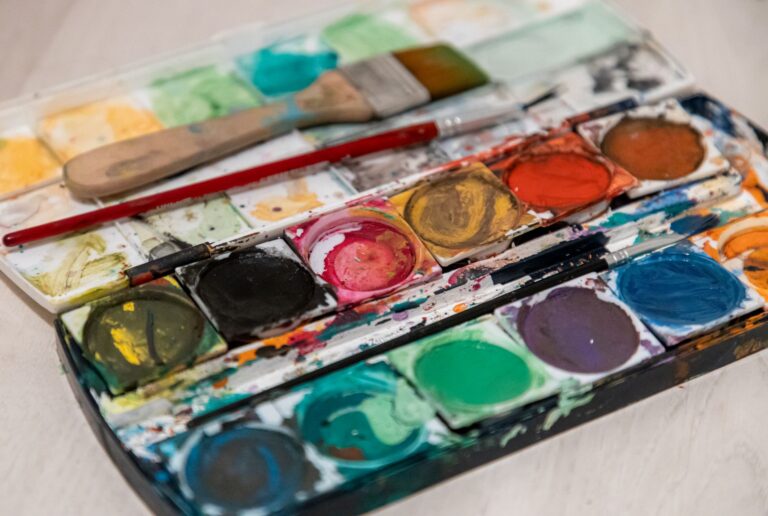
The same guide recommends adaptive tools such as triangular grips and foam-handled brushes. Large paper, few colors, and one wide brush reduce spills and choice overload. The caregiver can swap tools quickly because only one painter needs help.
What setup keeps it adult and safe?
The Alzheimer's Association advises keeping art projects at an adult level and avoiding anything demeaning or childlike. Offer real watercolor paper, a simple palette, and subjects with dignity, such as fruit, trees, or color washes.
Build conversation and encouragement into the activity. The Alzheimer's Association and National Institute on Aging guidance advises safe, nontoxic materials, no toxic substances or sharp tools, and supervision matched to swallowing or mouthing risk. A short setup helps:.
- Cover the table, fill one low-spill water cup, and lay out two or three nontoxic colors.
- Remove blades, toxic mediums, and small loose parts.
- Stay within arm's reach and watch for brush-to-mouth movement.
How do you lead each small step?
The National Institute on Aging advises caregivers adapting activities for Alzheimer's disease to help the person get started, break the activity into small praised steps, and match tasks to current abilities and best time of day, as explained in its activity adaptation guidance. Start when the person seems calm and alert, not tired or hungry.
Do one action, praise effort, then name the next action. Keep language short and show the motion beside the paper.
- Touch brush to water, then to blue. Make one stroke across the wet paper.
- Pause, notice the blend, then add one more color.
- Stop while interest lasts and name what worked.
How do you spark talk and recall?
Painting side by side gives natural time for talk. Comment on color, movement, and choice, then invite a short answer. Keep questions simple and accept pointing or watching as engagement.
For scent-based variety, Texas A&M University reports professor Christine Tisone's memory-care project mixes spices with water to make scented watercolor paints. The project uses the strong smell-memory link to prompt recall during one-on-one painting with residents. Try cinnamon or cloves in water on scrap paper first, then watch for memories, smiles, or stories.
What change can you reasonably expect?
A 2021 systematic review in Journal of Alzheimer's Disease Reports evaluated creative art therapy for dementia across wellbeing, quality of life, behavioral and psychological symptoms, and cognition as a non-drug intervention. That broad scope means one calm session is part of comfort care, not treatment.
A systematic review and meta-analysis of 26 studies through September 2025 found art-based interventions significantly improved depression but did not significantly change anxiety or agitation, according to the 2025 analysis record in its PubMed summary. Plan for connection, expression, and a steadier mood, then stop if agitation rises.