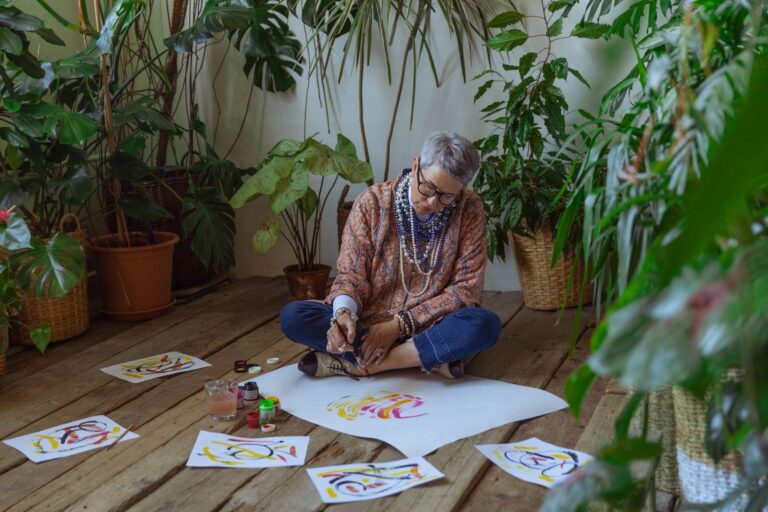
Watercolor painting for one-on-one dementia care means paper plus watercolors, a simple table setup, and safe materials with no sharp tools. The caregiver prepares the space and paints alongside the person as process art, which means the focus stays on making rather than on a finished picture. One person and one helper keep choices small and attention steady. Short sessions work well when each step is clear and all supplies are within reach.
Medical information disclaimer: This article is for general educational purposes only and does not provide medical advice, diagnosis, or treatment. Always consult a physician or other qualified health professional about symptoms, medications, tests, or treatment decisions.
Table of Contents
- What supplies work best?
- How do you set up the table?
- How do you paint alongside the person?
- How do you keep it safe?
What supplies work best?
Start with thick watercolor paper, a basic pan set, a soft brush, and two cups of water. A board-certified art therapist's one-on-one watercolor guide describes paper plus watercolors as accessible and frames the work as process art with no single required outcome Art Therapists at Home guide.
For days when mess feels risky, water-reveal painting books needing only brush and water eliminate paint mess and frustration, while easy-grip colored pencils accommodate arthritis or poor coordination, according to the HelpDementia.com supply guide. Keep both options on hand and let comfort choose.
How do you set up the table?
Cover the table, tape one sheet down, and place only what the session needs. Put brush, paint, water, and paper towel in the same spots each time.
- Seat the person with good light and upright support.
- Offer one brush and three or four colors.
- Keep water shallow to reduce spills.
- Keep paper towels close for blots and rests.
How do you paint alongside the person?
Prepare the materials first, then paint your own sheet beside the person. The caregiver prepares and paints alongside the person, which models each move without taking over.
Offer one choice at a time, such as blue or green. Name the motion in plain words, then pause and allow time. Stop while interest remains rather than pushing to fill the page.
How do you keep it safe?
The Alzheimer's Association advises caregivers planning art for middle-to-late-stage Alzheimer's to use safe materials while avoiding toxic substances and sharp tools Alzheimer's Association art and music guide. Remove craft knives, glass jars, and anything with a sharp point before starting.
The Art & Creative Materials Institute directs buyers to choose AP-seal products for adults who are physically or mentally disabled or do not understand safety labeling ACMI materials safety page. Check the seal before buying, watch for paint near the mouth, and end the session for coughing, skin irritation, or distress.