Watercolor painting can still spark engagement in late-stage dementia, when memory and speech are severely limited. Engagement looks like calm focus and interest, while distress looks like withdrawal, tension, or refusal.
Late-stage dementia means advanced decline in memory, language, and daily function. The Alzheimer's Association states that music and art enrich lives and allow self-expression after progression, noted in its art and music guidance. Watercolor offers a simple, low-pressure way to invite that response.
Medical information disclaimer: This article is for general educational purposes only and does not provide medical advice, diagnosis, or treatment. Always consult a physician or other qualified health professional about symptoms, medications, tests, or treatment decisions.
Table of Contents
- How should you set up the activity?
- What does engagement look like?
- When is it distress, not dislike?
- What can watercolor reasonably offer?
How should you set up the activity?
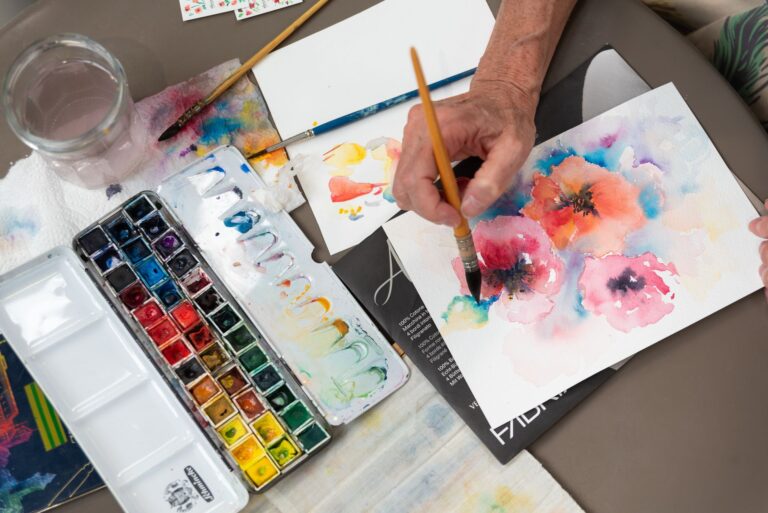
Keep the setup simple and safe. The Alzheimer's Association advises helping the person begin, adapting to current ability, using safe non-toxic materials without sharp tools, and prizing enjoyment over achievement. Lay out one brush, water, and two or three colors.
Offer one small choice and demonstrate first. Paint one stroke yourself, then hand over the brush. Stop teaching and follow their pace. If they hold, dab, or watch, that counts as participation.
- Use a large-handled brush and heavy paper taped down.
- Offer soft, familiar colors and fresh water.
- Sit beside, not across, and work slowly.
What does engagement look like?
Positive engagement is steady and calm. HelpDementia notes sustained looking, smiling, brush handling, purposeful color choices, and vocalizing as engagement signs in its dementia art activity guide. The same source describes a minimally verbal man focusing 40 minutes with deliberate choices.
Researchers in the Artful Moments pilot watched for interest, pleasure, sadness, anxiety, and anger, such as looking at art to show interest. The Canadian Geriatrics Journal report presents that direct-observation approach. You do not need quiz questions. Notice longer looking, relaxed hands, and willingness to continue.
When is it distress, not dislike?
Distress often builds quickly. Tucson Senior Home Services advises stopping rather than pushing through frustration, explained in its memory-care activities guide. Pause kindly and remove materials.
Offer a drink, a familiar song, or quiet company. Try again another day if calm returns. HelpDementia notes bright colors, unfamiliar textures, or mess may agitate a disoriented person. Choose soft colors and keep the table clear.
- pushes paper or water away, or refuses repeatedly
- voice rises, face tenses, or crying starts
- new confusion, irritability, restlessness, or withdrawal
What can watercolor reasonably offer?
Expect small moments, not lasting improvement. A review in the Journal of Alzheimer's Disease Reports cites a 12-patient study where painting improved motivation and reduced agitation (its art review). The Artful Moments benefit finding comes from a small convenience sample in one hospital, so it may not apply to all home settings.
The Canadian Geriatrics Journal report notes that limit. Watch the person more than the paper. End while calm remains and save the sheet with the date.