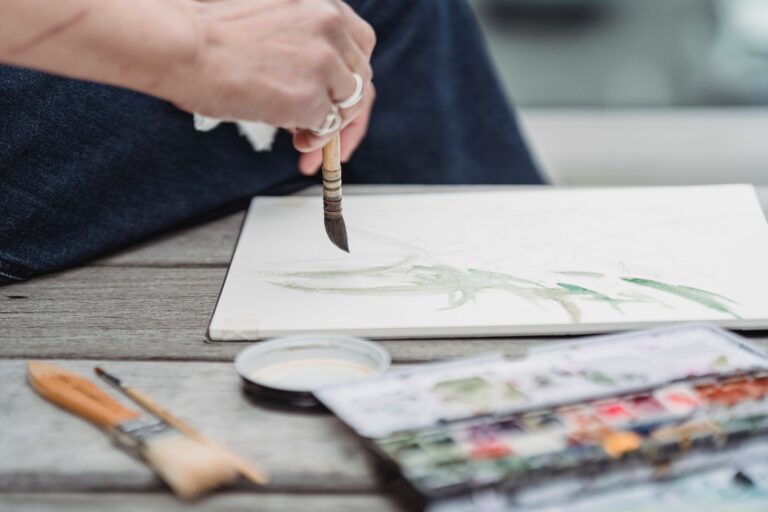
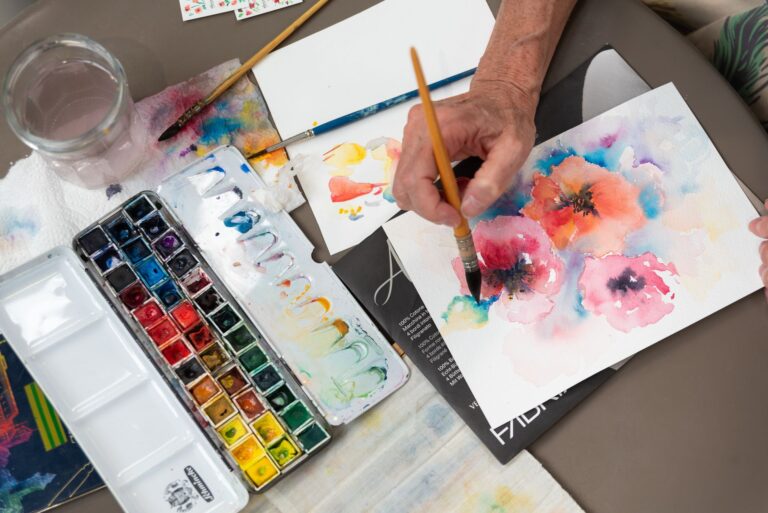
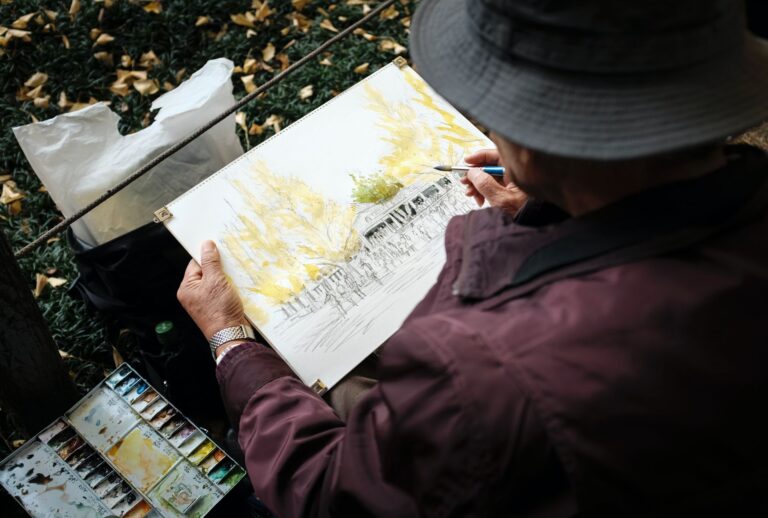
Step-by-step watercolor painting for late-stage dementia is slow, free-style brushing of water or soft color on thick paper. The goal is touch, sight, and time together, not a recognizable picture. Free-style means the feel of the brush and the spread of color matter more than the image. The Alzheimer's Foundation of America recommends this tactile brushing with water or watercolor for late-stage Alzheimer's rather than asking for pictures tactile activity guide.
Medical information disclaimer: This article is for general educational purposes only and does not provide medical advice, diagnosis, or treatment. Always consult a physician or other qualified health professional about symptoms, medications, tests, or treatment decisions.
Table of Contents
- What can painting still offer?
- What supplies keep it simple and safe?
- How do you guide each step?
- How do you keep the moment comfortable?
What can painting still offer?
The Alzheimer's Association says art projects can still bring accomplishment, purpose, self-expression, and engagement after dementia has progressed art and music guide. That may look like watching color spread, smiling, or tapping the brush. Your attention and calm voice are part of the benefit.
UsAgainstAlzheimer's describes painting as support for mood, connection, and good moments rather than restoring memory. So celebrate effort, keep the session short, and stop before tiredness grows. A brief happy time counts as success.
What supplies keep it simple and safe?
The Kensington Falls Church caregiver guide lists non-toxic washable watercolors, a large-grip brush, thick watercolor paper, and one small water cup home activities guide. Leave out sharp tools and small items that could be swallowed. Set only these items on a wipeable table in good light.
The Alzheimer's Society UK notes water-only aquapaint pages need very little dexterity and reduce mess. The brush reveals color where water touches the page. Keep one page and one brush within reach for a low-pressure start.
How do you guide each step?
The National Institute on Aging advises matching the activity to current abilities, helping the person start, breaking it into steps, and letting them simply watch if preferred adapting activities guide. Watch for frustration and slow down or pause.
Your job is host, not teacher. Being Patient describes a simple demo on a small 5-by-7 surface with a flower or abstract outline, plus hand-over-hand help if needed. Use that shape for your session.
- Show dip, brush, and paint once, then hand over the brush.
- Guide the first stroke together if the grip is weak.
- Let free brushing continue without fixing shapes.
- Offer pause or watching when focus fades.
How do you keep the moment comfortable?
Hand-over-hand support means placing your hand gently over theirs to steady the brush. Use it only if they cannot hold the brush alone. Let go as soon as they move with you.
Keep paint and the water cup supervised and close. Praise movement and color choice in plain words. Rinse the brush yourself, end while the mood is good, and date the paper to keep.