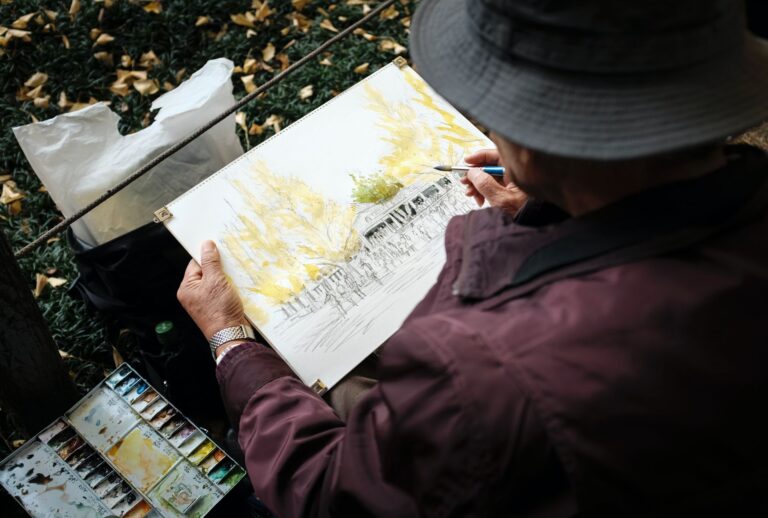
Adapt watercolor for late-stage dementia by making it sensory, one-step, and fully supported. Use large easy-grip tools, stay beside the person, and start the brush motion together. Adaptation here means changing the activity to fit weak grip, short attention, and limited speech. The Alzheimer's Association advises caregivers to keep art adult-level, build in conversation, and help start painting by initiating brush movement in its Alzheimer's Association caregiving guide.
Medical information disclaimer: This article is for general educational purposes only and does not provide medical advice, diagnosis, or treatment. Always consult a physician or other qualified health professional about symptoms, medications, tests, or treatment decisions.
Table of Contents
- Choose tools that fit weak grip and mouthing risk
- Give one step at a time
- Focus on senses, not a finished picture
- Watch response and stop before fatigue
Choose tools that fit weak grip and mouthing risk
Late-stage dementia often brings weak grip, tremor, mouthing, and easy staining. HelpDementia.com recommends large foam-handled or ergonomic brushes, thick paper, non-spill cups, and only non-toxic washable watercolors in its accessible art supplies guide.
Set up a small washable area with one brush, one water cup, and two or three colors. Tape thick paper to the table so it does not slide. Keep extra paper towels within reach and keep paint water separate from drinking water.
Give one step at a time
Say one short action, show it, then wait. The Illinois Cognitive Resources Network advises one simple step, no multi-step crafts, and low stimulation to prevent confusion and anxiety.
Use this pace for each turn: Keep projects adult-level with real paper and rich color. Talk during painting, name colors, and encourage each small effort.
- place your hand lightly over theirs and move the wet brush once
- point to one color and say "blue here"
- pause and let them watch, touch, or repeat
- praise the action, not the result
Focus on senses, not a finished picture
Let touching paint, watching color spread, and shared presence replace any goal of finishing a picture. The Kensington Falls Church describes this shift toward sensory presence over product in its art therapy guide.
Start from personal interests and senses, such as blue water, garden green, or warm sunset tones. Use pre-drawn outlines or wet paper where color blooms fast. The Alderley Clubhouse Group also recommends templates, watching for frustration, and lowering difficulty before distress appears.
Watch response and stop before fatigue
Kinney and Rentz studied 12 people with dementia in Memories in the Making sessions. Participants showed more interest, sustained attention, pleasure, self-esteem, and normalcy than during other structured activities.
That strongest watercolor-relevant evidence studied early- to middle-stage dementia in a small sample. The APA record of the Kinney and Rentz study supports gentler late-stage pacing, shorter 15-30 minute sessions, and stopping or simplifying when fatigue appears.