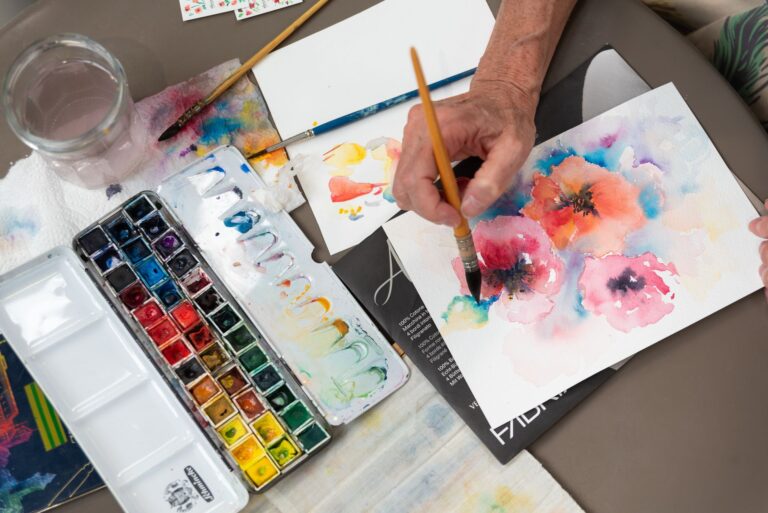
Watercolor painting for late-stage dementia is a short, supervised activity using nontoxic adult supplies, safe seating, and one simple color task at a time. Late-stage dementia means memory, speech, and movement are severely limited, so the caregiver sets up, stays close, and handles all safety checks. Painting aims for calm time together, not a finished picture. Caregiver help, steady pacing, and adult-level materials protect dignity and lower frustration.
Medical information disclaimer: This article is for general educational purposes only and does not provide medical advice, diagnosis, or treatment. Always consult a physician or other qualified health professional about symptoms, medications, tests, or treatment decisions.
Table of Contents
- How should you set up the space?
- Which supplies are safest?
- How do you help without taking over?
- What can painting realistically do?
How should you set up the space?
Pick a quiet, well-lit table with few distractions. Seat the person upright with feet supported and supplies within easy reach. Cover the table with a washable cloth and use a heavy, low cup for rinse water.
Keep the task very small. Offer one large sheet of thick paper, one or two colors, and a soft brush with a thick handle. The Alzheimer's Association advises direct supervision, nontoxic materials with no sharp tools, and help starting brush movement when needed, described in Alzheimer's Association guidance on art and music.
- Sit beside the person, not across.
- Place the paper straight and tape edges down.
- Put out one color first, then add another.
- Keep drinking cups away from the table.
- Allow extra time and stop before fatigue sets in.
Which supplies are safest?
Choose watercolors marked with the ACMI AP seal. The Art & Creative Materials Institute says the seal means a board-certified toxicologist certified the product contains no materials in sufficient quantities to cause acute or chronic injury under ASTM D-4236, explained in Art & Creative Materials Institute materials safety information.
Buy adult watercolor sets, thick watercolor paper, a large soft brush, and a spill-resistant water cup. Avoid sharp craft knives, small caps, glass jars, and anything that looks like food or candy. Doctors and caregivers use drawing and painting to support calm, engagement, and connection while avoiding materials that could be confused with food, according to InvestigateTV reporting on art therapy and caregivers.
How do you help without taking over?
Keep the project adult and respectful. Use real paper and brushes, name the colors plainly, and avoid childlike worksheets or demeaning crafts. Start gently if the person hesitates.
Touch your brush to the wet paper, make one slow stroke, then invite them to try. Talk about the colors and movement, praise effort, and let talk pause when focus grows. Do not require finishing in one sitting. Save the paper flat, return to it later if interest returns, and end on a positive mark rather than pushing for more.
What can painting realistically do?
For a person who speaks little, brushing color can offer another way to respond, choose, and stay with you. Families often use the time to sit close, watch hands move, and share quiet attention. Expect small, same-day changes rather than lasting improvement.
In a 12-week Alzheimer's Association Memories in the Making program with 76 middle-to-late-stage participants, interns rated significant gains on five well-being domains while facility staff rated no significant change, reported in the 2015 Dementia journal study summary. Treat that split as a practical limit. A good session may look like steadier breathing, longer attention, or a brief smile. Stop if paint goes toward the mouth, hands get rubbed in paint, or the person looks tired, and try again another day.