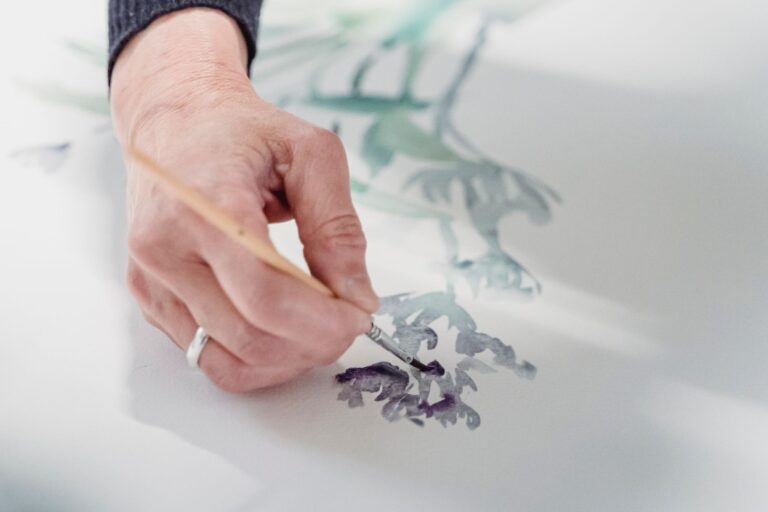
Simplify watercolor painting by setting out everything in advance, starting the first brushstroke yourself, then letting the person continue with broad washes. Early-stage dementia means thinking changes are mild, so favor large shapes, two or three colors, and enjoyment over precision.
The Alzheimer's Association says art projects can build accomplishment and purpose and open self-expression for the person and caregiver. The Art Therapists at Home guide notes watercolors glide easily across paper and suit larger arm movements, which aids calm focus. The Alzheimer's Association art and music guidance advises caregivers to begin the activity, such as moving the brush, then give only basic help.
Medical information disclaimer: This article is for general educational purposes only and does not provide medical advice, diagnosis, or treatment. Always consult a physician or other qualified health professional about symptoms, medications, tests, or treatment decisions.
Table of Contents
- Help start, then step back
- Choose simple projects that still feel adult
- Try wax resist for detail-free color
- Keep supplies safe and expectations honest
Help start, then step back
Sit together in good light with water, paper taped down, and one large soft brush ready. Wet the paper lightly, touch color to the brush, and make the first stroke so the person sees motion, not instructions.
Stay nearby and praise effort and color choice. Keep cues short, avoid correcting shapes, and stop while the mood is still good.
- Place one wash of color on the page
- Hand over the brush with a short cue
- Offer one choice at a time
- Pause and let drying show the effect
Choose simple projects that still feel adult
Pick tasks with a clear finish and little fine control. Large wet washes, sky bands, simple fruit shapes, and color blending give visible payoff without small lines.
Senior Helpers advises tailoring projects to the stage in a September 2025 dementia activity guide, with simplicity and enjoyment over precision or skill. Rotate simple watercolor exercises with coloring, markers, or crayons to prevent fatigue. Limit the palette so mixing stays clean and decisions stay easy.
Try wax resist for detail-free color
Ask a helper to pre-draw bold stars, leaves, initials, or simple houses in white crayon or wax. The person then brushes thin watercolor wash over the page and the hidden lines appear.
DementiaWho lists this wax-resist method in 11 visual art activities for early-stage dementia because it gives visual stimulation without fine detail. Use thick paper, plenty of water, and one dark wash for strong contrast. It works well for greeting cards, seasonal shapes, and name art.
Keep supplies safe and expectations honest
Use only non-toxic paint, crayons, and glue with supervision. The American Art Therapy Association safety guidance warns against small mouthable pieces and sharp tools during dementia art.
A 2025 narrative review in the Journal of Palliative Care and Social Practice described promise for cognition from visual art therapy in mild impairment and mild-to-moderate dementia. That promise is limited: an 8-week visual art trial found no effect on delayed recall or working memory, with varied designs noted in a Frontiers in Psychology trial report. Treat painting as connection, mood, and mastery, then store brushes out of reach after the session.