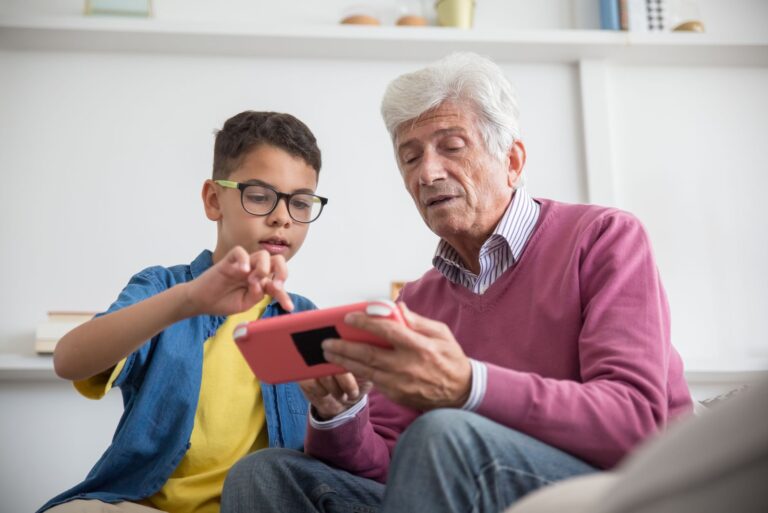
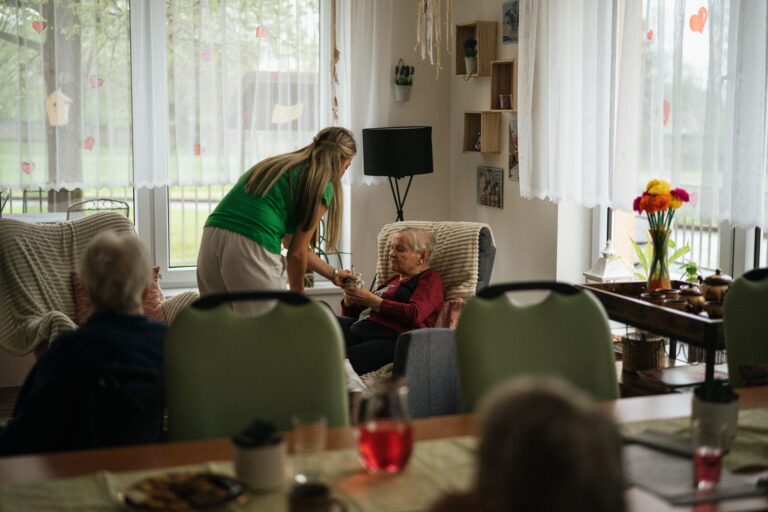
Yes, digital tablet games are generally safe for people with dementia when a caregiver supervises and keeps sessions short and simple. Dementia means ongoing loss of memory, thinking, and daily skills, and simple touchscreen play fits many patients at different stages. Caregivers use tablets for enjoyment, contact, and daily rhythm, not as a medical treatment. Safety comes from the setup, not the device alone.
Medical information disclaimer: This article is for general educational purposes only and does not provide medical advice, diagnosis, or treatment. Always consult a physician or other qualified health professional about symptoms, medications, tests, or treatment decisions.
Table of Contents
- What does safety research show?
- Do brain games improve memory in dementia?
- Why does engagement matter more than screen time?
- How can caregivers run a calm session?
What does safety research show?
In a McLean Hospital open-label study of 36 agitated geriatric inpatients with dementia, staff provided tablets with games, music, communication, and photo apps. The U.S. National Library of Medicine calls use feasible, safe, and potentially useful regardless of severity in the 2016 study summary.
Frontiers in Psychiatry researchers describe computerized cognitive training as having superior safety to most studied dementia drugs, with minimal risk. They support development of prescription digital therapeutics for mild impairment. Safety here means low medical risk during supervised use. It does not promise better memory or slower decline.
Do brain games improve memory in dementia?
A University of Sydney meta-analysis covered 17 trials with nearly 700 people. ScienceDaily reports computer training improved memory, learning, attention, and mood in mild cognitive impairment. Pooled results from 12 dementia studies were not positive, as described in the results summary.
TechCrunch reporting on federal action says Lumos Labs paid $2 million to settle charges over Lumosity ads. The ads deceptively claimed the games could delay decline and protect against dementia and Alzheimer's without scientific support. The practical point is direct. Choose tablet games for pleasure, focus, mood, and time together, not as a cure or shield.
Why does engagement matter more than screen time?
University of Alberta researchers report computer games need sustained engagement to help cognition. That sustained focus is very challenging for people with dementia. The team developed EEG monitoring to measure engagement. EEG means sensors that record electrical activity from the scalp.
In care, the lesson is simpler than the tool. A short session with eye contact, smiles, talk, and choices signals real involvement. Unsupervised screen time does not give the same value. Shared attention is the active part.
How can caregivers run a calm session?
The UK NHS advises tablets and smartphones are very useful for people with dementia for online games, puzzles, dedicated dementia apps, Zoom, and YouTube to stay engaged with others, explained in the NHS activities guide. Use that range to match the person, not to fill hours.
Benefits depend on engagement rather than unsupervised screen time. Stop the game if frustration appears and switch to music, photos, conversation, or a short walk.
- Pick one simple one-step game with large images and clear sound
- Sit beside the person, play together, and allow extra time
- Keep the first session under 15 minutes
- Stop if frustration, fatigue, or restlessness appears