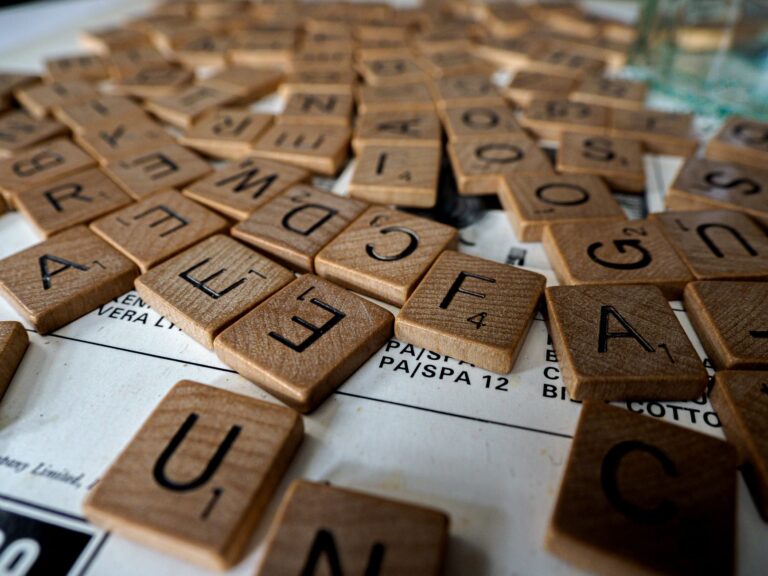
Yes, matching-style games can flag mild cognitive impairment (MCI), a stage with noticeable thinking change but intact daily independence, with useful screening accuracy. They work best as early screening aids, not standalone diagnoses.
These tools use short sorting, finding, ordering, and shopping tasks. Scores track memory, attention, and processing speed. A low score means seek clinical follow-up.
Medical information disclaimer: This article is for general educational purposes only and does not provide medical advice, diagnosis, or treatment. Always consult a physician or other qualified health professional about symptoms, medications, tests, or treatment decisions.
Table of Contents
- What do these games ask you to do?
- How accurate are game scores?
- Why is a game not a diagnosis?
- What should you do with a result?
What do these games ask you to do?
Players complete brief everyday challenges on a phone, tablet, or computer. Examples include Number Ordering, Species Sorting, and Gold Finding in the 3-minute WeChat G3 mini-program, described in a CiteDrive summary of a validation study.
Other tools use shopping and household scenarios. The Virtual Supermarket Test asks players to remember lists, find items, and pay correctly. The Korean tablet game uses five daily-life tasks, while Neuro-World uses six adaptive subgames across repeated sessions.
How accurate are game scores?
Game results line up with standard cognitive tests and separate MCI from normal thinking in study groups. A 12-week Neuro-World platform tracked 10 patients across 24 sessions, with accuracy and response time correlating r=0.71 with MoCA scores and r=0.80 with longitudinal change, according to the U.S. National Library of Medicine in the PubMed abstract. A Korean tablet game distinguished MCI from normal cognition with AUC 0.776, 80.0% sensitivity, 84.6% specificity, and 83.6% accuracy using machine learning, according to JMIR Serious Games in Jan.
2026 as indexed in the PubMed record. The self-administered Virtual Supermarket Test correctly classified 81.91% of older adults with memory complaints, outperforming MoCA at 72.04% and MMSE at 64.89% in the same sample, according to the Journal of Alzheimer's Disease via the IOS Press article page. A separate Virtual Supermarket Program study reported 85.9% sensitivity and 79.0% specificity at a cutoff of 46.4. It correlated strongly with MoCA and moderately with MMSE. These figures show promise for screening, not proof for home diagnosis.
Why is a game not a diagnosis?
MCI diagnosis remains a clinician's judgment under Alzheimer's Association guidance. It requires concern about cognitive change, objective impairment in one or more domains, and preserved daily independence.
Matching and shopping games can supply the objective signal. They cannot judge medical history, mood, medications, vision, hearing, or daily function. They also cannot order or interpret biomarkers and brain scans.
What should you do with a result?
Treat a brief game as a prompt for care, not a label. Home or community screening can help affected older adults seek a full clinical, biomarker, and functional evaluation sooner.
Study samples remain small and preliminary, including about 10 participants in Neuro-World and around 40 older adults averaging age 73 in ETH Zurich exergame studies reported by MedicalXpress, often with short or single-timepoint follow-up. Bring the game score, list of noticed changes, and medication list to the visit.
- Pick one validated-style task with clear scoring.
- Test in a quiet room when rested.
- Save the score, date, and noticed examples.
- Repeat once after one to two weeks if directions allow.
- Bring steady low scores plus change examples to primary care.