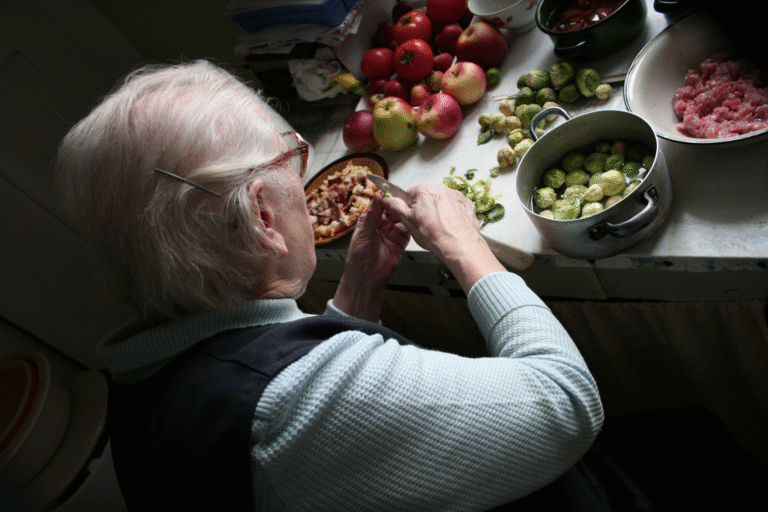
Adapt no-cook preparation for memory care groups by making foods easy to pick up, easy to chew, and safe to serve cold. Offer small, frequent portions of familiar balanced foods in bite-sized form. Memory care groups are group settings for people living with Alzheimer's or other dementia. No-cook preparation means assembling ready-to-eat foods without stoves or ovens, using items such as washed fruit, premade salads, cheese, and cooked lean meats.
Medical information disclaimer: This article is for general educational purposes only and does not provide medical advice, diagnosis, or treatment. Always consult a physician or other qualified health professional about symptoms, medications, tests, or treatment decisions.
Table of Contents
- What should go on the plate?
- Why switch to finger foods?
- How often should you serve?
- How do you serve safely?
What should go on the plate?
Build each serving around vegetables, fruits, whole grains, low-fat dairy, and lean protein. According to the Alzheimer's Association, people with dementia need that balance while limiting saturated fat, cholesterol, and refined sugars that add calories without nutrients, as explained in the Alzheimer's Association eating guide. Choose soft, moist options that need little chewing.
Try banana slices, berries, canned peaches in juice, whole-grain wraps, oatmeal cups made with milk, cottage cheese, yogurt, tuna, egg salad, and shredded rotisserie chicken. Avoid treating sweets as the main source of calories. Save cake, candy, and sugary drinks for small extras, and fill most of the plate with nutrient-rich foods the person already likes.
Why switch to finger foods?
Finger foods are small pieces eaten by hand without forks, knives, or spoons. Carers UK recommends them for people who struggle with utensils or pace and will not sit through meals, with examples such as small sandwiches, crackers with soft cheese, cut chicken pieces, and fruit pieces, described in the Carers UK dementia nutrition guide. Cut items to a size that can be held and eaten in one or two bites.
Offer one or two pieces at a time so the choice stays simple and the plate does not overwhelm. Use this approach for walkers as well as seated eaters. Place a few pieces on a napkin or small plate for someone who paces, and replace the portion when it is finished.
How often should you serve?
Offer smaller meals more often, plus calorie-rich no-cook snacks between meals. The National Institute on Aging advises this pattern and points to easy-to-prepare foods such as premade salads and microwaveable meals, plus foods the person likes and can chew, in the National Institute on Aging healthy-eating tips. Watch for missed meals, weight loss, and fatigue during activities.
Keep snacks visible and within reach, such as cheese cubes, peanut butter on crackers, trail mix without hard nuts, yogurt cups, and milk-based smoothies. Match textures to the person's chewing ability. For someone who tires quickly, split lunch into two short sittings rather than pressing for a full plate at once.
How do you serve safely?
Adults age 65 and older face higher risk from Listeria and other foodborne germs. According to FoodSafety.gov, high-risk no-cook foods must be avoided or reheated, with deli meats and hot dogs served only steaming hot to 165 degrees, and no raw sprouts, raw milk or juices, or soft cheeses from unpasteurized milk, detailed in the FoodSafety.gov at-risk guidance. Dementia can also cause dysphagia, which means difficulty swallowing. The Country Range summary of the IDDSI Framework says assessed groups needing soft and bite-sized foods should receive Level 6 items that are soft, tender, moist, and bite-sized with no leaking liquid.
Follow the person's prescribed texture level at all times. The DailyCaring dysphagia guide warns that these adaptations do not replace swallowing assessment, and caregivers should avoid hard, sticky, crumbly, or melt-in-mouth items that turn to thin liquid. Make food easy to see and eat calmly. NHS Cornwall advises solid-colored plates that contrast with both table and food, without patterns or white-on-white. For late-stage Alzheimer's, the National Institute on Aging advises sitting the person upright, serving small amounts and one food at a time, keeping the room quiet with TV off, checking each bite is swallowed, and keeping the person upright at least 20 minutes after eating.