No-cook food preparation for middle-stage dementia means simple hands-on kitchen tasks without heat, sharp tools, or complex steps. Engagement shows as focused participation, while distress shows as agitation, withdrawal, or refusal to eat. Middle-stage dementia is the phase when memory, judgment, and daily skills decline, but the person can often still follow one clear cue at a time. Washing vegetables, tearing lettuce, buttering bread, stirring batter, and setting the table with prompts fit this ability.
Medical information disclaimer: This article is for general educational purposes only and does not provide medical advice, diagnosis, or treatment. Always consult a physician or other qualified health professional about symptoms, medications, tests, or treatment decisions.
Table of Contents
- What kinds of tasks still work?
- How can you tell the person is engaged?
- What does distress look like during food tasks?
- Which foods and setups support independence?
- How should you adapt in the moment?
What kinds of tasks still work?
People in this stage can still take part in short, familiar actions. Useful choices include rinsing fruit, tearing salad leaves, spreading soft butter, stirring a cold batter, and placing napkins or unbreakable plates with guidance. According to the Alzheimer's Association, caregivers should adapt cooking to current ability by giving one task at a time and valuing participation over outcome middle-stage caregiving guide.
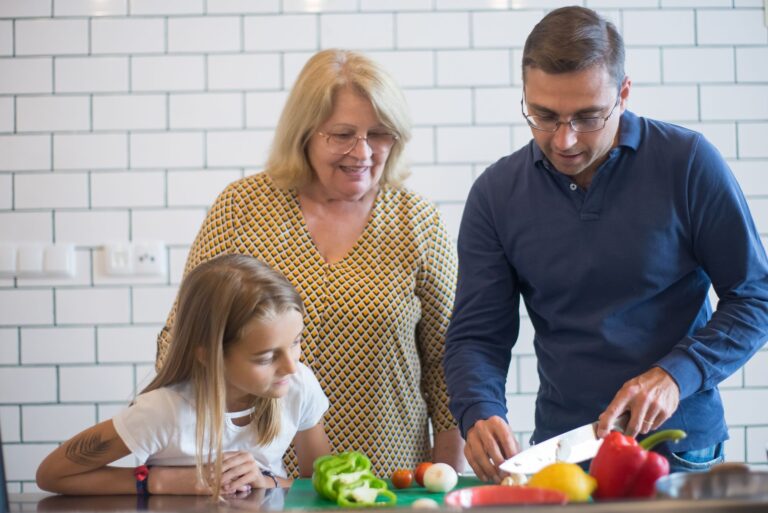
That approach keeps cooking possible instead of stopping it altogether. Success looks like joining in, not a neat result. Let the person work at their own pace, hand over one item, demonstrate the motion, then invite them to copy it.
How can you tell the person is engaged?
Engaged participation is steady and social. The person watches the demonstration, reaches for foods, holds and moves items with eye-hand coordination, stays with the step, and later joins in eating what was made together. These behaviors come from a Montessori-based food preparation approach that treats attention, imitation, handling food, coordination, and shared eating as signs of involvement food preparation full instructions.
The source describes them as observable markers during guided activity. Preparing food together in this way can also calm the day. The Alzheimer's Association notes that structured and pleasant activities, including making food together, can reduce agitation and support mood, usefulness, and dignity.
What does distress look like during food tasks?
Distress often appears before or during eating. Watch for agitation, loss of concentration, holding food in the mouth without swallowing, saying they already ate, confusion about what to do next, feeling overwhelmed by choices, pushing food away, or refusing to eat. These mealtime signs sit within broader middle-stage changes.
The Alzheimer's Association lists depression, anxiety, irritability, repetitive behaviors, sleep changes, verbal or physical outbursts, and wandering as common in this stage. When distress appears, pause rather than press forward. Reduce options to one or two, repeat the cue calmly, offer a break, and restart only if attention returns.
Which foods and setups support independence?
Finger foods often work best when cutlery is hard to manage or the person paces and snacks. Choose pieces that are easy to hold, moist but not messy, and served at safe room temperature. According to Buckinghamshire Healthcare NHS Trust community dietitians, these foods can prolong independence, but they must match any prescribed texture for swallowing problems finger foods guidance.
Do not change a dysphagia diet without clinician advice. The eating area matters as much as the food. Lower noise, clear the table of clutter, sit and eat together as a visual prompt, offer small frequent meals with liked or stronger-flavoured foods, and try a blue contrasting plate to make food easier to see.
How should you adapt in the moment?
Keep instructions short and physical. If one food causes trouble, switch foods rather than ending contact. Offer a drink, move to table-setting, fold napkins, or taste a finished item together before trying again later.
- Show one step, say one short phrase, then wait.
- Pass only the item needed now.
- Stay beside the person while they work.
- Praise effort, not neatness or speed.
- Stop the task if agitation, fatigue, or refusal grows.