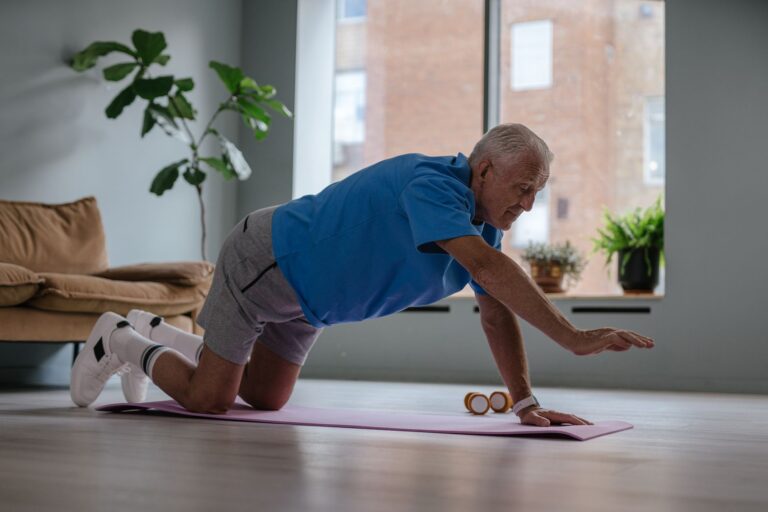
Step-by-step simple strength exercises for late-stage dementia are short, supervised moves that preserve leg and upper-body strength. They center on sit-to-stand, seated leg and arm work, and brief assisted walks between rooms. Late-stage dementia means advanced memory, movement, and balance changes that require full supervision and simple one-step cues. The Alzheimer's Society says gentle functional movement still helps preserve strength and mobility at this stage, including changing chairs at meals and short assisted walks Alzheimer's Society Keep Moving guide.
Medical information disclaimer: This article is for general educational purposes only and does not provide medical advice, diagnosis, or treatment. Always consult a physician or other qualified health professional about symptoms, medications, tests, or treatment decisions.
Table of Contents
- Which moves help most?
- How do you do sit-to-stand safely?
- What does a seated routine look like?
- How often and how do you fit it in?
Which moves help most?
The most useful moves use body weight and daily positions. Sit-to-stand, assisted standing, seated marching, seated leg lifts, and light hand weights or resistance bands fit moderate-to-severe dementia in 5-10 minute blocks.
Sit-to-stand is the anchor move. Dementia physiotherapists in NHS Greater Glasgow and Clyde say it strengthens leg muscles and improves body mechanics and balance, making it a key fall-reduction move NHS Greater Glasgow and Clyde strength exercises.
How do you do sit-to-stand safely?
Start with a stable, non-rolling chair against a wall. The person sits upright with feet flat and knees bent at right angles.
Then follow one cue at a time: A caregiver stays close, demonstrates each step, and offers a hand or gait belt. Stop if pain, dizziness, or unusual fatigue occurs.
- Scoot forward so feet are under knees.
- Lean chest slightly forward over toes.
- Push through heels to stand, holding sturdy support.
- Sit back slowly with control, then rest.
What does a seated routine look like?
Seated work suits days when standing feels unsteady. The NHS seated routine specifies sitting upright in a stable chair without wheels, with feet flat and knees at right angles NHS sitting exercises. From that base, try arm raises for shoulder strength, ankle circles and stretches for ankle flexibility, seated marching, and seated leg lifts.
The NHS notes ankle stretches also improve circulation and reduce blood-clot risk during long sitting periods. Keep resistance light and movements small. Use familiar music or a mealtime routine as the cue, then repeat the same order each day.
How often and how do you fit it in?
Aim for muscle-strengthening activity on two or more days per week, plus balance work. Adapt the amount to tolerance, with multicomponent balance-plus-strength spread across three or more days when possible. Break effort into small chunks through the day rather than one long session.
Show one simple step at a time, use familiar routines, and aim for daily supervised time sitting unsupported and moving regularly. Clear the space, use supportive shoes, keep sturdy support within reach, and check with a clinician first. Dementia changes gait, balance, and spatial awareness, so every late-stage session needs direct supervision.