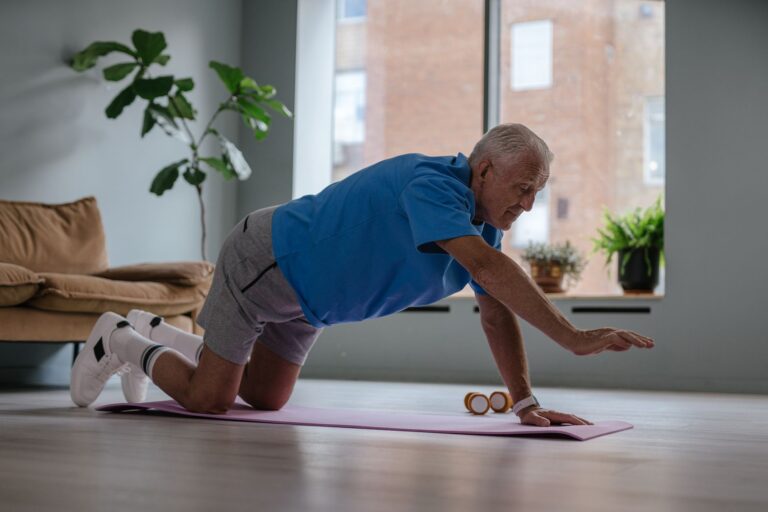
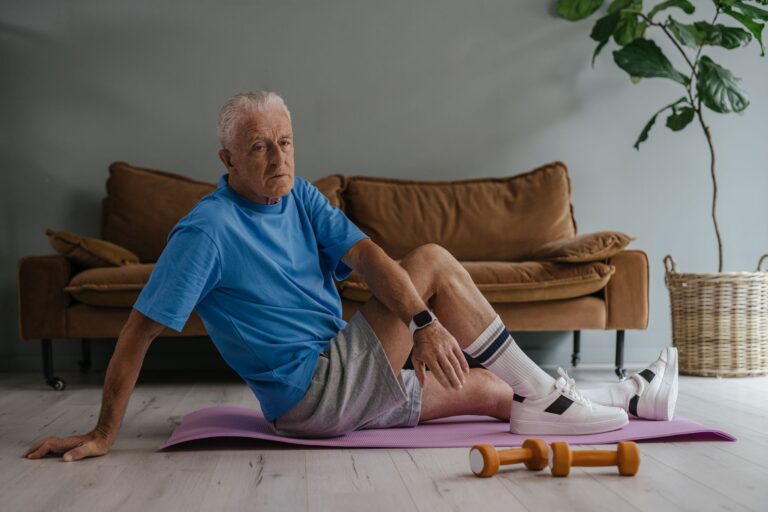
Alternatives to simple strength exercises in late-stage dementia are brief, preferred movements like gentle chair movement, assisted range-of-motion, short walks, music and dance, ball toss, and familiar chores. Late-stage dementia means the advanced phase when memory, movement, and daily function are severely reduced and a person may sit or lie most of the day. The goal shifts from fitness to comfort, circulation, joint mobility, and connection. When interest in repetitions fades, match the activity, assistance, pacing, and setting to what the person enjoys and can do now.
Medical information disclaimer: This article is for general educational purposes only and does not provide medical advice, diagnosis, or treatment. Always consult a physician or other qualified health professional about symptoms, medications, tests, or treatment decisions.
Table of Contents
- Why goals change in the late stage
- Which seated movements can replace repetitions?
- What enjoyable activities supply movement without weights?
- How do you build a simple daily routine?
- What limits and safety steps matter?
Why goals change in the late stage
Movement remains useful, but structured sets often no longer fit ability or attention. The Alzheimer's Association explains that late-stage dementia often leaves a person chair-bound or bedridden, so care focuses more on comfort, circulation, and connection than on fitness sets in its late-stage caregiving guide.
Caregivers can also help protect joint movement through assisted motion. After checking with a doctor, they can gently move the arms and legs two to three times daily, ideally when muscles are warm after bathing.
Which seated movements can replace repetitions?
Seated options work when standing is tiring, unsteady, or no longer possible. The Alzheimer's Society UK lists seated exercises, slow gentle chair-based movement, chair yoga or tai chi, changing chairs regularly, and shifting or moving sideways while sitting on the bed edge in its Keep moving feature.
Keep sessions very short and stop if pain, breathlessness, dizziness, or distress appears. Use a sturdy chair with armrests, feet flat, and a calm space free of clutter.
What enjoyable activities supply movement without weights?
Short walks, ball games, dancing to familiar music, swimming, and stationary cycling supply aerobic and balance activity without weights or counting reps. Support, balance aids, and close supervision make these options safer for changing mobility. Familiar tasks can carry the same benefit in disguise.
Examples include folding laundry, dusting, sweeping, watering plants, and planting or harvesting in a garden. These chores embed light endurance, strength, and flexibility work. Choose one task the person once liked, simplify it, and do it together.
How do you build a simple daily routine?
Rotate one or two brief preferred activities into the day rather than pushing a fixed workout. Music and dance, ball toss, garden chores, and short walks are easy to swap when attention fades.
For context, U.S. older-adult guidance points to about 150 minutes per week of moderate aerobic activity plus muscle-strengthening on two or more days and balance activity about three days per week, often split into shorter bouts. Use that pattern only as a flexible direction, not a late-stage target.
- Pick the best time of day for alertness
- Offer one clear choice, not a list
- Allow rest between short bouts
- Adjust help, speed, noise, light, and seating
- End while the experience is still pleasant
What limits and safety steps matter?
No single intensity, volume, or type has been shown best for dementia. Exercise and Sports Science Australia, summarized through ExerciseRight, notes that seated-only light programs may improve strength without improving walking speed or balance, with higher fall risk requiring supervision and clinician or physiotherapist input in its guide to exercise and dementia.
Ask the doctor or physiotherapist about pain, contractures, skin pressure, swallowing, breathing, medications, and safe handling. Seek prompt advice for new falls, injury, chest pain, unusual shortness of breath, sudden weakness, or a sharp change in alertness.