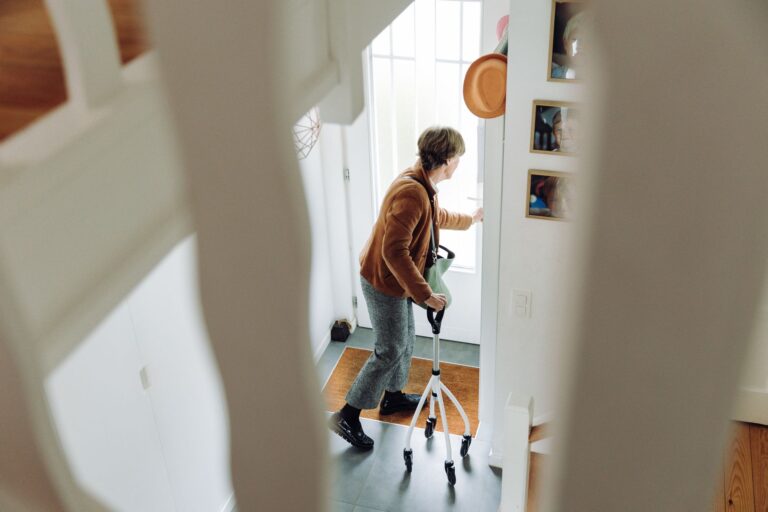
Simple strength exercises for late-stage dementia are gentle assisted movements that support comfort, circulation and connection. They use a stable chair setup, a few light supports, and close caregiver supervision. Late-stage dementia means the advanced phase when a person needs full help with daily care. According to the Alzheimer's Society, the goal shifts from fitness to comfort through assisted range-of-motion, position changes and short supported walks in its Keep Moving guidance.
Medical information disclaimer: This article is for general educational purposes only and does not provide medical advice, diagnosis, or treatment. Always consult a physician or other qualified health professional about symptoms, medications, tests, or treatment decisions.
Table of Contents
What the goal is now
The aim is ease of movement, not building fitness. Gentle motion helps blood flow, joint flexibility and daily comfort. Calm contact during movement also supports connection.
Repetitive familiar moves work best. Seated arm lifts, leg movements and assisted stands feel predictable. Short sessions keep attention and energy from fading.
How do you set up the space?
Clear a small area with good light and fresh water nearby. The caregiver should face the person and give one simple cue at a time. Keep the pace slow and unhurried. Use a solid chair without wheels on a non-slip, cleared floor.
According to the NHS Health Well guide, the person should sit tall with feet flat and knees at right angles in its sitting-exercises guide. Leave room to move arms and legs safely. Keep needed items within reach before starting. Avoid clutter, cords, rugs that slide, and distractions. Stop and reset posture if leaning or sliding begins.
What supplies help?
Comfortable clothing and supportive closed shoes reduce slipping and distraction. A sturdy chair or counter gives a steady hold for standing or balance. Water nearby helps pauses stay calm. According to the University of Arizona and Flagstaff Shelter Services guide, simple supports include light bands, soft weights or soup cans and small therapy balls in its Care Partner dementia-exercise guide.
Choose light, soft and easy to grip items. Check bands and chairs for wear before use. Start with body weight alone when unsure. Add light resistance only if movement stays controlled and pain-free. Less equipment often means better focus.
How do you keep it safe?
Stay with the person for the whole session. According to HelpDementia guidance, people with moderate-to-advanced dementia should not exercise unsupervised, with slow demonstration and close monitoring in its chair-exercise guidance for limited mobility. Watch form, breathing and mood throughout.
Keep voice calm and cues short. Offer rest, water and reassurance between moves. End early when the day is difficult.
- Stop if confusion, agitation or pain appears
- Stop for dizziness, chest pain or severe breathlessness
- Pause for fatigue, then end if it does not pass
- Ask a clinician or physiotherapist about new symptoms