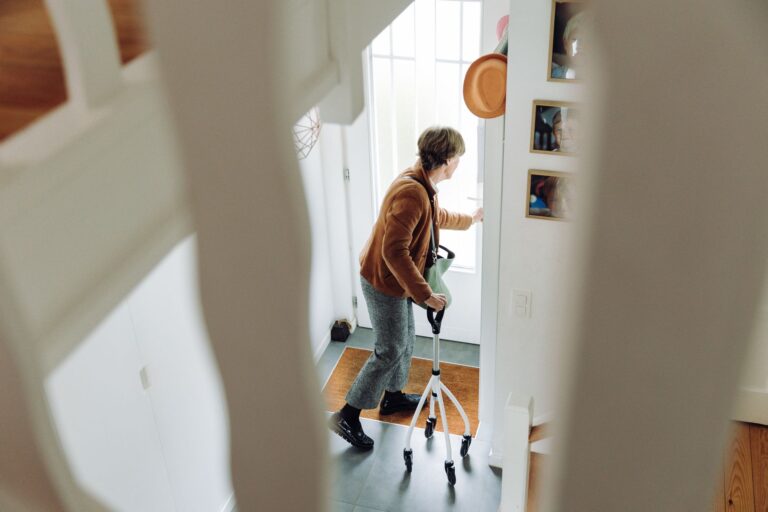
Simple strength exercises for middle-stage dementia are short, predictable chair-based moves using light bands and everyday motions. Middle-stage dementia means memory loss, confusion, and need for help have grown, so routines must stay simple and supervised. The goal is to keep major muscles working without complex gym routines. Sessions work best when they are shorter, use the same order, and pair strength with gentle balance work.
Medical information disclaimer: This article is for general educational purposes only and does not provide medical advice, diagnosis, or treatment. Always consult a physician or other qualified health professional about symptoms, medications, tests, or treatment decisions.
Table of Contents
- How much activity should you aim for?
- Which seated strength moves work best?
- How do you add balance with support?
- How should caregivers guide each session?
How much activity should you aim for?
People living with dementia are advised by the U.S. CDC to follow older-adult targets of at least 150 minutes per week of moderate aerobic activity plus muscle-strengthening for major muscle groups on 2 or more days.
That target can be built from short walks, marching in place, and seated strength moves spread through the week. Older adults with poor mobility are advised by the World Health Organization to add balance-and-coordination activity on 3 or more days per week to prevent falls, alongside the 2-day strength minimum. For middle-stage dementia, those extra balance days should stay supported and closely supervised.
Which seated strength moves work best?
Keep the setup simple, as described in the Grand Brook Memory Care guide by Grand Brook Memory Care. Use a sturdy chair, light resistance bands, and everyday movements rather than machines or long sequences.
Do the same short order each time so the person knows what comes next. Dementia physiotherapists in the NHS Greater Glasgow and Alzheimer Scotland strength-and-flexibility poster prescribe these seated steps: Do a small number of slow repetitions and rest between moves. Stop the set if form slips or the person looks tired.
- Sit tall in a sturdy chair, feet flat on the floor.
- Rise both heels, hold briefly, then lower.
- Circle each ankle slowly, then straighten each knee in turn.
- Stand up and sit down without using hands when able.
How do you add balance with support?
The same NHS Greater Glasgow and Alzheimer Scotland program adds standing balance steps with firm support. Stand close to a wall, counter, or sturdy chair and hold on throughout. Keep feet and knees soft, eyes forward, and movements slow.
Practice one-leg standing for 10 seconds on each side, then heel-to-toe standing as if on a tightrope. Finish with heel-toe walking for 5 to 10 steps while holding support or a hand. Repeat once if steady, and sit down right away if dizzy or unsteady.
How should caregivers guide each session?
Caregivers help most by keeping cues short and calm, following the Alzheimer's Society exercise guide from Alzheimer's Society UK. Give one short instruction at a time, demonstrate each move, and follow written or printed steps. Exercise together, praise effort, and do not force participation when the person is unwilling.
Use practical safety checks from National Institute on Aging Go4Life safety guidance: sturdy chair or counter for support, supportive shoes, slow starts, and clear stop rules. Stop and seek care for chest pain or pressure, faintness, severe dizziness or breathlessness, or sharp pain. People with dementia fall more often and can struggle to follow instructions, so Exercise & Sports Science Australia advises one-to-one supervision with counting of repetitions over unsupervised or group-only exercise.