Simplify reminiscence conversations for late-stage dementia by offering one familiar sight, sound, or texture at a time and letting the person react without pressure to remember. Reminiscence here means sharing a pleasant cue linked to the past, not testing memory. Late-stage dementia often brings very limited speech and a need for close, steady support. Short, calm, sensory moments can still bring comfort and connection.
Medical information disclaimer: This article is for general educational purposes only and does not provide medical advice, diagnosis, or treatment. Always consult a physician or other qualified health professional about symptoms, medications, tests, or treatment decisions.
Table of Contents
- What changes in late-stage conversation?
- How do you set up a calmer moment?
- Which prompt should you choose?
- What should you say and avoid?
- When should you stop or switch?
What changes in late-stage conversation?
Many people with severe Alzheimer's lose clear speech and rely on facial expressions, gestures, or vocal sounds. The Alzheimer's Association advises caregivers to watch, encourage, and respond to those cues in its communication guidance.
That means a smile, a relaxed hand, humming along, or turning toward a photo can be the reply. Treat those signals as the conversation.
How do you set up a calmer moment?
Meet one-on-one in a quiet space with the television and background noise off. The Alzheimer's Association recommends allowing extra time, avoiding interruptions, and never correcting, arguing, or quizzing memory in its communication guidance.
Sit at eye level, make gentle eye contact, and keep your voice slow and clear. Allow long pauses so the person does not feel rushed.
Which prompt should you choose?
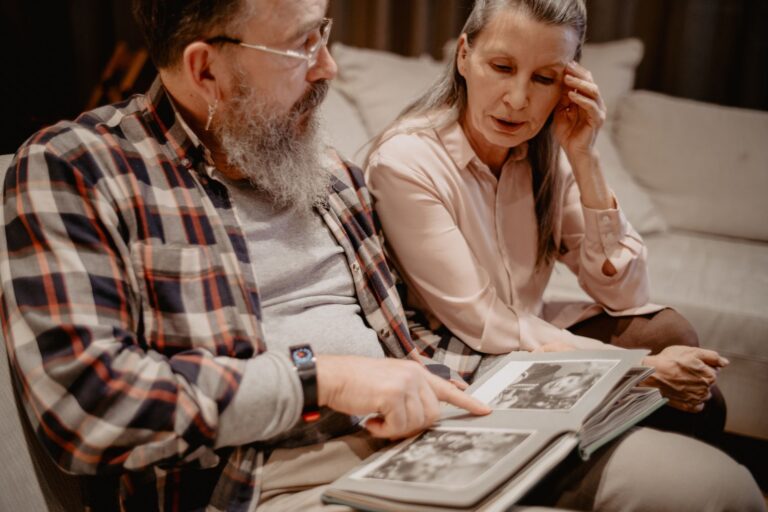
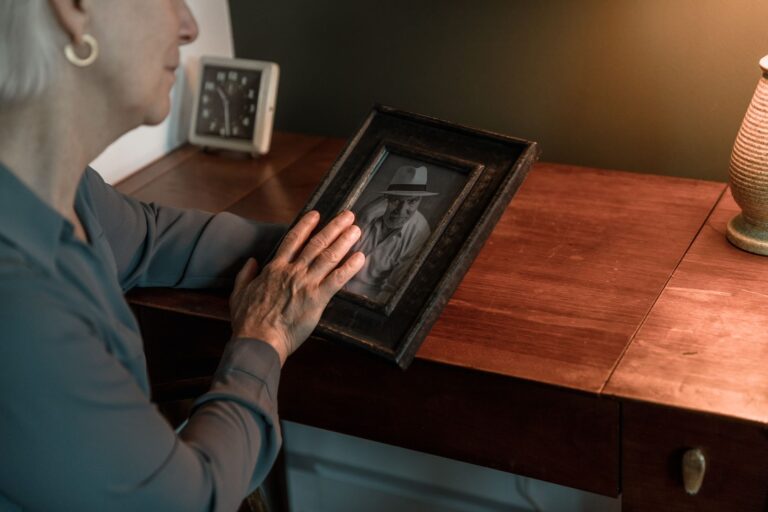
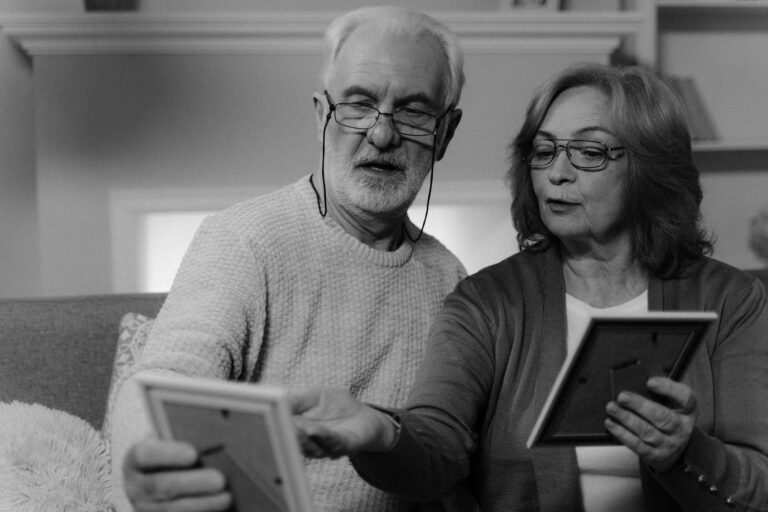
Pick one concrete item: a familiar song, an old photo, a soft scarf, a spice scent, a keepsake, or an object from a memory box. The Alzheimer's Society UK recommends using one life-story or sensory prompt at a time rather than open-ended "do you remember?" questions in its therapy and approaches for memory loss support.
Hold the photo where it is easy to see, play 30 to 60 seconds of music, or place the texture in the person's hand. Notice what draws attention and stay with that one item.
What should you say and avoid?
Ask only one short, simple question at a time, with yes-or-no choices such as "Would you like some coffee?" Speak slowly, keep sentences brief, and narrate warmly instead of asking for facts: "This was your garden. The roses smelled sweet." Do not test memory with names, dates, or "who is this?" Share the moment calmly. If the person tires, looks away, or becomes restless, shift to soothing contact such as holding hands, gentle touch, or familiar music.
When should you stop or switch?
Short is often better. End while the mood is calm, even after a few minutes, and try again later if you wish.
Connection in the late stage often continues through touch, eye contact, holding hands, familiar music, old photos, and other sights, sounds, smells, and tastes. The 2018 Cochrane review by Woods and colleagues pooled 22 trials with 1,972 people and found only small, uneven effects, mostly in mild-to-moderate dementia, according to the Cochrane Library in its reminiscence therapy review. Keep expectations modest: aim for comfort in the moment, not better memory.