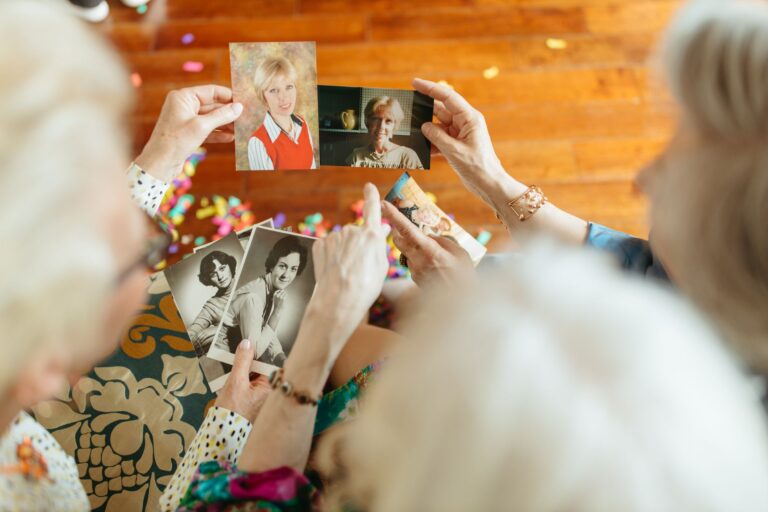
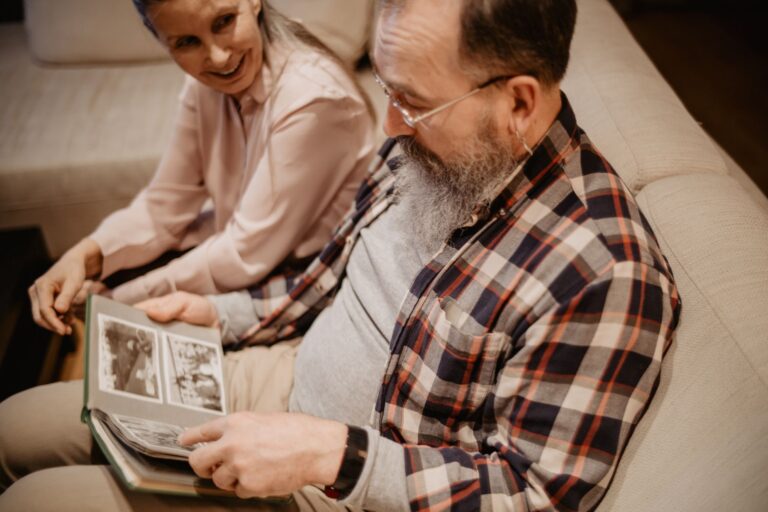
Talk one-on-one in a quiet place and ask one short question at a time. Support each question with a photo, object, gesture, or simple choice. Reminiscence conversations are guided talks about past experiences that support comfort, identity, and connection.
The middle stage is often the longest stage of Alzheimer's, when communication gets harder and people need more direct care, according to the Alzheimer's Association in its communication guidance. That makes short, slow exchanges more workable than long stories. Allow plenty of time for the person to think and respond.
Medical information disclaimer: This article is for general educational purposes only and does not provide medical advice, diagnosis, or treatment. Always consult a physician or other qualified health professional about symptoms, medications, tests, or treatment decisions.
Table of Contents
- Why does one-on-one work better?
- How should you phrase questions?
- What can you show, play, or hold?
- What benefits and limits should you expect?
Why does one-on-one work better?
A quiet room removes competing voices, television, and movement. The person can focus on one face, one voice, and one memory at a time. Sit where eye contact feels natural and stay close enough to point together.
Time pressure creates confusion and withdrawal. Give the person extra seconds to hear, recall, and answer. Accept silence as thinking time rather than a need to repeat or rephrase quickly.
How should you phrase questions?
Use short, plain sentences and ask only one thing before pausing. The Alzheimer's Association advises speaking clearly and slowly to reduce confusion in its communication guidance.
Clear pacing helps the question land. Try narrowing broad memory questions into small decisions: If the person does not answer, offer a gentle next step. Name what you see, describe the object, or move on without correcting.
- Show one wedding photo and ask, "Is this summer?"
- Hold two shirts and ask, "Blue or white?"
- Play one song and ask, "Shall we listen?"
What can you show, play, or hold?
Words alone are hard to follow in middle-stage dementia. Pair speech with pointing, gestures, touch, and real choices such as clothes or a glass. Let the person look, hold, and explore the item.
Build a small set of familiar prompts around one life theme. NHS guidance describes reminiscence work that shares life stories with photos, objects, video, and music clips in a book or on a tablet in its dementia activities advice. A work uniform, recipe card, postcard, or team song can anchor the talk. Art can help too when you praise the effort and talk about what the person is making.
What benefits and limits should you expect?
Expect comfort, pleasure, mental activity, and a stronger sense of identity rather than better memory. Keep sessions brief and stop when attention fades, frustration rises, or the person wants rest. A good session may be a smile, a named face, or a few calm minutes together.
The benefits are usually small. A 2018 Cochrane review of 22 randomized trials found no important overall effect on quality of life, with probable slight gains in mood from one-to-one work, communication in groups, and broader benefits in care homes, according to Cochrane in its reminiscence therapy review. Use the conversation for connection today, then note which photo, song, or object drew a response and start there next time.