Caregivers can support nonverbal communication in memory care by approaching from the front at eye level, staying calm and open, and giving the person full attention without rushing a response. Memory care here means day-to-day support for a person living with dementia whose words are fading. Nonverbal communication means gestures, facial expressions, posture, and body language. As words are lost, it becomes the main channel for connection and needs.
Medical information disclaimer: This article is for general educational purposes only and does not provide medical advice, diagnosis, or treatment. Always consult a physician or other qualified health professional about symptoms, medications, tests, or treatment decisions.
Table of Contents
- Why nonverbal signals matter more over time
- How do you set up a calm exchange?
- What should your own body say?
- What if agitation is really a message?
- Frequently Asked Questions
Why nonverbal signals matter more over time
Most human communication, with or without dementia, is nonverbal. Gestures, facial expressions, posture, and body language carry much of the meaning. The Alzheimer's Society notes this channel becomes central as words are lost, in its guide to non-verbal communication and dementia.
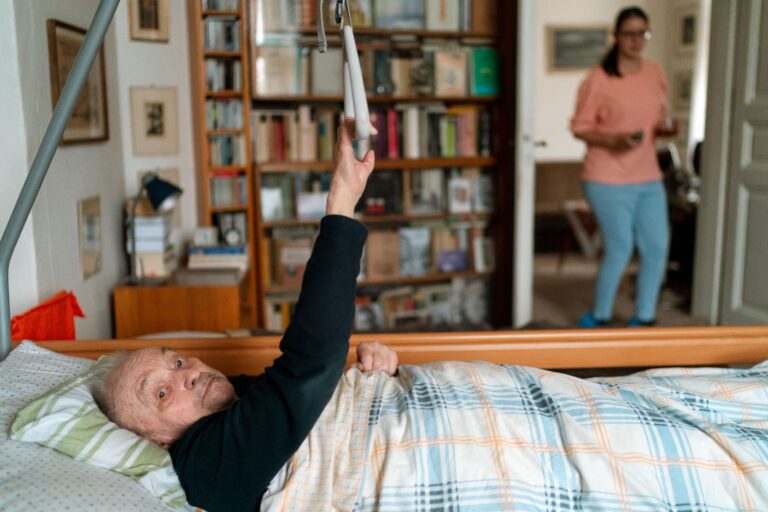
That shift changes the caregiver's job. You watch as much as you listen. A furrowed brow, turned body, restless hands, or relaxed smile can signal comfort, fear, pain, or desire for company.
How do you set up a calm exchange?
Stop other tasks and get attention before you speak. Turn off or lower the TV or radio. Face the person and encourage any effort to communicate.
The NHS advises approaching from the front at eye level, using eye contact, speaking slowly in short sentences, and allowing extra time to respond, in NHS advice on communicating with someone with dementia. Do not interrupt or pressure for a quick answer. Family Caregiver Alliance recommends a matching routine for daily talks:.
- Set a positive mood and get attention first
- State one clear message and ask simple, answerable questions
- Listen patiently and answer the feeling behind confused words
What should your own body say?
Stay calm, friendly, and unhurried. Sit at the same level rather than standing over the person. Keep posture open and relaxed, with a positive tone of voice.
Reassuring touch can convey closeness, such as patting or holding a hand. Watch words and body language for whether touch feels welcome. If the person tenses, pulls away, or looks distressed, pause and give space.
What if agitation is really a message?
Restlessness, resistance, shouting, or withdrawal can look like problem behavior. A 2022 analysis in Nursing Forum found such agitation may actually signal pain, fear, or an unmet need, affecting patients, families, and staff, as reported in the peer-reviewed analysis in Nursing Forum. Treat the moment as a question. Check for hunger, thirst, toileting, pain, cold, noise, fatigue, or confusion about what is happening.
Offer one simple choice at a time, such as water, blanket, quieter room, or a short walk. Nonverbal signals are ambiguous and vary by person. Do not lock onto one meaning. Seek individualized assessment, including a speech-language or dementia-care specialist when available.
Frequently Asked Questions
How close should I stand when talking?
Approach from the front, get to eye level, and sit nearby rather than looming. Keep your posture open and your tone calm and friendly.
Should I keep talking when words no longer get a reply?
Yes. Use short sentences, one message at a time, and allow extra time. Welcome gestures, sounds, eye movements, and facial expressions as valid replies.
Is touch always helpful?
Often, but not always. A hand pat or held hand can reassure, yet some people dislike touch when anxious or in pain. Watch for tensing or pulling away and pause.