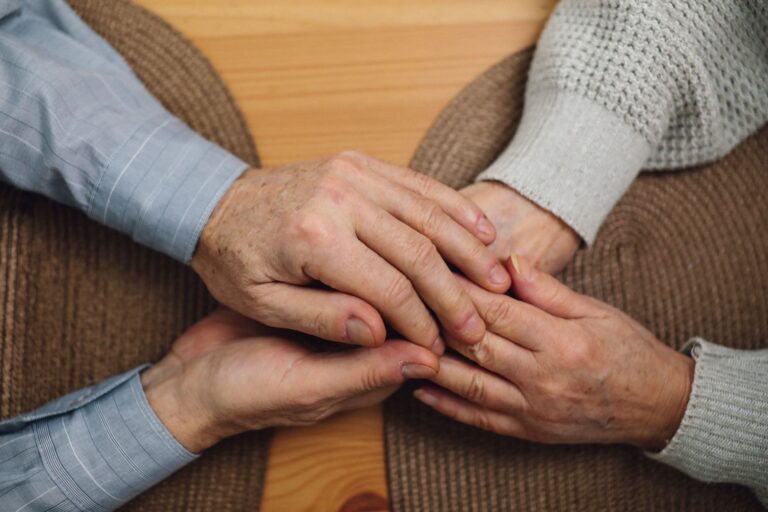
Yes—folding laundry together can be a meaningful, emotionally grounded activity during Alzheimer's progression, and research shows it offers measurable benefits to both the person with dementia and the caregiver. Familiar household tasks like laundry invoke past routines and memories while providing purposeful engagement at a time when many activities become difficult or overwhelming. During the middle stages of Alzheimer's disease, instrumental activities of daily living (IADLs)—complex household tasks like laundry—deteriorate first, before basic self-care becomes impaired. This creates a window where someone with mild-to-moderate dementia can still participate meaningfully in familiar tasks, even as supervision and adaptation become necessary.
Medical information disclaimer: This article is for general educational purposes only and does not provide medical advice, diagnosis, or treatment. Always consult a physician or other qualified health professional about symptoms, medications, tests, or treatment decisions.
Table of Contents
- When Laundry Tasks Become Difficult (But Not Impossible)
- Why Shared Activity Changes Both Lives
- How to Adapt Laundry Folding to the Person, Not the Other Way Around
- The Bigger Picture—How Shared Routines Slow Decline
- Frequently Asked Questions
When Laundry Tasks Become Difficult (But Not Impossible)
Alzheimer's disease progresses through three stages over roughly 15 years, with cognitive decline eventually affecting the ability to perform both complex household tasks and basic self-care. During the early and middle stages, the sequence matters: laundry, cooking, and financial tasks typically become difficult first. Bathing and dressing come later.
This progression is not a cliff. In the middle stage especially, someone with Alzheimer's can still recognize a sock, match colors roughly, or fold a shirt with gentle guidance—they simply cannot manage the full sequence alone. The impulse to put on clean clothes, to fold a familiar object, to participate in a routine remains, even as the executive function to plan or organize the task has faded.
Why Shared Activity Changes Both Lives
Research shows that when caregivers and people with dementia engage in shared activities, both behavioral and psychological symptoms—agitation, aggression, depression—decline measurably on the same day. Folding laundry together taps into this protective mechanism. The activity is purposeful, it is familiar, and it creates a moment of working toward something together rather than something being done *to* or *for* the person with dementia.
The caregiver benefit is equally important. Approximately 60% of Alzheimer's caregivers report high or very high stress, and 40% experience clinical depression. Yet on days when caregivers engaged in structured shared activities, both caregiver stress and dementia-related behavioral symptoms declined. A half-hour folding laundry together is not wasted time—it is stress reduction and prevention of distressing behaviors, happening simultaneously.
How to Adapt Laundry Folding to the Person, Not the Other Way Around
Person-centered activity adaptation—adjusting the task to the individual rather than requiring the person to fit the task—encourages participation without pressure while preserving dignity. In practice, this means:.
- Start with clean, dry laundry already sorted. Let them fold hand towels or kitchen towels (simpler than fitted sheets).
- Work side by side, not across a table where folding patterns must be seen from a distance.
- Let imperfection be fine. Folding a towel into thirds or quarters, even crookedly, is success.
- Offer one piece at a time rather than a full basket; the visual overwhelm of a large pile can trigger frustration.
- Narrate what you're both doing ("I'm folding this corner in, you're folding yours—we're doing this together"), which anchors the person to the present moment and shared purpose.
The Bigger Picture—How Shared Routines Slow Decline
Maintaining emotional connection and shared routines has been shown to slow cognitive decline, reduce caregiver burden, and delay the need for institutional care placement. Folding laundry is not a cure or a treatment, but it is an evidence-based activity that works on multiple levels at once: it preserves dignity, invokes memory and routine, manages symptoms, and keeps both caregiver and person with dementia emotionally regulated.
The hope in "folding laundry side by side" is not that the laundry will be perfectly folded. It is that on a day when dementia feels like only taking things away—memory, independence, the ability to do—you are doing something *with* your loved one, not just *for* them. The evidence shows that matters, measurably, for both of you.
Frequently Asked Questions
What if my loved one gets frustrated or refuses to participate?
Stop the activity without pressure. Person-centered care means the person's comfort and willingness matter more than task completion. Try again another time or with a simpler version (e.g., just matching socks instead of folding).
Is folding laundry appropriate during late-stage Alzheimer's?
Laundry folding works best during early and middle stages when some cognitive and motor function remains. During late stages, basic self-care assistance becomes the focus. Your care team can help you assess what's realistic for your loved one's current stage.
Can shared activities really reduce caregiver depression?
Research demonstrates that structured shared activities lower both caregiver stress and dementia-related behavioral symptoms on the same day they occur. While shared activities are not a substitute for professional mental health treatment if depression is clinical, they are a measurable protective factor.