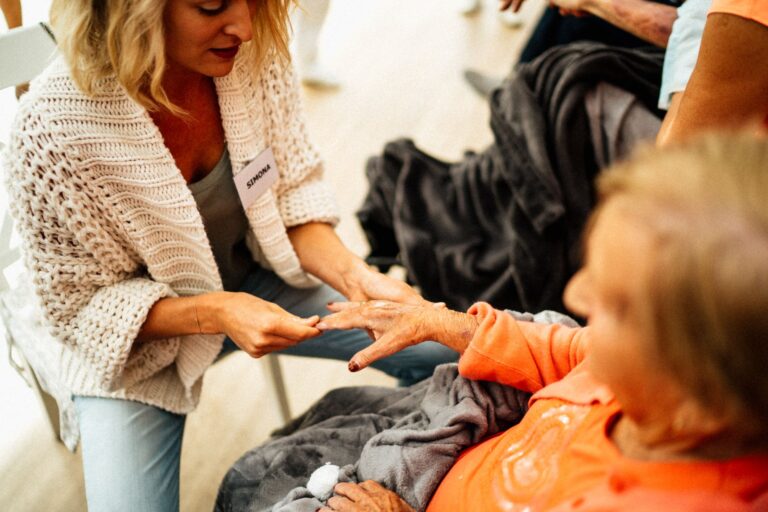
Holding hands in comfortable silence can create a calm, low-pressure opportunity for connection in dementia care. It should be offered gently, never imposed, and stopped whenever the person appears uncomfortable. Dementia is an umbrella term for cognitive loss severe enough to disrupt daily life; it is not normal aging. Alzheimer's disease is its most common type, according to the National Institute on Aging.
Medical information disclaimer: This article is for general educational purposes only and does not provide medical advice, diagnosis, or treatment. Always consult a physician or other qualified health professional about symptoms, medications, tests, or treatment decisions.
Table of Contents
- What comfortable silence can offer
- How to try it without creating pressure
- How to tell whether touch is welcome
- What the evidence does—and does not—show
- Where this practice fits in care
What comfortable silence can offer
Conversation may become difficult as dementia progresses. Pausing removes the demand to find words quickly and gives the person more time to respond.
Silence does not mean withdrawing attention. A caregiver can remain present through a relaxed posture, an unhurried pace, and—when welcomed—a hand held without squeezing or pulling. The National Institute on Aging recommends allowing extra response time, avoiding infantilizing speech, and using gentle touch, including holding the person's hand while talking.
How to try it without creating pressure
Choose a moment when the person is not showing obvious pain, fear, or distress. Sit nearby, offer your hand where it can be seen, and allow the person to accept or decline.
Do not use touch to restrain, steer, or force cooperation. Holding hands is expressive touch—touch meant to communicate concern or calm—rather than touch required to complete a care task.
- Ask simply: "May I hold your hand?"
- Wait longer than usual for a verbal or physical response.
- Keep your grip loose and your body still.
- Let silence continue without demanding eye contact or conversation.
- Release the hand immediately if the person pulls away or becomes tense.
How to tell whether touch is welcome
Comfort is person-specific. Acceptance might appear as keeping the hand in place, relaxing, or remaining calmly engaged, but caregivers should not treat stillness alone as consent. Watch for withdrawal, pain, fear, refusal, or a change in behavior.
Pulling away, guarding the hand, or saying "no" means the contact should end. In U.S. nursing homes, CMS guidance says staff must respect a resident's refusal and explore possible causes, including pain or fear. The same safeguard is useful in any care setting: stop first, then consider what may be wrong.
What the evidence does—and does not—show
Research does not establish hand-holding in silence as a dementia treatment. It has not been shown to slow cognitive decline, alter the underlying disease, or replace medical care. One trial involving 68 nursing-home residents found that a single 10-minute hand massage reduced agitation compared with no intervention, with benefit lasting through one hour.
However, hand massage is not the same as quietly holding hands. An AHRQ review found only two small qualifying randomized trials of massage or touch. It judged the true effect on behavioral symptoms uncertain, and the evidence was not specific to hand-holding or silence.
Where this practice fits in care
The best-supported context is broader, relationship-centered care. In the WHELD trial, an intervention combining staff training, personalized activities, and medication review produced small improvements in agitation and proxy-rated quality of life over nine months. That result cannot be attributed to touch alone.
It suggests that quiet companionship belongs within care shaped around the individual, not as a stand-alone technique expected to work for everyone. If hand-holding is declined, respect the answer. Remaining nearby without touching, allowing extra response time, or speaking gently can still create space without overriding the person's choice.