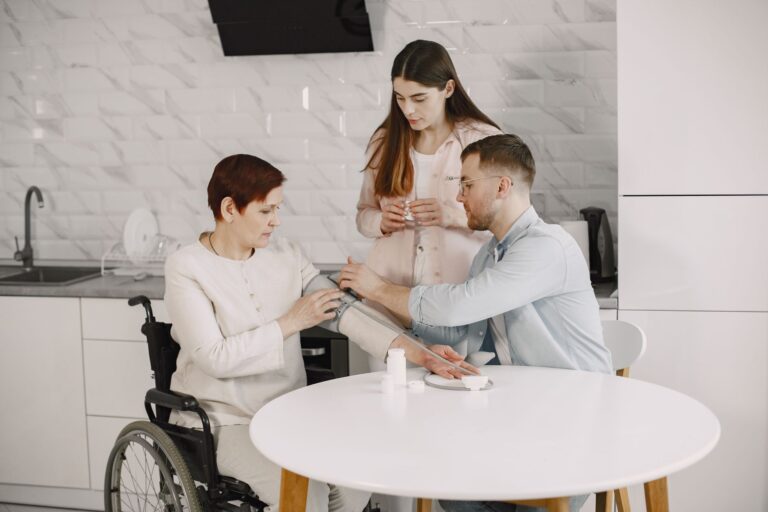
A brief moment of recognition—a short response suggesting someone registers a familiar person or cue—can be a genuine moment of connection in dementia care. Create space for it through calm, warm interaction, but do not treat it as proof of recovery. Dementia is not normal aging. Alzheimer's and related dementias progressively damage memory, thinking, reasoning, and daily function, so recognition may appear briefly, change, or remain difficult to interpret.
Medical information disclaimer: This article is for general educational purposes only and does not provide medical advice, diagnosis, or treatment. Always consult a physician or other qualified health professional about symptoms, medications, tests, or treatment decisions.
Table of Contents
- What does a moment of recognition mean?
- How can you make connection easier?
- Can familiar activities help?
- How should you respond to recognition?
- Where treatment fits—and does not
What does a moment of recognition mean?
Recognition might look like eye contact, a familiar word, a smile, or increased attention after hearing a name or song. These responses can matter without revealing exactly what the person remembers. Alzheimer's can affect word-finding, comprehension, attention, and the ability to filter background noise.
The NIH/NIA communication guidance therefore supports connection even when an ordinary conversation is no longer possible. Avoid interpreting a limited response as indifference. It may reflect difficulty understanding the question, finding words, or attending to a voice amid other sounds.
How can you make connection easier?
Start by reducing demands on attention. Turn down competing sound, face the person, make eye contact, and speak in a warm, unhurried voice.
For example, replace "Do you remember who I am?" with "Hi, I'm Ana, your daughter. I'm glad to see you." The second approach supplies helpful information and invites contact without making the person pass a test.
- Use the person's name.
- Introduce yourself instead of asking to be identified.
- Express one simple idea at a time.
- Pause long enough for a reply.
- Allow two-way conversation when possible.
Can familiar activities help?
Person-centered activities build the interaction around the individual rather than expecting the individual to follow a fixed exercise. Options include reminiscence, familiar music, cognitive activities, and multisensory stimulation. A 2022 systematic review and meta-analysis of 36 studies found immediate benefits from person-centered interventions.
However, results varied by the type of intervention and the outcome measured. Try one cue at a time and watch the person's response. A song may invite attention one day and receive no visible response another day; neither reaction proves whether a specific memory remains.
How should you respond to recognition?
Meet the response without interrogating it. If the person brightens, speaks, or reaches toward you, stay with the interaction rather than asking follow-up questions to confirm what happened.
Respond to the feeling you can observe: "It's good to be together," or "You seem pleased to hear that song." Empathy keeps the exchange centered on the person's present experience. If no response comes, do not turn the attempt into a performance review for either of you. Note which cue you used, how much background noise was present, and whether a simpler approach might be worth trying later.
Where treatment fits—and does not
A shared moment is not evidence that dementia has reversed. The FDA's warning about purported Alzheimer's cures states that no treatment has been shown to stop or reverse Alzheimer's progression. Medication for a related symptom has a different purpose.
On April 30, 2026, the FDA approved Auvelity—dextromethorphan hydrobromide and bupropion hydrochloride extended-release tablets—for agitation associated with dementia due to Alzheimer's disease in adults, not for restoring recognition or treating dementia broadly. According to the FDA approval notice, Auvelity performed better than placebo on caregiver-rated agitation scores in a five-week trial and delayed relapse in a withdrawal study. Its risks include suicidality, seizures, hypertension, and mania or hypomania.