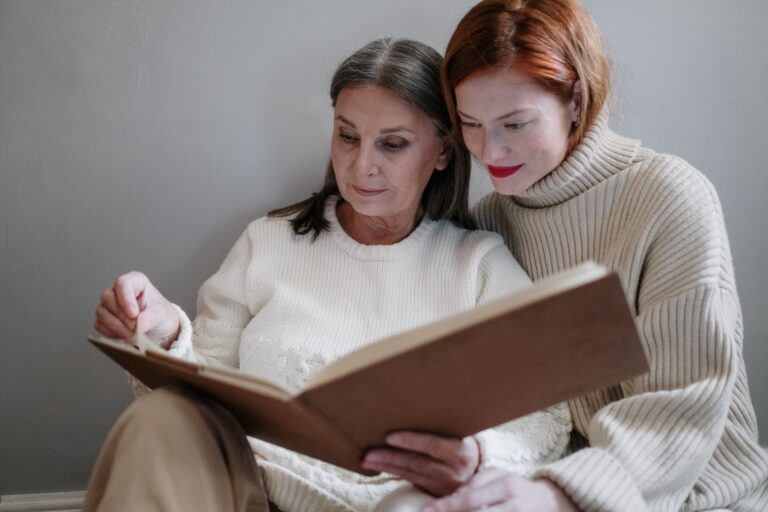
Childhood photo albums can give families a familiar, low-pressure way to connect when Alzheimer's makes conversation harder. Their value lies in supporting shared attention and conversation—not in restoring memory or testing what someone remembers. Alzheimer's progressively damages memory and thinking, and later changes can affect language, reasoning, and social behavior, according to the National Institute on Aging. A photograph can offer another starting point when words no longer come easily.
Medical information disclaimer: This article is for general educational purposes only and does not provide medical advice, diagnosis, or treatment. Always consult a physician or other qualified health professional about symptoms, medications, tests, or treatment decisions.
Table of Contents
- What can a childhood album offer?
- What does the evidence show?
- How should families choose photographs?
- How can you share an album without testing memory?
- When should you change course?
What can a childhood album offer?
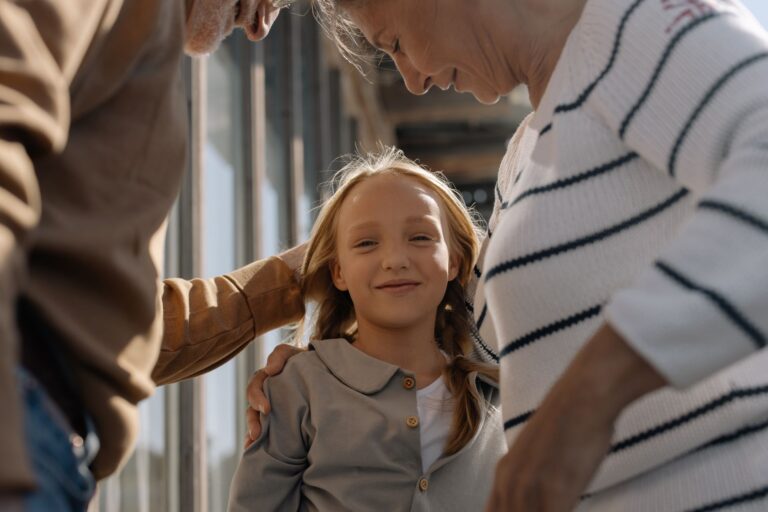
looking through photographs is a form of reminiscence: discussing past experiences with prompts such as pictures, music, videos, or familiar objects. It may happen one-to-one, in a group, or while creating a life-story book. The goal is connection in the present.
A person might describe a school uniform, smile at a familiar face, point to a house, or simply stay engaged with the page. Facial expressions and other nonverbal signals may become especially meaningful as speech declines. Childhood albums have personal and emotional significance for many families, but research has not established a special clinical benefit for childhood photographs. A picture from adulthood, a favorite song, or a familiar object may prompt a better response.
What does the evidence show?
The strongest relevant evidence concerns reminiscence therapy for dementia generally, not childhood albums specifically. A Cochrane review of 22 randomized trials involving 1,972 people found that group and community programs may produce small improvements in communication and interaction, including at follow-up. Results varied by setting and format, and benefits were inconsistent and usually small.
The review found only a very small immediate effect on cognition and no clear longer-term difference. Families should therefore treat an album as a communication aid, not as a treatment. A quiet shared moment can still matter even when it produces no accurate names, dates, or detailed stories.
How should families choose photographs?
Start with a small selection rather than a crowded album. Choose clear images with familiar people, places, celebrations, pets, clothing, or activities. Include different periods instead of assuming childhood photographs will work best.
Avoid pictures likely to cause distress, embarrassment, grief, or family conflict. When you are uncertain about an image, introduce it gently and watch the person's face, posture, and tone. Add simple labels if they help: "Your sister Ana," "The house on Pine Street," or "Summer picnic." Labels can reduce pressure on the person to retrieve names and provide caregivers with an easy conversation cue.
How can you share an album without testing memory?
Sit beside the person so you can view the photograph together. Reduce distractions, speak warmly, and leave enough time for a response.
The National Institute on Aging's caregiver guidance recommends avoiding memory tests, rephrasing when needed, and using simple yes-or-no or either-or questions. Try prompts such as: Avoid repeated questions such as "Don't you remember?" or "Who is that?" If an answer is inaccurate, correction is often unnecessary unless safety or an important decision depends on the facts. Follow the person's emotional response rather than turning the album into a quiz.
- "This looks like a school picture."
- "That is a bright red coat."
- "Was this taken at home or somewhere else?"
- "Did you enjoy picnics?"
- "Would you like another picture, or should we stop?"
When should you change course?
Stop or switch activities if the person becomes tense, withdrawn, frightened, angry, or tired. A photograph that comforts one day may be confusing on another, so a poor response does not mean the album has permanently lost its value. Keep sessions brief and flexible.
Try one picture, accept silence, and allow pointing, smiling, or touch to count as participation. This approach is especially relevant at home: the CDC reports that about 80% of adults with Alzheimer's and related dementias receive home care. If photographs repeatedly cause distress, use a different shared activity. Familiar music, conversation about an object, or simply sitting together may offer connection without demanding an answer.