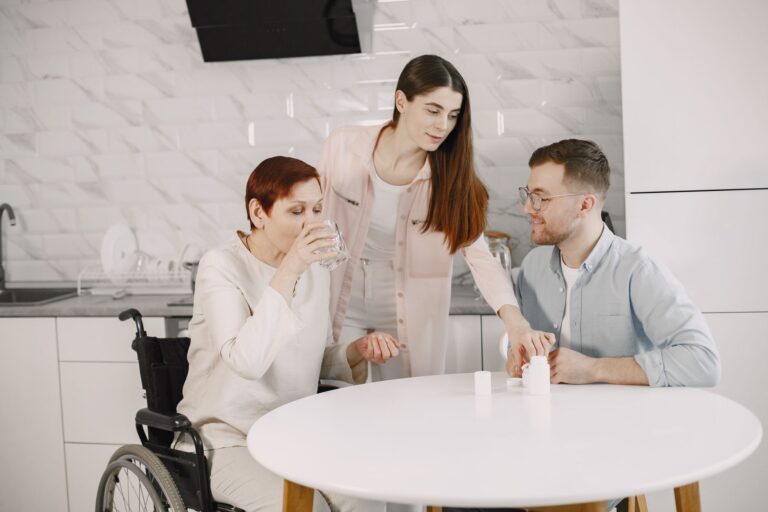
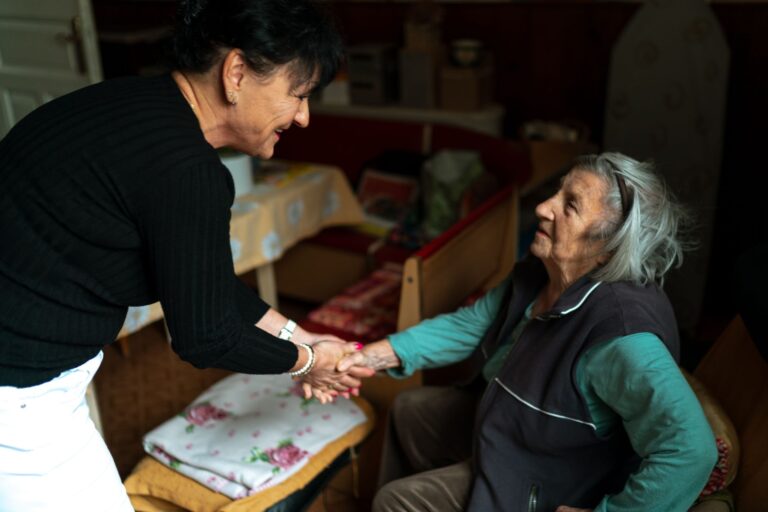
Old love letters can become family touchstones when Alzheimer's disease makes everyday conversation harder. Alzheimer's is a progressive brain disorder that damages memory and thinking and later affects language, so a familiar letter may offer a gentle way to connect without proving it restores memory. The value lies in the moment: hearing a familiar name, holding the paper, or sharing an emotion. Families should treat letters as personal conversation prompts, not a tested therapy or a measure of what someone still remembers.
Medical information disclaimer: This article is for general educational purposes only and does not provide medical advice, diagnosis, or treatment. Always consult a physician or other qualified health professional about symptoms, medications, tests, or treatment decisions.
Table of Contents
- How Alzheimer's changes conversation
- What can an old letter realistically do?
- How to share a letter without testing memory
- What if the letter brings distress or confusion?
- Preserve the letter and the person's privacy
How Alzheimer's changes conversation
A person may struggle to find words, understand their meaning, organize speech, or keep a train of thought. Background noise can also become harder to tolerate, although the timing and severity of these changes vary. These difficulties can hide what the person still wants to express.
Silence, an unfinished sentence, or an unexpected answer does not necessarily mean the letter has no meaning to them. The National Institute on Aging recommends making eye contact, allowing time for answers, and paying attention to facial expressions and body language. It also advises families to use simple choices, rephrase instead of correcting, and avoid baby talk or speaking around the person as though they were absent. See the NIA communication guidance for families.
What can an old letter realistically do?
Reading or discussing a letter resembles reminiscence therapy, which uses conversations and tangible prompts to explore past experiences. Distant memories may remain more accessible than recent ones for some people with dementia, making a letter a possible cue rather than proof of recovered memory. A Cochrane review covering 22 randomized trials and 1,972 participants found small, setting-dependent communication benefits from broader reminiscence work. Group and community settings appeared more promising than individual or care-home formats.
The review did not test old love letters specifically, so its findings cannot establish that letters improve communication. The same Cochrane evidence review found no important overall immediate improvement in quality of life. Cognitive gains were very small and may not have been meaningful, and joint sessions showed a possible small increase in caregiver anxiety. A separate, small nonrandomized study found improved verbal-fluency scores among people with mild or moderate dementia who received life-story books. That study of 43 intervention and 32 control participants supports further research into personal written materials, but it does not prove that love letters provide the same benefit.
How to share a letter without testing memory
Choose a quiet time and present the letter as an invitation. "Would you like me to read this?" preserves more control than "Do you remember who wrote this?" Keep the exchange simple: Do not turn the exchange into a quiz.
Questions such as "What year was this?" can shift attention from connection to performance. A comment—"This paper has been kept for a long time"—leaves more room for the person to respond in their own way.
- Show one letter rather than a large bundle.
- Read a short passage slowly, then pause.
- Offer choices such as, "Should I keep reading or stop?"
- Rephrase a question if it causes difficulty.
- Accept a gesture, expression, or brief answer as participation.
What if the letter brings distress or confusion?
Love letters may contain private, complicated, or painful history. Before sharing one, consider whether its contents involve bereavement, separation, conflict, infidelity, or information the person would not want discussed with others. Watch the person rather than pursuing the story. If their face, posture, voice, or words suggest discomfort, pause and offer a simple choice: continue, put it away, or do something else.
Do not insist that your version of the past is correct. Caregivers should notice their own reactions as well. A letter can carry grief for the reader, especially when conversation no longer unfolds as it once did. Stopping is reasonable when the exchange feels upsetting or exhausting; reminiscence is not disease-modifying care and does not need to be completed.
Preserve the letter and the person's privacy
With the person's agreement when possible, store the original safely and use a copy for repeated handling. Add basic context separately—names, an approximate date, and why the letter matters—without writing on the original.
Ask before reading intimate passages aloud or sharing them with relatives. A family may treasure the document, but ownership of a shared history does not erase the writer's or recipient's dignity and privacy.