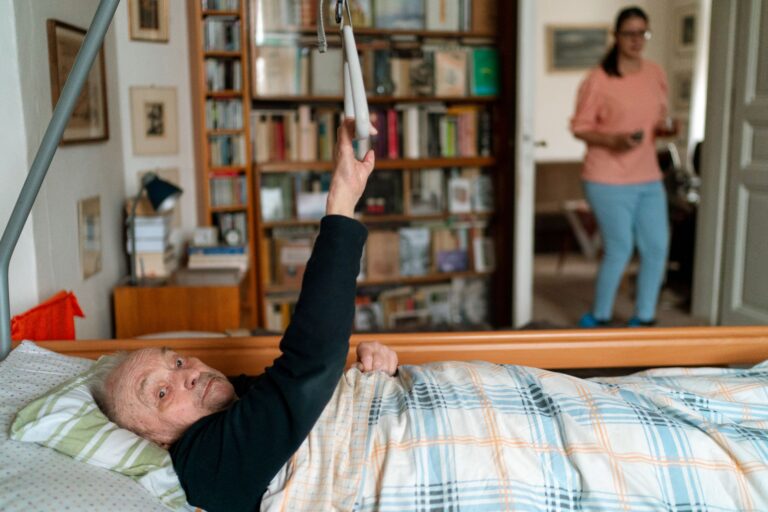
Your mother was always the life of the party—quick with a joke, generous with compliments, eager to hear about everyone’s day. Now she sits quietly for hours, sometimes snapping at family members over minor things. These personality changes aren’t character flaws or stubbornness; they’re direct consequences of how dementia damages the brain’s frontal lobe and limbic system, which govern emotion regulation, impulse control, and social behavior. In the early stages, someone might become withdrawn or unusually irritable. As the disease progresses, changes can become more pronounced—a naturally cautious person might become reckless, or someone naturally reserved might become inappropriately verbal.
The confusion many families feel comes from expecting the person they know to remain consistent. But dementia doesn’t just affect memory; it fundamentally alters the neural pathways responsible for personality expression. A person with Alzheimer’s disease might lose the filters that once kept their thoughts private, or lack the emotional context needed to understand why certain comments hurt others. This happens not because the person has “changed as a person” in a moral sense, but because the biological substrate generating their behavior has been compromised. Understanding this distinction is essential for both caregivers and family members learning to adapt.
Table of Contents
- How Does Brain Damage Trigger Personality Shifts?
- The Frontal Lobe’s Role in Emotional Control and Social Behavior
- Emotion Recognition and Social Memory Loss
- The Difference Between Intentional Behavior and Brain-Driven Behavior
- Sundowning, Aggression, and Behavioral Complications
- When Personality Change Signals a Specific Dementia Type
- The Cumulative Impact of Infection, Delirium, and Medication
- Frequently Asked Questions
How Does Brain Damage Trigger Personality Shifts?
The personality changes you observe are rooted in specific brain regions. The prefrontal cortex, which sits just behind the forehead, is responsible for decision-making, social awareness, and self-control. The temporal lobes, including areas deep in the brain’s limbic system, process emotions and social memory. When dementia damages these regions, the result is predictable: people lose their ability to regulate emotions, read social cues, and inhibit socially inappropriate behavior. Someone might become verbally aggressive without the former embarrassment that would have stopped them. Another person might laugh at sad news, not because they’re cruel, but because the connection between the emotional content of what they’re hearing and their own emotional response has been severed.
A concrete example: an accountant with a forty-year reputation for precision and honesty might begin accusing family members of theft—not out of malice, but because their brain can no longer reliably distinguish between real memories and confabulated ones, and the executive function that would normally prompt skepticism about such thoughts is offline. The behavior looks intentional, but the biological mechanism driving it is involuntary. Different dementia types damage different regions first. Frontotemporal dementia, which attacks the frontal and temporal lobes early, often causes dramatic personality change—sometimes within a year. Vascular dementia, caused by small strokes, might cause sudden shifts corresponding to specific locations of brain damage. Lewy body dementia can trigger obsessive behaviors or unprovoked anger. Alzheimer’s, the most common form, typically affects memory first but eventually damages the same personality-regulating regions, just on a slower timeline.
The Frontal Lobe’s Role in Emotional Control and Social Behavior
The frontal lobe is essentially the brain’s executive assistant. It stops you from saying hurtful things at the wrong moment, reminds you why you love someone even when they’re frustrating, and keeps you following social rules even when breaking them might feel good in the moment. Dementia degrades this system progressively. Early on, the person might feel frustrated and struggle to express themselves clearly but still maintain some self-awareness. As the disease advances, that metacognitive layer vanishes. The person no longer recognizes that their behavior is inappropriate or that others are upset. One limitation worth noting: family members sometimes assume that if the person can recognize themselves in a mirror or remember one grandchild’s name, their frontal lobe function must be preserved.
This is a dangerous misunderstanding. Memory and executive function are separate systems. Someone can have crystalline memory for distant events while having almost no impulse control. Conversely, someone can have intact emotional warmth while being unable to form new memories. Assessing where the damage is requires looking at patterns of behavior and change, not isolated cognitive tasks. The tradeoff here is that frontal lobe damage often develops slowly enough that families initially blame the person’s character or emotional choices before recognizing the neurological cause. A woman who becomes increasingly paranoid over six months might be assumed to be “going through something” emotionally before anyone considers that her brain’s threat-detection system has misfired. By the time the diagnosis comes, family relationships may have already been strained by conflict based on misattribution.
Emotion Recognition and Social Memory Loss
beyond impulse control, dementia often damages the brain’s ability to recognize and interpret emotions in others—a capacity called emotional theory of mind. A person with this damage might not recognize sadness in a family member’s voice, so they make jokes at an inappropriate moment. They’re not being cruel; their brain literally isn’t receiving the emotional signal. Similarly, the brain’s social memory—the accumulated knowledge of relationships, shared history, and unspoken rules within a family—gradually erodes. The person might treat an adult child like a stranger or confuse a spouse’s identity entirely. A specific example: a grandfather with mid-stage dementia was told his grandson had broken his arm. The grandfather’s response was to become irritated, because his brain had lost the contextual knowledge that the grandson was young, vulnerable, and deserving of sympathy.
Instead, his brain defaulted to a more primitive rule: “Broken arm equals weakness equals why are you complaining to me?” The emotional and social context that would have generated compassion had been deleted. To observers, this looked like callousness. To the brain, it was simply a failure to access the necessary data. Some people with dementia actually become more emotionally expressive—sometimes inappropriately so. They might cry at commercials or become passionately angry about trivial matters. This happens when the frontal lobe’s braking system fails but the limbic system, which generates raw emotion, is still partially intact. The person experiences emotions more intensely and has less ability to modulate them, leading to what appears as emotional volatility or instability.
The Difference Between Intentional Behavior and Brain-Driven Behavior
One of the hardest psychological adjustments for family members is learning to stop interpreting dementia-related behavior as intentional. When your loved one accuses you of stealing, or rejects your attempt to help with personal care, or becomes hostile during a task you’re trying to complete, every instinct screams that they’re choosing to hurt you or being stubborn. But the vast majority of dementia-related personality change and behavior isn’t chosen. It’s the output of a malfunctioning brain. This has profound caregiving implications. Arguing with someone about whether something happened the way they remember it is ineffective and exhausting, because the person genuinely experiences their false memory as true.
Their brain is producing it. Similarly, trying to convince someone through logic that they should let you help with hygiene won’t work if their brain’s threat-detection system is misfiring and reading your approach as dangerous. The solution isn’t stronger argument; it’s environmental change, redirection, or timing adjustment—working around the malfunction rather than against it. The comparison is helpful here: imagine if your loved one had suffered a stroke that left them with permanent slurred speech. You wouldn’t get frustrated and tell them to “just speak more clearly.” You’d adjust your listening, speak more slowly in response, and accept that this is their new normal. Personality change due to dementia demands the same fundamental acceptance and accommodation, except the changes are often less visible and more emotionally charged.
Sundowning, Aggression, and Behavioral Complications
As dementia progresses, behavioral symptoms sometimes emerge that go beyond personality change into active distress or danger. Sundowning—increased confusion and agitation in late afternoon or evening—affects many people with dementia. Aggression, either verbal or physical, can develop even in people who were previously gentle. Obsessive behaviors, repetitive questioning, and wandering become common. These aren’t personality shifts; they’re symptoms of brain deterioration reaching critical regions involved in circadian rhythm regulation, pain perception, and motor control. The warning here is crucial: caregivers often interpret aggressive behavior as directed at them personally and internalize it as rejection.
A person with dementia who strikes out during bathing isn’t attacking their caregiver; they’re responding to genuine fear or physical discomfort that their damaged brain is translating into a threat response. Recognizing this is essential for preventing caregiver burnout and enabling empathetic care even in difficult moments. Another limitation: there’s no reliable medication to reverse personality change or stop behavioral progression. Antipsychotics are sometimes prescribed to manage severe agitation, but they carry significant risks for falls, stroke, and accelerated cognitive decline in people with dementia. They also often sedate the person rather than genuinely treating the underlying brain problem. Behavioral modification—finding what calms or triggers the person and structuring the environment accordingly—is often more effective than drugs, but it requires patience and attention that stressed caregivers sometimes lack.
When Personality Change Signals a Specific Dementia Type
Different forms of dementia have distinctive personality signatures. Frontotemporal dementia is notorious for causing inappropriate sexual comments, loss of empathy, or sudden loss of social inhibition—sometimes so dramatic that family members seek psychiatric rather than neurological help initially, because the behavior looks like a psychological break rather than a medical one.
Behavioral variant frontotemporal dementia specifically attacks personality and behavior first, leaving memory relatively intact for much longer than in Alzheimer’s. Lewy body dementia often produces visual hallucinations and can trigger strong emotional responses to those hallucinations—not delusions or false beliefs, but genuine perceptual experiences that the person’s brain insists are real. Someone might become terrified because they see shadowy figures in the room, and their emotional response is appropriate to what their brain is telling them is present.
The Cumulative Impact of Infection, Delirium, and Medication
It’s essential to recognize that dementia-related personality change can be dramatically worsened—sometimes reversibly—by factors outside the dementia itself. A urinary tract infection can cause acute behavioral change and confusion in an older person with dementia. Delirium, often triggered by infection, medication change, or dehydration, can produce personality changes completely distinct from the baseline dementia-related changes and sometimes partially reversible if the underlying cause is treated. A person on sedating medications might become withdrawn or emotionally flat, not because of the dementia, but because of the drugs. Before accepting a personality change as permanent, always investigate medical causes.
A sudden spike in aggression might indicate pain from an untreated condition. Abrupt withdrawal might be delirium from an infection. Persistent confusion about time and place worsens with many common medications, from blood pressure drugs to sleep aids. If the change came on suddenly over days or weeks, suspect delirium or medical causes before assuming it’s simple dementia progression. If it’s been gradual over months or years, dementia progression itself is the likely driver.
- —
Frequently Asked Questions
Can medication stop personality changes from dementia?
Medication cannot reverse dementia-caused personality changes, but it can sometimes manage specific symptoms like severe agitation or aggression. Antipsychotics carry risks, so behavioral approaches—changing the environment, finding triggers, adjusting routines—are often tried first.
Is my loved one’s hostility toward me a sign they don’t love me anymore?
No. Dementia-related hostility is a symptom of brain damage, not a choice or reflection of their actual feelings. The brain regions that generate and regulate emotion have been compromised; the behavior is involuntary.
Why does my mother act like a completely different person, but my father with dementia seems mostly like himself?
Different brain regions are affected at different rates depending on the dementia type and individual variation. Damage to the prefrontal cortex and limbic system causes dramatic personality shifts. Damage starting in the hippocampus, as in typical Alzheimer’s, leaves personality relatively intact longer.
Could my loved one’s personality change be due to something other than dementia?
Yes. Delirium from infection, stroke, medication side effects, or depression can cause acute personality change and is sometimes reversible. Always investigate sudden changes; they may have a treatable cause outside the underlying dementia.
How do I stop taking personality changes personally when my loved one rejects my help or lashes out?
Remind yourself that the behavior is a symptom of brain damage, not a choice or reflection of their regard for you. Seek support through support groups or therapy so you can process your own emotions without burdening your loved one.