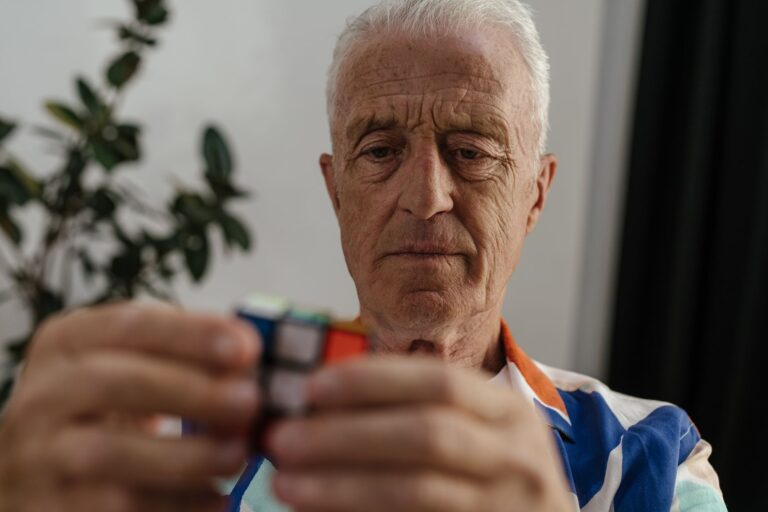
Dementia care needs shift dramatically as the disease progresses from early awareness to severe cognitive decline. In the mild stage, a person might repeat questions and need reminders for appointments, but they can still cook meals, manage medications, and recognize family members. By severe dementia, the same person may lose the ability to swallow, communicate, or recognize anyone around them—requiring 24-hour skilled nursing care with feeding tubes, catheter management, and constant monitoring for aspiration and infection.
The trajectory isn’t gradual; it’s marked by distinct thresholds where old strategies stop working and families must suddenly restructure the entire care environment overnight. These changes affect far more than just memory. They reshape what caregivers actually do hour-to-hour, what medications are used, whether the person needs supervised housing, and when paid help stops being optional and becomes essential for survival. A person who wanders at night but can still bathe themselves needs different equipment, different staffing, and different safety measures than someone who can no longer sit up without assistance.
Table of Contents
- What Changes in Daily Memory and Living Skills During Mild Dementia?
- How Do Behavioral and Physical Care Shifts Emerge in Moderate Dementia?
- What Physical Care Demands Appear in Severe Dementia?
- When Should Professional In-Home Care or Facility Placement Begin?
- How Does Caregiver Burden and Support Needs Escalate Across Stages?
- How Should Medical Care and Healthcare Coordination Change?
- Which Specific Care Skills Shift From Family Management to Professional Nursing?
- Frequently Asked Questions
What Changes in Daily Memory and Living Skills During Mild Dementia?
Early-stage dementia typically presents as forgetfulness that disrupts daily routines but doesn’t yet require physical assistance. A person may forget conversations from earlier that morning, struggle to balance a checkbook, or get lost driving to familiar places. They can still feed themselves, use the toilet independently, and initiate activities—though they may repeat the same activity or ask the same question multiple times. At this stage, the person is often still aware that something is wrong, which can trigger anxiety, depression, or defensive behaviors like denying the diagnosis.
The care shift in mild dementia is mostly supervision and external reminders. Families typically handle this by creating written schedules, setting phone alarms for medications, placing reminder notes on the refrigerator, or checking in daily via phone or visit. For example, a 72-year-old man with mild dementia might still live alone with his daughter calling him each morning to remind him to take his blood pressure medication and eat breakfast, then again in the evening to confirm he’s locked the doors. This strategy works for months or even years—until the day he forgets to turn off the stove, or he takes his blood pressure medication twice because he forgot he already took it that morning. At that point, the daily check-in is no longer enough.
How Do Behavioral and Physical Care Shifts Emerge in Moderate Dementia?
Moderate dementia introduces a new problem: the person’s judgment and impulse control deteriorate faster than their physical abilities. They might have the strength to walk, but not the safety awareness to avoid wandering into traffic. They can still feed themselves, but will eat spoiled food from the refrigerator or forget they already ate and demand another meal. This stage is often called “the hardest stage” by family caregivers because the person looks physically healthy but their behavior becomes unpredictable and sometimes dangerous. Physical care demands begin emerging in moderate dementia. Incontinence becomes common, requiring the use of adult diapers, frequent clothing changes, and attention to skin care to prevent breakdown. Sleep cycles reverse; many people sleep all day and are awake and restless at night, meaning caregivers can no longer sleep through the night themselves.
Agitation and aggression may emerge, especially when the person is confused, scared, or frustrated by not understanding what’s happening around them. Bathing often becomes a conflict, because the person no longer understands why they need to bathe and may interpret washing as a threat. A daughter helping her mother shower might be met with yelling, hitting, or complete refusal—a situation that requires patience and often the presence of two caregivers instead of one. A critical limitation at this stage: medication use becomes risky if unsupervised. The person might refuse medications they previously took willingly, hoard pills, or ask for medication they’ve already taken. All medications must now be managed directly by the caregiver, with each dose given and verified taken. This is the stage when most families move their loved one into a senior community or hire in-home caregivers to handle the 16+ hours per day of supervision needed.
What Physical Care Demands Appear in Severe Dementia?
Severe dementia strips away nearly all self-care ability. The person can no longer walk safely, feed themselves, or use the toilet. They may not recognize family members or respond to conversation. Many lose the ability to chew and swallow food safely, which introduces the risk of aspiration—food or liquid entering the lungs instead of the stomach. This is one of the most serious changes because it can lead to aspiration pneumonia, a frequent cause of death in severe dementia. When swallowing becomes unsafe, families face a decision: pursue a feeding tube (PEG tube inserted directly into the stomach) or transition to comfort feeding with smaller portions that are easier to manage.
Physical care routines that take an hour or less in moderate dementia now consume most of the caregiver’s day. Transferring the person from bed to wheelchair requires mechanical lifts in most cases, because lifting a 160-pound person by hand several times daily risks injury to both the caregiver and the person. Hygiene care—bathing, toileting, dressing—may take 90 minutes when the person cannot cooperate and requires maximum assistance. Many people develop contractures, where their limbs become permanently stiff or bent from immobility, which actually increases the physical effort needed to move them. Medications multiply at this stage; in addition to the Alzheimer’s or dementia medication, there are often painkillers for arthritis, medications for high blood pressure, drugs to manage behavioral symptoms, and treatments for any infections that develop. Managing this medication load safely requires a trained caregiver or nurse.
When Should Professional In-Home Care or Facility Placement Begin?
The transition from family-only caregiving to paid care assistance rarely happens because caregivers think “this is a good time.” It happens because unpaid family caregivers reach physical or emotional exhaustion, miss work and lose income, or face a crisis like a fall that suddenly requires more help than they can provide. Research shows that family caregivers of people with moderate to severe dementia report stress levels comparable to people with major depression; many develop health problems of their own and some die before the person with dementia does. The practical threshold for paid help is usually when one caregiver, working alone, cannot safely complete the daily care tasks.
If a spouse is helping their partner bathe and feels their back strain with each transfer, or if a daughter is waking up five times per night to prevent her mother from falling, professional care becomes necessary—not optional. A part-time caregiver (20-30 hours per week) can often manage moderate dementia in a home setting, handling bathing, meal prep, and medication management while the family member handles supervision and social engagement. Severe dementia typically requires either a full-time live-in caregiver (costing $4,000-$8,000 per month in most regions) or 24-hour facility care. The tradeoff is significant: facility care removes the burden of hands-on care from family members and provides trained staff, but it also means the person is no longer in their own home and the family loses the role of primary caregiver.
How Does Caregiver Burden and Support Needs Escalate Across Stages?
Caregiver burden follows a steep curve. In mild dementia, the emotional burden is often heaviest because families are processing denial, grief, and the loss of the person they knew—while the actual physical work is still minimal. Many people at this stage attend support groups, read books about dementia, and try to learn everything they can about the disease. In moderate dementia, emotional burden decreases somewhat as families accept the diagnosis, but physical and time burden explodes. The caregiver is now managing toileting, hygiene, behavioral issues, and overnight supervision, often while also working or managing other family responsibilities. By severe dementia, caregiver burden shifts again. The emotional component may ease because the person with dementia is largely unresponsive, so there are fewer frustrating conversations or behavioral conflicts to manage.
But the physical demands are at their peak. A 55-year-old son providing care for his father with severe dementia might be transferring him 8-10 times daily, managing feeding with a tube, administering medications, preventing infections, and performing wound care—work that requires nursing knowledge and physical strength. If this son is doing this alone, he has nearly zero free time and faces serious health risks from the physical strain. A critical warning: caregiver isolation is common in severe dementia. The person being cared for is no longer able to engage in meaningful conversation, go to doctor’s appointments with you, or do activities together. Family members often stop visiting because they find it painful to see their loved one so diminished, leaving the primary caregiver alone. Depression and suicidal thoughts among dementia caregivers are well-documented but rarely discussed openly. Mental health support for the caregiver—whether through support groups, counseling, or respite care that gives them breaks—is not a luxury but a necessity for long-term sustainability.
How Should Medical Care and Healthcare Coordination Change?
Healthcare needs and decision-making change fundamentally across dementia stages. In mild dementia, the person can usually communicate their symptoms to a doctor and make medical decisions with input from family. By moderate dementia, the person may not be able to describe pain or remember why they’re in a doctor’s office, requiring a caregiver to be present at every appointment to provide history and context. In severe dementia, the person cannot participate in any medical decisions; all choices fall to whoever has legal authority—typically a healthcare proxy or power of attorney.
This is when advance directives become critical. Decisions about CPR, feeding tubes, antibiotics for infections, and hospitalization need to be made while the person still has capacity or made by a designated representative once they don’t. Without clear documentation, families often face wrenching choices in crisis moments. Should a person with severe dementia and aspiration risk be hospitalized for pneumonia, given antibiotics, and treated aggressively? Or is comfort care—treating pain but not pursuing aggressive interventions—more aligned with the person’s values? These are medical and philosophical questions, but they’re also legal questions that require proper documentation to answer without guilt or family conflict.
Which Specific Care Skills Shift From Family Management to Professional Nursing?
In mild dementia, medication management is the most technical task, and it typically stays at the level of “ensure they take what the doctor prescribed.” By severe dementia, medication management includes recognizing side effects (some dementia medications can cause dangerous falls), reporting interactions, and adjusting schedules around feeding or toileting. More critically, nursing tasks like wound care, infection management, tube feeding, catheter care, and pain assessment become necessary and require training. Recognizing pain in severe dementia is a concrete example of how care knowledge must change. A person with severe dementia cannot say “my hip hurts” or “I have a headache.” Instead, caregivers must recognize that increased agitation, refusal to move, or behavioral changes might signal pain.
Someone who suddenly becomes uncooperative during transfer might have a fracture. Fever, unusual breathing, or behavioral changes might indicate an infection. Family caregivers can learn to recognize these signs, but doing so requires education and often involves trial-and-error—which can mean missed diagnoses or inappropriate treatments. Professional caregivers trained in geriatric dementia care recognize these patterns faster and respond more appropriately.
- —
Frequently Asked Questions
How long does each stage of dementia last?
Mild dementia typically lasts 2-7 years, moderate dementia 2-10 years, and severe dementia 1-3 years. The timeline varies widely based on the person’s age, overall health, and the specific type of dementia (Alzheimer’s, vascular, Lewy body, frontotemporal).
At what point should someone with dementia stop driving?
This is highly individual, but most doctors recommend stopping when the person becomes confused during familiar drives, misses traffic signals, or shows poor judgment behind the wheel. In mild dementia, this might be after a near-accident or getting lost on a routine drive. By moderate dementia, driving is typically unsafe, even if the person still wants to drive.
Is a feeding tube necessary when someone can’t swallow safely?
Not automatically. Some families choose to continue feeding orally in smaller amounts, accepting the risk of aspiration. Others use a feeding tube to extend life and ensure adequate nutrition. There’s no single right answer; it depends on the person’s values, prognosis, and family preferences. The important step is making this decision before a crisis forces it.
Can a family member provide all care at home for someone with severe dementia?
Physically, it’s possible with training, but it’s not recommended long-term without support. The physical demands of transferring, toileting, and managing 24-hour care put the caregiver at high risk of injury and health problems. Most experts recommend at least part-time paid help or respite care.
How much does dementia care cost?
In-home care averages $4,000-$8,000 per month for full-time assistance; assisted living facilities range from $3,500-$6,000 per month; memory care or skilled nursing facilities range from $6,000-$15,000 per month depending on location and care intensity.
What’s the difference between mild cognitive impairment and dementia?
Mild cognitive impairment (MCI) is measurable decline in memory or thinking that doesn’t interfere significantly with daily functioning. Dementia involves cognitive decline severe enough to interfere with work, social activities, and self-care. Some people with MCI progress to dementia; others remain stable for years. —