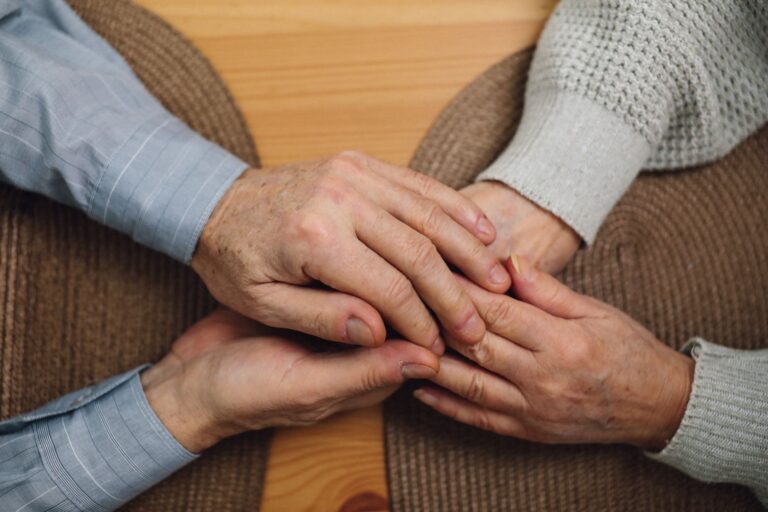
Death with dignity in dementia care means allowing a person to die naturally—without needless medical interventions that prolong suffering without restoring meaningful function—while maintaining their comfort, respect, and sense of self throughout decline. It recognizes that a “good death” for someone with advanced dementia is not one that avoids death itself, but one that avoids unnecessary pain, intubation, hospital transfers, or aggressive treatments that would be confusing, frightening, or incompatible with the person’s values. When Joan H., a 78-year-old with late-stage Alzheimer’s disease, developed pneumonia in her care facility, her family made the difficult choice to pursue comfort measures—warmth, pain relief, gentle mouth care—rather than antibiotics and a hospital ICU stay where she would be separated from her bed, her caregivers, and any sense of continuity.
This goal becomes central in dementia care precisely because the disease often strips away cognition before it strips away the body’s capacity to breathe, eat, and linger. A person with advanced dementia cannot tell you what they want, cannot consent to procedures, and often cannot understand why strangers are putting tubes in their nose or arms in restraints. Death with dignity, then, is partly a practical acknowledgment: you cannot restore someone’s mind, but you can control what happens to their body, and you can choose comfort.
Table of Contents
- What Does Dignity Mean When the Mind Is Gone?
- When Medical Care Becomes Harm
- The Role of Prior Wishes and Substitute Judgment
- Supporting Dignified Dying: What Comfort Care Actually Involves
- Barriers to Achieving Dignity: Guilt, Uncertainty, and System Defaults
- Hospice and Palliative Care: Tools for Dignity
- The Practical Meaning of Personhood Until the End
What Does Dignity Mean When the Mind Is Gone?
Dignity in late dementia is not about autonomy in the traditional sense—the person cannot make decisions. It is about maintaining their humanity: continuing to address them by their name, protecting their privacy, avoiding rough handling, and making choices based on what will keep them comfortable and calm rather than what will extend their measurable lifespan. A person who cannot recognize their children still recognizes kindness, stillness, and pain. Dignity means acting as though they matter—because they do—even when there is no one inside to know you are doing so. This matters because the alternative can be brutal.
A person with advanced dementia admitted to a hospital for aspiration pneumonia might be placed in a gown, hooked to monitors, given IV antibiotics, and possibly intubated if breathing worsens. They cannot understand why. They experience the tube, the noise, the strange environment, and the constant handling as assault. Even if antibiotics work and they survive, they leave the hospital more frail, often returning within weeks with another infection. In contrast, comfort-focused care in a familiar setting—often a hospice or care home—means no tubes, no hospitals, but also sometimes no life-extension. For a person already in cognitive freefall, that trade is often the dignified one.
When Medical Care Becomes Harm
One of the hardest truths in dementia care is that modern medicine can harm people it is meant to help. Aggressive end-of-life interventions—CPR, artificial breathing, feeding tubes, hospital admission for minor infections—can add suffering without adding life quality. A 2019 study in the Journal of Palliative Medicine found that people with advanced dementia who were hospitalized in their final month had more pain, more medications, and shorter survival than those who remained in place-based care with comfort focus. The hospital did not save them; it complicated their death.
Feeding tubes illustrate this contradiction sharply. When swallowing becomes difficult in advanced dementia, a tube into the stomach seems like a lifeline—surely we should feed people. But research shows that tube feeding does not prevent aspiration (food still goes into the lungs), does not extend life meaningfully in advanced dementia, and often leads to restraints (because people pull the tubes out), infection, and discomfort. Some facilities place feeding tubes reflexively, without discussing whether the person would have wanted this, and families often feel guilty saying no. Yet allowing natural decline—where a person eats less, slowly, and may eventually stop—is often more consistent with dignity and comfort.
The Role of Prior Wishes and Substitute Judgment
Because people with advanced dementia cannot speak for themselves, the goal of dignified dying rests heavily on knowing what they would have wanted before they could not speak. An advance directive, a conversation between a person and their family or doctor conducted in early or middle dementia, creates a blueprint for what kind of care honors their values. Someone might say: “If I can’t recognize people or feed myself, I don’t want to be hospitalized. I want to be kept comfortable and with my family.” The problem is that few people have these conversations.
Many wait until dementia has already taken the ability to think through such questions clearly. Without an advance directive, family members and doctors must make a “best interest” judgment: What kind of death would this person have chosen if they could choose? This requires knowing the person deeply—their fears, their values, what they found undignified. A person who spent 50 years maintaining independence might find dependence more horrifying than death. Another might desperately cling to any extension of life. Without clear guidance, medical culture defaults to intervention—doing everything—which can betray the person’s actual wishes.
Supporting Dignified Dying: What Comfort Care Actually Involves
Comfort-focused care in advanced dementia is not passive or neglectful; it is active and thoughtful, simply directed toward different goals. Instead of fighting decline, it guides the person through it with attention to pain, breathing, anxiety, and presence. This might include: managing pain with regular medication (morphine, which is standard in hospice and does not hasten death when used correctly), addressing constipation and nausea, keeping skin clean and dry, managing fever with cooling (not antibiotics), using anti-anxiety medication if the person is distressed, and ensuring someone familiar is nearby. Consider two scenarios: An 82-year-old with advanced Alzheimer’s develops a fever in a care home.
In an intervention-focused approach, she is rushed to the ER, given blood cultures and antibiotics, admitted to a hospital where she shares a room with a stranger, is confused and frightened by the new environment, and—if the infection is serious—may be intubated. In a comfort-care approach, she stays in her home room with her daughter nearby, receives medication for fever (acetaminophen, cool cloths), pain relief if needed, and unhurried care. She is less frightened, in a place she knows, with someone she loves. If she recovers, she is still in her bed. If she does not, her death happens at home, not in an ICU.
Barriers to Achieving Dignity: Guilt, Uncertainty, and System Defaults
Families often struggle with the choice to prioritize comfort over life-extension, even when it aligns with the person’s stated wishes. The barrier is not medical—it is emotional and cultural. Guilt is powerful: “If we don’t do the antibiotics, we’re giving up.” “Won’t people think we just let her die?” Some family members fear that refusing hospitalization or feeding tubes will be seen as euthanasia or abandonment. Others wrestle with the possibility that they are making the wrong call.
Healthcare systems reinforce this struggle by defaulting to intervention. A doctor might say, “We should get her to the hospital” without asking whether hospitalization serves her goals. Nursing homes sometimes have policies that require hospital transfer for certain conditions, limiting the family’s choice to keep someone in place. Hospitals are structured for intervention—they have machines, specialists, protocols—not for guiding people gently through decline. A person arriving at an ER with pneumonia enters a system optimized to treat pneumonia, not to ask whether treating it serves that specific person’s larger goal.
Hospice and Palliative Care: Tools for Dignity
Hospice is one structured pathway toward death with dignity, though it arrives late for many dementia patients. Hospice provides access to pain specialists, medications, and staff trained to support comfort dying. It also offers something else: permission. Families in hospice are explicitly told that extending life is not the goal, which can lift guilt. Doctors in hospice do not order feeding tubes or aggressive treatments; they focus on medication, positioning, and emotional support.
The limitation is timing. Many families do not choose hospice until days or weeks before death, after the person has already endured hospital transfers and failed treatments. Earlier palliative care—starting in middle dementia, before a crisis—can sketch out a gentler path. Some advanced dementia units and memory care facilities have adopted palliative approaches without calling them hospice: comfortable rooms, families allowed to stay all hours, morphine available, no transfers. These settings demonstrate that dignity does not require specialized hospice; it requires a different set of priorities.
The Practical Meaning of Personhood Until the End
Honoring dignity in death means continuing to treat the person as a person, not a body or a problem. This takes concrete forms. Using the person’s name instead of “resident” or “honey.” Asking permission before touching them, even though they cannot answer. Choosing clothes they wore when well. Continuing to wash and groom them with the same care as when they were conscious and aware. Playing music they loved. Sitting with them in silence.
A 75-year-old man in late dementia no longer recognizes his wife, but she reads to him each day from the novel he loved in middle age. He does not understand the words, but her voice is familiar. Another family wraps their father’s favorite blanket around him each evening, something he always wanted. These practices are often dismissed as symbolism, but for the person dying, they are the entire remaining world. The symbolism is the point. When a person cannot think, cannot plan, cannot communicate, what remains of their humanity lives in how they are handled and spoken to. That is where dignity lives.
- —