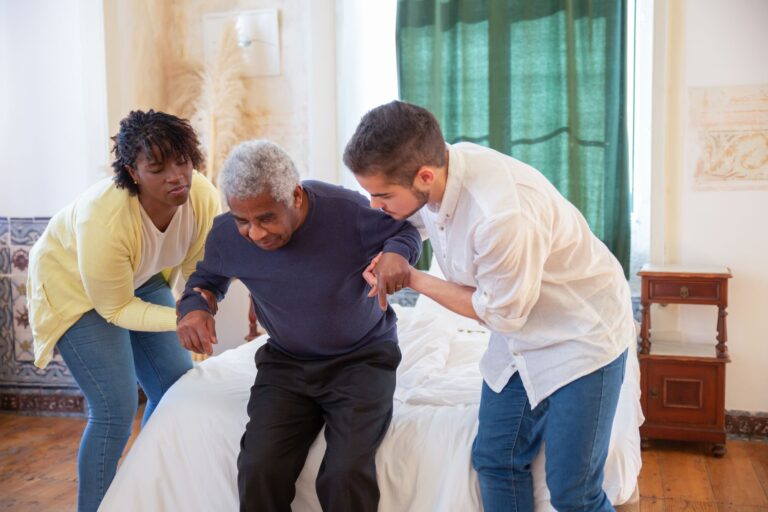
Human oversight remains essential in dementia care because the cognitive decline characteristic of the disease creates blind spots that automated systems, checklists, and even the patients themselves cannot reliably catch. A person with moderate dementia may confidently report that they’ve taken their medication when they haven’t—or taken it twice. They may describe symptoms in ways that obscure their actual severity. A caregiver or clinician observing the person over time notices subtle changes in gait, speech patterns, mood, and functional ability that tell a different story. These observations, made by someone who knows the patient’s baseline, form the foundation of safe, effective dementia care. A healthcare provider reviewing lab results without context misses the significance of a weight loss that happened between appointments.
A family caregiver watching a parent struggle to find words notices the difference between normal aging and progressive language decline. The reason human oversight matters is not because dementia care is simple—it’s because dementia care is inherently unpredictable. The disease affects each person differently. Medications interact with cognitive changes in ways that can’t always be anticipated. Behavioral shifts may signal medication side effects, infection, dehydration, or disease progression, and only someone familiar with the person can distinguish between these possibilities. Technology and structured protocols support this oversight; they don’t replace it.
Table of Contents
- How Dementia Affects Decision-Making and Self-Reporting
- The Limitations of Automated Systems and Pill Organizers
- Behavioral and Mood Changes as Clinical Information
- The Role of Observation in Early Detection and Monitoring
- Caregiver Knowledge and the Risk of Missed Decline
- Communication Between Caregivers and Healthcare Providers
- Real-World Consequences of Inadequate Oversight
- Frequently Asked Questions
How Dementia Affects Decision-Making and Self-Reporting
dementia progressively impairs the ability to evaluate one’s own condition accurately. In early stages, people with dementia often have intact insight—they recognize something is wrong and may be motivated to work around their limitations. But as the disease advances, anosognosia (lack of awareness of deficits) becomes common. A person with moderate dementia may insist their memory is fine while having forgotten conversations from an hour earlier. They may believe they’re still working at a job they retired from years ago. This isn’t dishonesty or stubbornness; it’s a consequence of the same brain changes causing memory loss. When you ask such a person whether they’ve taken their medications, eaten lunch, or noticed new symptoms, their answer reflects not necessarily what actually happened, but what they believe or wish had happened. A caregiver or clinician cannot simply trust the patient’s report.
Instead, they must verify: check the medication bottle, observe the person eating, watch for signs of pain or discomfort that the patient may not spontaneously report. This becomes especially critical in medication management, where errors have serious consequences. Research and clinical experience show that people with dementia frequently miss doses, take duplicate doses, or take medications at wrong times when unsupervised. A study published in the Journal of the American Geriatrics Society found that over 50% of older adults living alone with cognitive impairment reported medication errors in a single month. In a household where the person with dementia is responsible for their own medications without direct oversight, the rate of errors climbs significantly. A person taking a blood thinner might miss a dose and experience a stroke. Someone on an antipsychotic for behavioral symptoms might take it twice, leading to oversedation and falls. Without oversight—a caregiver watching the person take the medication, or a healthcare provider reviewing adherence at appointments—these errors go undetected until harm occurs.
The Limitations of Automated Systems and Pill Organizers
Pill organizers and medication reminder systems are useful tools, but they have built-in limitations that human oversight must address. A pill organizer cannot distinguish between a person who takes their pills and a person who empties the compartments into a potted plant. An automated pill dispenser that beeps when it’s time to take medication cannot determine whether the person actually took what came out, or whether they took it correctly, or whether an interaction with food or another medication might affect absorption. A medication reminder app sends alerts, but a person with dementia may see the notification and forget it instantly, or see it and experience anxiety rather than clarity about what to do next. More importantly, these systems cannot account for the dynamic nature of dementia. A medication regimen appropriate last month may need adjustment now because the person’s kidney function has declined, or because a new symptom suggests a different diagnosis, or because the medication itself is no longer being tolerated well.
A pill organizer filled a month in advance sits unchanged in a cabinet while the patient’s actual needs shift. A caregiver reviewing the person’s status—noting increased confusion, loss of appetite, or changes in sleep—and communicating with a healthcare provider to adjust the regimen is the intervention that catches these changes. The pill organizer is inert. It cannot adjust. It cannot think. When a dementia patient stops eating and a healthcare provider considers whether the medication is causing nausea, that provider is relying on a caregiver’s observations: “She seemed fine on this dose last month, but this week she’s hardly touching her meals and she’s more withdrawn.” Without that human report and judgment, the provider might continue a medication that’s becoming harmful, or change it unnecessarily based solely on lab values that don’t tell the whole story.
Behavioral and Mood Changes as Clinical Information
Dementia often brings changes in behavior and mood—increased irritability, anxiety, depression, or aggression—that may signal either the advancing disease itself or a treatable complication. An infection like a urinary tract infection can cause acute confusion and behavioral changes in an older adult with dementia, mimicking disease progression. Medication side effects can trigger depression or emotional blunting. Pain from an undiagnosed condition—a dental abscess, arthritis, a pressure ulcer—often manifests as behavioral disturbance because the person cannot locate or describe the source of their discomfort. A healthcare provider cannot see these changes by reading a chart. They depend entirely on reports from someone who spends time with the patient. Consider a real scenario: An 78-year-old man with moderate Alzheimer’s disease suddenly becomes agitated and verbally aggressive—behavior his wife has never seen before in three years since his diagnosis.
His daughter, a nurse, initially wonders whether his dementia is progressing dramatically. But his wife, who lives with him, notices he’s been making frequent trips to the bathroom and seems uncomfortable. A urinalysis reveals a urinary tract infection. Ten days of antibiotics resolve both the infection and the behavioral symptoms completely. No disease progression occurred. The person’s behavior communicated something urgent that a chart review would have missed, but only because someone who knew him well was present to notice and interpret the change. A care facility where staff are stretched thin and don’t know the person might instead have requested sedating medication to manage the “behavioral problem,” masking the underlying medical issue.
The Role of Observation in Early Detection and Monitoring
Detecting cognitive and functional decline early—before it reaches crisis—requires sustained observation by someone familiar with the person’s baseline. Small changes are easy to miss when you don’t see the person regularly. A spouse or adult child notices that their parent is repeating questions they asked yesterday, or that they’ve stopped managing the checkbook, or that they’re getting lost in familiar neighborhoods. A healthcare provider seeing the patient twice a year might notice nothing amiss. A home health aide visiting three times a week sees the gradual narrowing of the person’s world: they’re more confused about which medications to take, they need help choosing clothes, they’re becoming afraid to be alone. These incremental observations, pieced together, paint a picture that prompts earlier intervention, earlier enrollment in a clinical trial, earlier conversations about advance planning and long-term care. A person whose decline is detected at a moderate stage still has time to participate in decisions about their care, to complete legal documents, to say what matters to them.
Detection depends on human observation. Monitoring for complications requires the same ongoing attention. Dementia patients are at high risk for falls, for delirium from infection, for aspiration pneumonia, for pressure injuries, and for depression. A standardized fall-risk assessment done annually might identify that someone is at risk. But a caregiver who notices that the person is moving more slowly, seems less steady, or has nearly fallen twice this week communicates urgency in a way a form cannot. That caregiver might ensure grab bars are installed, might reduce other medications causing dizziness, might arrange for physical therapy. These adjustments prevent falls before they happen. Someone reviewing checklists alone would miss the pattern.
Caregiver Knowledge and the Risk of Missed Decline
Family caregivers and professional caregivers are not infallible. Caregiver stress, burnout, and inconsistency are real risks in dementia care. A caregiver who is exhausted or depressed may miss or minimize concerning changes. A facility where staffing is inadequate and turnover is high means that no individual staff member accumulates deep knowledge of a resident’s baseline, making subtle changes harder to detect. A family caregiver with limited health literacy may not recognize that a symptom warrants medical attention. These failures in human oversight have real consequences.
They do not, however, argue against human oversight—they argue for supporting caregivers, ensuring adequate staffing in facilities, providing caregiver education, and building oversight into systems so that one person’s blind spot is covered by another’s observation. A warning worth stating clearly: Institutional settings with poor oversight and inadequate staffing are hotbeds of neglect and harm. A dementia patient who cannot advocate for themselves and has no engaged family member checking in regularly is at risk. They may not receive medications, may not be turned frequently enough to prevent pressure injuries, may not be toileted regularly, may suffer infections, falls, and malnutrition without anyone noticing or acting quickly. The solution is not less oversight; it’s more—and better—oversight. Regular family visits, care conferences, facility inspections, and staff education are protective factors. In facilities where families are welcomed and staff are adequately trained and supported, the risk of neglect is substantially lower.
Communication Between Caregivers and Healthcare Providers
Effective dementia care requires ongoing conversation between the people who know the patient best (family, primary caregivers) and the healthcare providers managing medical and psychiatric aspects of care. A primary care physician cannot coordinate dementia treatment without knowing what’s actually happening in the patient’s daily life. A neurologist prescribing a new medication cannot assess whether it’s helping without feedback from someone who spends time with the person. A psychiatrist managing behavioral symptoms needs to know whether the new medication has improved mood and reduced aggression, or whether it’s caused unacceptable side effects, or whether the person’s family is struggling to manage it.
This communication requires time, respect, and structure. In busy medical practices, it’s easy for this conversation to be shallow or one-directional. A healthcare provider may give instructions without asking whether the person’s caregiver has the resources to follow through. A family caregiver may have important observations but not feel heard or may lack the medical vocabulary to describe what they’re seeing. Effective systems build in space for this conversation: structured care conferences, written summaries of clinical visits, phone calls when significant changes occur, and explicit acknowledgment that the caregiver’s observations are crucial clinical data.
Real-World Consequences of Inadequate Oversight
Cases from the medical literature and elder law illustrate what happens when oversight fails. In one reported case, a dementia patient in assisted living was prescribed a high-dose antipsychotic without the family’s knowledge or consent, causing severe oversedation and falls. In another, a person whose kidney function was declining continued taking a medication that accumulates in renal failure, leading to toxicity and hospitalization. These are not errors of commission—they’re errors of omission. The oversight that would have caught these problems—a family conference before starting a powerful medication, a review of kidney function before continuing a dose—didn’t happen. In both cases, harm was preventable.
The common thread was insufficient human attention: no one with authority and knowledge was actively watching and asking the right questions. Medication errors alone cause thousands of preventable deaths annually in older adults, and dementia patients are at elevated risk. A person cannot reliably self-monitor on complex medication regimens. Pill organizers cannot think. Care homes where staff are spread too thin cannot provide consistent observation. The only intervention proven to reduce medication errors in dementia is direct observation and oversight by a competent, engaged person—a family caregiver, a healthcare provider, or a trained professional caregiver with adequate time and resources to do the job properly.
- —
Frequently Asked Questions
Can a pill organizer replace a caregiver’s supervision of medications?
No. A pill organizer cannot verify that someone actually takes the medication, assess whether it’s causing side effects, or adjust dosing based on changes in kidney or liver function. It’s a useful tool, but only within a system where someone with judgment is monitoring the person’s response and health status.
What should I do if I notice a sudden change in my parent’s behavior or mood?
Contact their healthcare provider promptly. Sudden behavioral changes often signal a treatable problem—infection, medication side effect, pain, or another medical condition—rather than disease progression. Provide specific details: when you noticed the change, what it looks like, whether they’ve been eating and drinking normally, whether there are other new symptoms.
How often should someone check on a dementia patient living alone?
Daily contact is minimum—ideally in person, not just by phone. Daily contact allows someone to verify that medications are being taken, that the person is eating and staying safe, and to notice changes early. If daily in-person contact isn’t possible, consider alternatives like adult day programs, paid caregivers, or moving to a setting with built-in oversight.
Is it wrong to check up on my parent’s medications if they object?
No. Oversight of medications is a medical necessity when someone has dementia, not a violation of privacy or autonomy. If your parent has capacity to make medical decisions and objects to your involvement, respect that—but also recognize that they may not have the judgment to manage medications safely. A healthcare provider can help navigate this conversation and may recommend a formal assessment of decision-making capacity.
What signs suggest a dementia patient needs more intensive oversight?
Missed medications, weight loss, new confusion or behavioral changes, falls, untreated medical problems, poor hygiene, or reports from neighbors or friends that suggest neglect. Any of these warrants a conversation with their healthcare provider about whether the current living situation and care arrangement is safe.
Can technology like medication reminders or monitoring devices replace human oversight?
Technology is a support, not a replacement. A medication reminder app alerts someone, but doesn’t verify they took the medication or assess how they’re tolerating it. A monitoring device might alert you to a fall, but can’t explain why it happened or prevent the next one. These tools work best within a system where a human is actively involved and making judgments about what the data means.