Reviewed by the Help Dementia Editorial Team — our editors review every article for accuracy against guidance from the National Institute on Aging, the Alzheimer’s Association, and peer-reviewed sources.
Research shows sits at the center of this dementia and brain health question.
The headline sounds almost too good to be true: puzzles adding 20 years of healthy brain function. The reality is more nuanced but still compelling. Research, particularly a landmark 20-year longitudinal study conducted in the Bronx, shows that regular crossword puzzle use delays the onset of dementia by approximately 2.54 years—a meaningful extension of healthy cognitive life.
When combined with other findings showing cognitive abilities equivalent to someone 8-10 years younger, puzzle engagement emerges as one of the most accessible and evidence-backed interventions for preserving brain health. What researchers have discovered is not a magic cure but something more practical: a simple daily habit that measurably protects the brain. For someone with early signs of memory changes, or anyone concerned about cognitive decline, this research offers both hope and a concrete action step. The evidence suggests that solving puzzles—whether crosswords, Sudoku, or other cognitive challenges—appears to create a buffer against age-related mental decline.
Table of Contents
- How Puzzles Delay Cognitive Decline and Dementia
- The Neuroscience of Brain Reserve and Puzzle Engagement
- Different Puzzles, Different Benefits
- Building a Sustainable Puzzle Practice
- Important Limitations and What Puzzles Cannot Do
- Puzzles Versus Other Brain Training Methods
- The Future of Puzzle-Based Brain Health
- Conclusion
How Puzzles Delay Cognitive Decline and Dementia
The most striking finding comes from the Bronx Aging Study, a rigorous longitudinal investigation following thousands of older adults over two decades. researchers found that people who regularly engaged in crossword puzzles experienced a 2.54-year delay in the development of dementia symptoms compared to those who rarely or never solved puzzles. This wasn’t a small statistical artifact—it represented a meaningful extension of years lived with intact memory, language skills, and reasoning abilities. Separate research from King’s College London revealed that regular puzzle solvers demonstrated cognitive function equivalent to people 8-10 years younger on standardized tests.
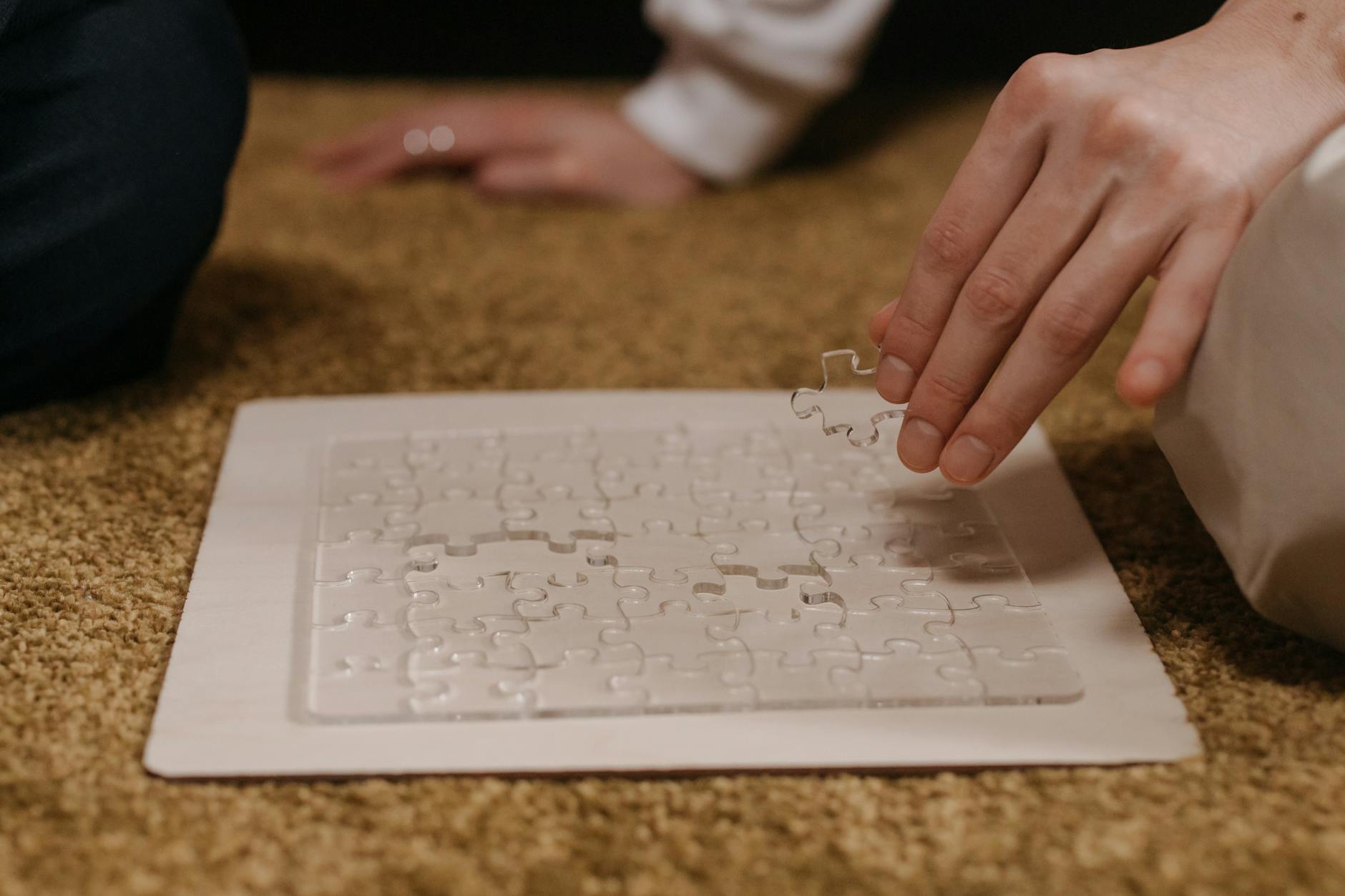
In one study, frequent word puzzle users performed as well on grammatical reasoning tests as people a full decade younger, and showed similar advantages on short-term memory assessments. These findings held true across different age groups, suggesting the benefit applies whether someone starts puzzles at 55 or 75. A more recent 2025 clinical trial from Case Western Reserve University directly compared crossword puzzle solving to computerized cognitive training programs—the kind aggressively marketed as brain-training tools. Crosswords not only outperformed the computerized programs on cognitive measures but also showed decreased brain atrophy over the 78-week study period, a sign of genuine neurological protection rather than just improved test performance.
The Neuroscience of Brain Reserve and Puzzle Engagement
Understanding how puzzles work requires examining the concept of “cognitive reserve”—essentially, how much mental capacity your brain has built up to resist decline. Think of it like financial savings: if you’ve built up reserves, you can weather downturns. Similarly, a brain that’s been regularly exercised and challenged has more resilience when age-related changes begin. Brain imaging studies show the mechanism at work. When researchers followed people solving online crossword puzzles over 18 months, they documented that puzzle solvers experienced 0.5-1% less shrinkage in the hippocampus and cortex compared to control groups. The hippocampus is crucial for forming new memories, and the cortex handles reasoning and language—precisely the areas damaged earliest in Alzheimer’s disease.
Puzzles appear to literally slow the brain’s physical decline. However, there’s an important caveat: this protective effect isn’t permanent or guaranteed. It requires consistency. One person who solved crosswords sporadically showed minimal benefit, while someone solving puzzles several times weekly showed marked protection. The brain, like muscle, responds to regular use but atrophies with neglect. Missing weeks of puzzle engagement appears to diminish the protective effects, suggesting this is a lifestyle commitment rather than a one-time intervention.
Different Puzzles, Different Benefits
Not all puzzles equally engage the brain. Crossword puzzles show the strongest evidence base, primarily because researchers have studied them most extensively. The combination of vocabulary recall, pattern recognition, and sustained attention creates multiple cognitive challenges simultaneously. When a 72-year-old named Robert solves a crossword, he’s not just retrieving word definitions—he’s integrating clues across intersecting answers, managing working memory as he fills in letters, and engaging language networks throughout his brain. Sudoku and number-based puzzles activate different neural pathways, primarily those involved in logical reasoning and spatial visualization.
Someone struggling with verbal memory might find more benefit in number puzzles, while someone with language skills but weakening reasoning might benefit more from word-based challenges. The research suggests variety offers advantages—switching between crosswords, Sudoku, jigsaw puzzles, and logic games creates a more comprehensive cognitive workout than relying on a single puzzle type. Importantly, not all “brain games” are equal. Many computerized brain-training applications market themselves as cognitive enhancement tools, but the Case Western research suggests they underperform compared to traditional paper puzzles. One distinction may be that paper-based puzzles require sustained, focused attention without algorithmic hints or immediate feedback, whereas many apps provide step-by-step guidance that reduces cognitive demand.
Building a Sustainable Puzzle Practice
For someone wanting to use puzzles as a brain health strategy, consistency matters more than intensity. Research suggests that people solving puzzles most days of the week—roughly five or more days—showed the strongest cognitive protection. This is genuinely achievable for most people: a 20-minute daily crossword takes less time than most morning routines and can become as habitual as coffee or reading the news. The practical challenge is choosing what fits your life. Some people find paper puzzles meditative—the tactile experience, the elimination of digital distractions. Others prefer the accessibility and variety of apps or online platforms.
A sustainable practice is one you’ll actually maintain for years, not one that’s “optimal” but abandoned after three weeks. Someone who consistently solves five Sudoku puzzles weekly may see better outcomes than someone who intensely solved crosswords for two months then quit. One important limitation: puzzles appear most protective when combined with other brain-healthy practices. People in the studies who solved puzzles regularly also tended to have social engagement, physical activity, and other cognitive stimulation. Puzzles seem to be one piece of a comprehensive approach rather than a standalone solution. Using puzzles to justify a completely sedentary lifestyle or social isolation likely undercuts their benefits.
Important Limitations and What Puzzles Cannot Do
The research is clear about what puzzles can accomplish—delay cognitive decline, maintain memory and reasoning—but equally important to understand what they cannot do. Puzzles do not reverse Alzheimer’s disease if it’s already established. They do not eliminate the underlying pathology of dementia. They do not replace medical treatment, medication, or professional cognitive rehabilitation for someone with diagnosed cognitive impairment. Additionally, the benefits appear most pronounced in people with normal or mild cognitive changes, not advanced dementia. Someone with moderate Alzheimer’s disease may still enjoy puzzles for quality of life, but shouldn’t expect the same protective mechanism as someone doing preventive puzzle work.
The research also doesn’t yet clarify whether starting puzzles late in life—say, at 85 after decades of minimal puzzle engagement—offers the same protection as lifelong engagement. The evidence suggests benefit at any age, but the effect may be smaller if you’re starting late. A final caution concerns puzzle difficulty. Using puzzles that are too easy provides little cognitive benefit—the brain needs genuine challenge to build reserve. Conversely, puzzles that are chronically frustrating and unsolvable may provide stress without benefit. The sweet spot appears to be puzzles difficult enough to engage full attention but achievable with effort.

Puzzles Versus Other Brain Training Methods
How do traditional puzzles compare to modern alternatives? The 2025 Case Western study directly addressed this question by comparing crossword puzzles to computerized cognitive training programs. Crosswords won on virtually every measure—they produced better cognitive performance improvements and showed less brain atrophy over the study period. One likely explanation: computerized programs often adapt difficulty downward when users struggle or provide hints that reduce cognitive demand, whereas a crossword puzzle maintains consistent challenge regardless of your performance. Physical exercise, particularly aerobic activity, shows comparable brain-protective effects in the research literature. But the advantage of puzzles is accessibility—someone with joint problems, limited mobility, or living in severe weather can do puzzles daily when exercise might be inconsistent.
The ideal approach combines both: a person solving crosswords while also walking regularly may see greater cognitive protection than either intervention alone. Social engagement and cognitive complexity also matter. A 68-year-old named Margaret might gain similar cognitive benefits from a weekly book club discussing complex literature as from daily puzzles. The key mechanism appears to be sustained mental engagement, whether through word puzzles, learning a new skill, or intellectually demanding conversation. Puzzles stand out not because they’re uniquely powerful but because they’re reliably accessible and have the strongest research documentation.
The Future of Puzzle-Based Brain Health
Research is evolving in interesting directions. Scientists are investigating whether combining puzzle solving with other interventions—such as cognitive training specifically targeting weak areas, or combined with physical activity protocols—produces synergistic benefits. Early data suggests integration might be more effective than isolated puzzle use. There’s also growing interest in puzzle characteristics that maximize cognitive benefit.
Emerging research suggests crossword puzzles requiring general knowledge and vocabulary may offer different benefits than those requiring only pattern recognition. As personalized medicine advances, we may eventually identify which specific puzzle types best match an individual’s cognitive profile and risk factors. For now, the message is simpler: find puzzles you enjoy, use them consistently, and integrate them into a lifestyle that also includes physical activity, social engagement, and cognitive variety. The research shows this approach measurably protects your brain—not for 20 magical years, but for genuinely meaningful added years of healthy cognitive function.
Conclusion
The research on puzzles and brain health presents a rare convergence of scientific evidence and practical simplicity. Crossword puzzles, Sudoku, and similar cognitive challenges demonstrably delay cognitive decline—by roughly 2.5 years on average for dementia onset, and by producing cognitive abilities equivalent to someone 8-10 years younger. Brain imaging shows less atrophy in people who solve puzzles regularly.
This isn’t theoretical benefit; it’s measurable protection documented across multiple independent studies. What makes this finding valuable for dementia care is that puzzles represent an accessible, low-cost, pleasurable intervention that almost anyone can implement immediately. Unlike medications that require prescriptions or medical facilities, unlike exercise that requires physical capability or gym access, puzzles need only a pen and paper, curiosity, and commitment. For someone concerned about memory changes or wanting to maintain cognitive health into later life, the evidence supports making puzzle-solving a daily habit—not as a replacement for medical care or other healthy practices, but as a proven component of a brain-protective lifestyle.
You Might Also Like
- Research Shows doing puzzles Adds 20 Years of Healthy Brain Function
- Research Shows yoga Adds 3 Years of Healthy Brain Function
- Research Shows yoga Adds 3 Years of Healthy Brain Function
For more, see National Institute on Aging.