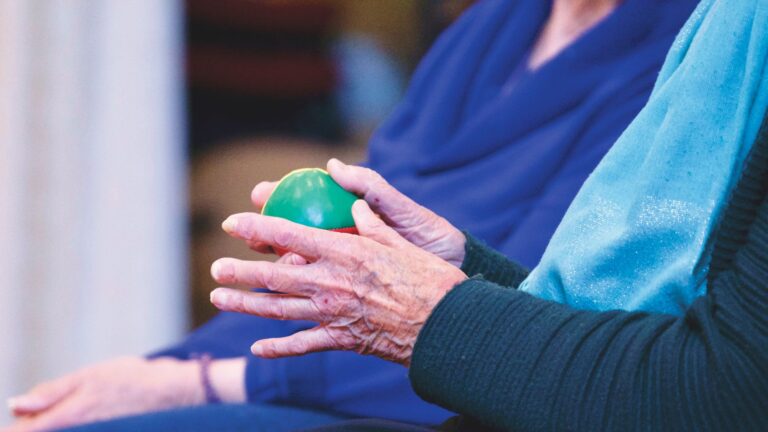
Quality of life is a medical metric because it measures what treatment actually accomplishes in the world patients live in—not just in test results. When a neurologist prescribes medication for a dementia patient, the lab work might show stable biomarkers, but if the person no longer recognizes family members or has become withdrawn and agitated, the treatment has not succeeded by any meaningful standard. Quality of life captures the gap between what labs measure and what matters: whether someone can still enjoy a meal with loved ones, sleep through the night, or find moments of dignity and engagement in their day.
In dementia care especially, quality of life is not a soft consolation prize offered when a cure is not possible. It is the primary medical outcome. The disease itself cannot be halted or reversed in most cases, so clinicians and families must pivot from the goal of recovery to the goal of maintaining function, comfort, and connection for as long as possible. A drug that slows cognitive decline by a few months but causes severe nausea or apathy has failed—not by test-tube standards, but by the only standard that matters to the patient living through it.
Table of Contents
- Why Medicine Moved Beyond Lab Numbers
- How Quality of Life Reveals What Numbers Hide
- Quality of Life and Treatment Decisions
- Measuring and Tracking Quality of Life in Dementia Care
- The Burden of Caregiver Strain on Measured Quality of Life
- Quality of Life in Research and Drug Approval
- Quality of Life as the Realistic Medicine in Progressive Disease
- Frequently Asked Questions
Why Medicine Moved Beyond Lab Numbers
Medical practice has historically focused on objective measures: blood pressure, cholesterol levels, tumor size, bone density. These are quantifiable, comparable, and easily tracked. But over the past two decades, clinical medicine has recognized a fundamental problem with this approach: a patient can have perfect lab values and still suffer profoundly. An older adult with well-controlled diabetes, normal blood pressure, and no cardiac damage might also have Alzheimer’s disease that prevents them from remembering why they take medication, or from enjoying the life they worked to preserve.
Quality of life (or QoL, as it appears in medical literature) measures dimensions that labs cannot: physical comfort, emotional well-being, cognitive engagement, social connection, and sense of purpose. In cancer care, oncologists now routinely ask patients not just about tumor response but about fatigue, pain, sexual function, and ability to work. In heart disease, cardiologists consider whether a patient can walk to the mailbox again, not just whether their ejection fraction improved. Dementia research has followed this shift: trials measuring new drugs now include quality-of-life scales as primary outcomes, not afterthoughts.
How Quality of Life Reveals What Numbers Hide
A standard cognitive test—the kind that scores memory, attention, and reasoning—can miss crucial information about how a person is actually doing. Consider two Alzheimer’s patients who both score 18 out of 30 on the Montreal Cognitive Assessment (MoCA). One lives independently in a familiar home, takes her own medications with a pill organizer, enjoys her garden, and has lunch with friends twice a week. The other is institutionalized, incontinent, nonverbal, and requires full assistance with feeding and dressing. Both have moderate dementia by the numbers.
By any honest medical standard, their outcomes are radically different. This is where quality-of-life instruments—validated questionnaires that probe how someone spends their days—reveal the truth that pure cognition scores cannot. Scales like the Cornell-Brown Scale for Quality of Life in Dementia or the Quality of Life in Alzheimer’s Disease (QoL-AD) ask: Does the person enjoy activities? Do they have appetite? Can they express themselves? Are they comfortable physically? These answers change how a clinician interprets test results and decides on treatment adjustments. The warning here is that these scales are not perfect substitutes for clinical judgment, and some are harder to use reliably in late-stage dementia when a patient cannot self-report. A caregiver’s observations are crucial, but they are also colored by caregiver stress, depression, and exhaustion—all of which can skew the picture.
Quality of Life and Treatment Decisions
In dementia, quality-of-life metrics inform decisions that have no clear “right answer” in purely medical terms. Consider the decision about whether to start a new Alzheimer’s drug like lecanemab or donanemab. These drugs can slow cognitive decline modestly—reducing decline by a few months over two years of treatment. But they require regular infusions, carry a small risk of amyloid-related imaging abnormalities (ARIA) in the brain, and can cause headaches, fatigue, and temporary cognitive fog. For a patient who is relatively cognitively intact but socially isolated and already struggling with depression, the disruption and side effects might outweigh the cognitive benefit.
For another patient—someone younger, with strong family support, and actively engaged in hobbies—the same drug might be a reasonable choice. Quality of life provides a framework for weighing these tradeoffs. A clinician can ask: Will this treatment improve your ability to do the things that matter to you? If a patient’s main concern is independence with household tasks, and the drug offers a realistic chance of preserving that independence a bit longer, it may be worth the inconvenience. If a patient’s chief worry is pain or difficulty sleeping, and the drug does nothing for those symptoms while introducing new hassles, it becomes harder to justify. This is not soft or vague—it is rigorous medical reasoning applied to the domain where it matters most: the patient’s own life and values.
Measuring and Tracking Quality of Life in Dementia Care
Quality of life in dementia is measured through structured interviews and questionnaires, some of which are administered by clinicians, some completed by caregivers, and some (in early or mild dementia) by the patient themselves. The QoL-AD, one of the most widely used, includes 13 items: physical health, energy, mood, living situation, memory, family relationships, friendships, self as a whole, ability to do chores, ability to do things for fun, money situation, life as a whole, and marriage (if applicable). Each item is rated from 1 to 4, and the result is a simple score out of 52.
The limitation of any single-point-in-time measurement is that quality of life fluctuates. A patient might rate themselves as happy and comfortable on a Tuesday morning after a good night’s sleep and a visit from a grandchild, but quite differently on a Wednesday evening after a bad pain episode or an upsetting news story. This is why clinicians who use QoL-AD scores over time track trends rather than obsessing over individual results. If a patient’s score drops from 34 to 28 over three months, that signals a real change that warrants investigation: Is there new pain? Has the patient become more withdrawn? Is the caregiver more stressed, and has that stress affected how the patient is being managed at home? Quality-of-life measurement is most useful as a conversation starter, not as a blood pressure reading.
The Burden of Caregiver Strain on Measured Quality of Life
A critical reality that complicates quality-of-life measurement in dementia is the role of caregiver burden. The person living with dementia does not exist in isolation; they exist inside a caregiving relationship or system. When a family caregiver is severely stressed—working full-time while managing a parent’s dementia alone, losing sleep, skipping their own medical appointments—the quality of care drops. The patient may be fed but not engaged, clean but not stimulated, safe but lonely. Some research has found that caregiver burden correlates more strongly with patient quality of life than the severity of cognitive decline does.
A highly stressed caregiver, even one who loves their relative deeply, may inadvertently contribute to a poor quality of life for the patient. This is not blame; it is biology and human limitation. A caregiver who has not slept properly in weeks cannot respond with warmth to a patient who asks the same question fifty times a day. A caregiver in chronic pain cannot lift a patient safely or take them on the pleasant outings that would enrich the patient’s life. This is why respite care, day programs, and supportive services are not luxuries or signs of inadequate family love—they are medical interventions that directly improve the patient’s quality of life by reducing the caregiver’s burden.
Quality of Life in Research and Drug Approval
When the FDA approves a new Alzheimer’s drug, it now considers quality-of-life data alongside cognitive scores and biomarker changes. Lecanemab (Leqembi) was approved based on showing a 35 percent slowing of cognitive decline, but regulators also required monitoring of amyloid-related imaging abnormalities (ARIA) and looked at how often patients experienced side effects that might harm their function or comfort.
The drug does prolong independence slightly, but only for certain patients—those diagnosed in the early symptomatic stage with mild cognitive impairment or mild dementia due to Alzheimer’s. A patient or family should understand that this drug does not make anyone feel better; in fact, infusion days and potential side effects might worsen the day-to-day experience. The benefit is that decline is slower—a difference measured in months, not felt immediately.
Quality of Life as the Realistic Medicine in Progressive Disease
For people living with progressive diseases where remission or reversal is not possible, quality of life becomes the primary and honest medical goal. This shift in perspective is uncomfortable for medicine, which is trained to fight disease, to cure, to intervene. Quality of life sounds passive, accepting, almost like giving up.
It is not. It is the most rigorous and human form of medicine available: asking not “Can we win?” but “How can we help this person live well within the constraints of their illness?” In dementia, that might mean controlling pain aggressively, treating depression or anxiety, maintaining social engagement through day programs or family visits, simplifying medication regimens to improve adherence and reduce side effects, and ensuring adequate nutrition and sleep. None of these interventions will cure dementia, but each one, individually and together, makes the difference between a life that is merely prolonged and a life that is actually lived.
Frequently Asked Questions
Is focusing on quality of life the same as giving up on treatment?
No. Quality of life is how you measure whether treatment is working. A drug that extends life by six months but causes severe nausea and confusion has not succeeded by any meaningful standard. Prioritizing quality of life means choosing treatments and approaches that genuinely improve how someone experiences their days.
Who decides what quality of life means for someone with dementia?
Ideally, the patient decides, especially in early and mild dementia. As cognitive ability declines, family members and clinicians work together, informed by the patient’s stated values and preferences from earlier conversations, to make decisions that align with what matters to that person. There is no one-size-fits-all answer.
Can quality of life be measured objectively, or is it just opinion?
Validated quality-of-life scales are based on decades of research and are used consistently across thousands of patients and clinicians. They are not perfect—no single measurement is—but they are far more reliable and reproducible than casual observation. They are objective tools, though they measure subjective experience.
If my family member is happy but declining cognitively, is that a good outcome?
From a quality-of-life perspective, yes, that is a very good outcome. Happiness, comfort, and connection matter more than cognitive performance in dementia care, where cognitive decline cannot be stopped. A person can have moderate dementia and high quality of life, or severe dementia and low quality of life, depending on pain management, social engagement, and overall care.
How often should quality of life be assessed?
Most clinicians assess quality of life at major transition points: at diagnosis, before starting a new medication, after a hospitalization, or when family or caregivers notice a change. There is no rigid schedule. Some research settings measure it monthly or quarterly in clinical trials, but in routine care, the focus is on trends and changes over months, not weekly scores.