Reviewed by the Help Dementia Editorial Team — our editors review every article for accuracy against guidance from the National Institute on Aging, the Alzheimer’s Association, and peer-reviewed sources.
Memory loss does not erase who a person fundamentally is. While dementia damages the brain’s ability to form and retrieve memories, it does not diminish a person’s intrinsic value, their capacity to feel and express emotion, or the essence of their personality and character. A person living with Alzheimer’s disease or another form of dementia remains the same individual—with their values, their preferences, their dignity—even when the specific details of their life experiences fade from conscious recall. When Margaret, a 72-year-old mother and former teacher, stopped recognizing her daughter’s face, she still recognized kindness. She still responded to music she had loved for decades. She still showed preference for the same foods, the same colors, and the same gentle tone of voice that had always calmed her.
Her memory had changed, but her personhood remained. This distinction between memory and identity is crucial for families, caregivers, and anyone supporting someone with dementia. Too often, the progressive loss of memories is misunderstood as a progressive loss of the person themselves. This misunderstanding can lead to isolation, reduced engagement, and a failure to see the person behind the diagnosis. The science of dementia and the lived experiences of families worldwide demonstrate that memories are not the seat of personhood. Identity persists through emotion, through bodily responses, through relational connection, and through the neurological patterns that shape personality and preference—many of which remain intact long after episodic memory fades.
Table of Contents
- What Makes Someone a Person When Memory Fades?
- The Neuroscience of Identity Beyond Episodic Memory
- Personality Persists When Memory Does Not
- Maintaining Personhood Through Relational Connection
- The Danger of Confusing Absence of Memory With Absence of Self
- Personhood and the Advance of Dementia Across Stages
- The Ethical and Relational Future of Dementia Care
- Conclusion
- Frequently Asked Questions
What Makes Someone a Person When Memory Fades?
Personhood is not a single neurological function; it is a constellation of capacities and qualities that extend far beyond memory storage and retrieval. Emotions, preferences, personality traits, values, and the ability to connect with others all survive memory loss. A person with advanced dementia may not remember breakfast, but they may express clear joy or distress in response to a loved one’s touch. They may not recall their career as a musician, but their brain may still respond to melody and rhythm in measurable ways.
Research using functional MRI shows that even when people with dementia cannot consciously recall a piece of music or a meaningful song from their past, their brains activate in the same regions that light up in non-affected individuals—suggesting that something essential about the memory persists at a neurological level, even when conscious awareness has faded. Consider the difference between semantic memory—facts and knowledge—and implicit memory—the automatic responses and skills that persist even when we cannot consciously explain them. Someone with advanced Alzheimer’s may not remember their grandchild’s name, but they may still reach out for an embrace, still show recognition through physical closeness, still smile at a familiar voice. These are not tricks of the mind or remnants of memory; they are evidence of a person who continues to exist in a different way, through sensory experience and emotional response rather than through narrative recall. The person has not vanished; the pathway to accessing them has simply changed.

The Neuroscience of Identity Beyond Episodic Memory
The brain’s memory systems are divided into distinct pathways, and dementia does not affect all of them equally or simultaneously. Episodic memory—the recall of specific events and moments in time—is often the first to deteriorate in Alzheimer’s disease. But procedural memory, which governs automatic movements and learned skills, may persist for years. A person may not remember learning to dance, but their body may still remember the steps. This separation reveals something profound: the brain contains multiple pathways to identity, and damage to one system does not erase the person who exists through another.
The brain regions responsible for emotion—the amygdala, the insula, and the orbitofrontal cortex—often remain relatively functional longer than the hippocampus and temporal lobe regions critical for memory formation. This explains why someone with severe dementia may become upset at a caregiver’s harsh tone, even if they cannot remember that caregiver from one moment to the next. The emotional response is real; the person’s capacity to feel, to prefer, and to react to the world remains intact. However, a limitation of focusing on emotion and implicit memory is that it can minimize the reality and pain of memory loss itself. families still grieve the loss of shared narrative, the inability to reminisce together, the sensation that their loved one has been separated from their own history. This grief is valid and important to acknowledge, even as we recognize that the person remains.
Personality Persists When Memory Does Not
One of the most striking observations from dementia care is that fundamental personality traits often remain recognizable long after memory fades. Research on dementia and personality has found that people tend to maintain their core temperament—whether they are naturally cautious or adventurous, introspective or social, creative or practical—even as their cognitive abilities decline. A person who was humorous before developing dementia often continues to make jokes and find delight in absurdity. Someone who was kind remains responsive to others’ distress. Someone who was reserved often continues to be reserved, even when other forms of communication have become difficult.
This persistence of personality is not merely anecdotal; it reflects the deeply rooted nature of temperament in brain structure and neurotransmitter patterns. While the hippocampus—essential for forming new memories—may shrink in dementia, the neural networks that support personality, reward sensitivity, and emotional responding are more distributed throughout the brain. A specific example: James, a lifelong tinkerer and problem-solver, developed moderate dementia at age 75. While he could no longer recall his career as an engineer or remember his children’s current life situations, he would spend hours sorting objects, taking things apart, and trying to fix items in his environment. His hands remembered what his conscious mind could not. His approach to the world—that deeply ingrained need to understand how things work—remained a central part of who he was.

Maintaining Personhood Through Relational Connection
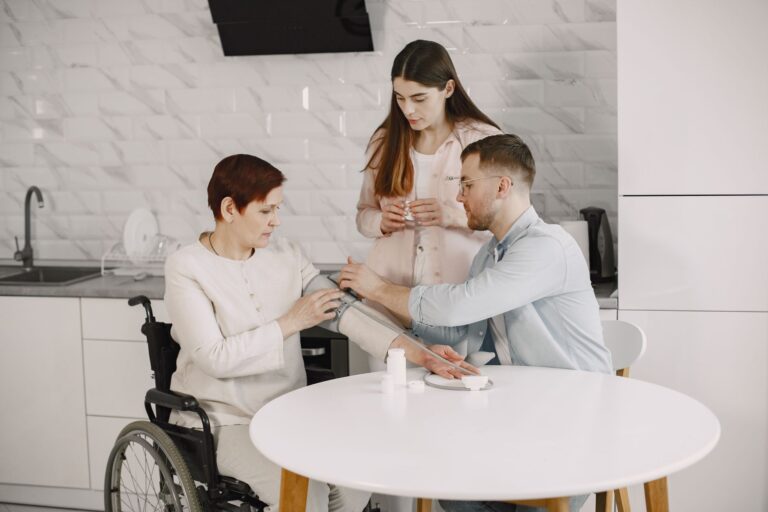
One of the most practical and powerful ways to affirm personhood in dementia care is to relate to the person not as a collection of failing functions, but as a relational being with whom connection is still possible. This shift in perspective—from “managing symptoms” to “being present with a person”—can transform the caregiving experience. Rather than focusing on what the person has lost, caregivers can explore what remains: the possibility of shared calm, of sensory pleasure, of peaceful presence together. Families and professional caregivers often discover that the relationship changes but does not disappear.
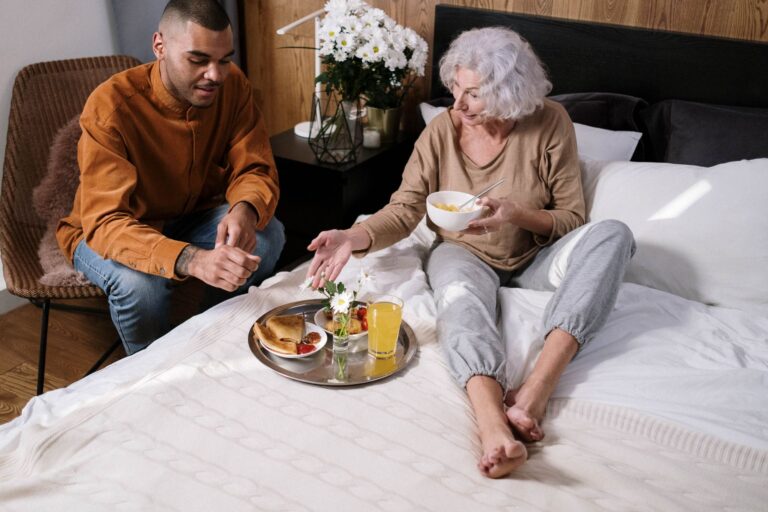
Instead of conversing about shared memories, they may sit together in companionable silence, share meals, take walks, listen to music, or simply hold hands. These forms of connection do not require memory; they require only presence and acceptance. Research on family visits and caregiver interaction shows that people with dementia, even in advanced stages, respond positively to consistent, calm, connected presence. They may not remember the person’s name, but they respond to the person’s energy, voice, and intention. The trade-off is that these new forms of connection require caregivers to let go of the expectation of being recognized and remembered, and instead to find meaning in the present moment and in the sustained presence itself.
The Danger of Confusing Absence of Memory With Absence of Self
A significant risk in dementia care is the assumption that a person who cannot recall their own history has somehow become a different person, or worse, that they have ceased to be meaningfully present. This confusion can lead to profound isolation and neglect. Some families distance themselves from a relative with dementia because they feel they are relating to “someone they don’t know anymore.” Some care facilities inadvertently warehouse residents with advanced dementia under the assumption that meaningful activity or engagement no longer matters because the person “won’t remember anyway.” This is a dangerous and compassion-eroding error. The evidence consistently shows that even people in advanced dementia respond to their environment, to the quality of care, to sensory stimulation, and to the emotional tone of their surroundings.
They may not remember a caregiver’s name, but they experience the difference between a caregiver who is gentle and one who is rough. They may not recall their favorite music, but their entire body may relax when it plays. To neglect engagement, stimulation, and kindness because the person won’t “remember it” is to confuse two separate things: the person’s capacity to store memories and the person’s capacity to experience their life in the present moment. A person experiencing dementia is present now, in this moment, with the capacity to suffer or to be comforted. That present-moment personhood is enough to demand our ethical commitment.

Personhood and the Advance of Dementia Across Stages
As dementia progresses, the outward signs of personhood may become less visible, but this does not mean personhood itself has disappeared. In early dementia, the person may be acutely aware of their memory loss and suffer from the confusion and grief it brings. In moderate dementia, memory loss expands but the person may still have moments of clarity, still engage in extended conversations, still recognize people from time to time. In advanced dementia, the person may become nonverbal, may spend much of the day sleeping, may show little visible response to their environment. Yet family members, hospice workers, and experienced care providers often report moments of apparent recognition, sensitivity to tone and touch, and signs of comfort or distress that suggest an inner life continues.
Consider the case of Helen, who lived for eight years with progressive dementia. By the final year, she could no longer speak, no longer eat by mouth, no longer stand. Yet her daughter reported that Helen’s face would light up when her favorite hymn was played. Was Helen remembering the hymn? Perhaps not consciously. But something in her neurological system recognized it, responded to it, found peace in it. That response was evidence of personhood—of a being who, even in the depths of dementia, was still capable of response, still present, still worthy of dignified care and relational attention.
The Ethical and Relational Future of Dementia Care
As dementia research advances and our understanding of the disease grows more sophisticated, the field is moving toward a model of care that honors personhood throughout the disease process. Rather than focusing exclusively on cognitive restoration or symptom management, a growing number of programs emphasize what is sometimes called “person-centered care.” This approach begins with the assumption that the person with dementia is a subject, not an object—a being with preferences, values, and inherent dignity, not merely a set of neurological deficits to be managed. This shift has practical implications.
It means involving the person with dementia in decisions about their own care, to whatever degree they are able. It means learning what matters to them—what activities bring them peace, what foods they prefer, what music moves them—and building care around those preferences rather than around medical convenience. It means addressing behavior changes with curiosity about what might be causing distress, rather than immediately resorting to medication. Most fundamentally, it means recognizing that personhood persists, that the person is still there, and that how we relate to them matters deeply—not for the person’s memory or future well-being necessarily, but for the ethical integrity of our present care and the dignity of their present life.
Conclusion
Memory loss is profound and real. For families watching a loved one slip away from their own history, for the person with dementia struggling to hold onto the threads of their identity, for everyone touched by this disease, the loss of memory is a genuine and devastating change. But this loss is not the same as the loss of personhood. The person remains—changed, struggling, perhaps in pain, but fundamentally present. They remain in their emotions, their preferences, their personality, their capacity to connect, and their deserving of dignity and care.
Understanding this distinction does not erase the grief or the difficulty of dementia. It does, however, offer a framework for relating to the person who remains, for finding meaning even in advanced stages of the disease, and for building a culture of dementia care that respects the personhood of every human being affected by this condition. The path forward in dementia care—whether as a family member, a professional caregiver, or a policymaker—requires holding two truths at once: acknowledging the profound reality and tragedy of memory loss while simultaneously affirming that the person who is losing their memory remains a person worthy of connection, respect, and love. This is not sentimental or naive. It is a clear-eyed recognition of what science tells us about the brain, what clinical experience demonstrates, and what human dignity demands.
Frequently Asked Questions
Can a person with dementia still know who they are if they can’t remember their own history?
Personhood is not the same as autobiographical memory. A person with dementia may not be able to recall their career, their family stories, or significant life events, but they retain their fundamental personality, their emotional responses, their values, and their capacity to engage with the present moment. Who they are in their core often persists even when what they have done and experienced is no longer consciously accessible.
If my loved one doesn’t remember me, are they still the same person I knew?
In some ways yes, in some ways no. They may not remember your relationship history, but their capacity to feel, to respond, and to form connection in the present moment remains. The relationship changes form, but connection is still possible. Many families find that while they grieve the loss of shared memory, they also discover new ways of being together that can be meaningful and intimate.
Does personhood end with advanced dementia?
There is no clear scientific evidence that personhood ends with dementia at any stage. Even in advanced dementia, when a person is nonverbal and appears minimally responsive, there are signs that suggest an inner life and capacity for experience continues. The person may not show memory, may not communicate, but they may still respond to comfort, to familiar voices, and to the quality of care. How we understand and respect this remaining presence remains an evolving ethical question.
Is it okay to make decisions for someone with dementia if they won’t remember the outcome?
Yes, it is not only okay but ethically required. A person’s present-moment experience matters even if they cannot form lasting memories of it. Decisions should be made with the person’s best interests in mind, honoring their known preferences and values, and ensuring their present comfort and dignity—not because they will remember, but because they are living through the experience now.
Can someone with dementia still have relationships with family?
Yes, though the nature of the relationship changes. Instead of a relationship built on shared history and conversation, it becomes a relationship in the present moment, built on presence, touch, shared experience, and the caregiver’s patience and acceptance. Many families report that these modified relationships, while painful and different, can still contain love, comfort, and meaningful connection.
How can I help someone with dementia maintain their sense of self?
Support their personality and preferences rather than fighting them. Provide sensory engagement—music, nature, textures, tastes that they enjoy. Maintain routines and familiar environments. Speak to them with respect. Involve them in decisions when possible. Most importantly, relate to them as a person in the present moment, not as a collection of lost abilities.
You Might Also Like
- How Meaningful Moments Continue With Memory Loss
- Why Emotional Memory May Last Longer Than Facts
- Why Connection Matters More Than Perfect Memory
For more, see NIH MedlinePlus — dementia.