
Iran war sits at the center of this dementia and brain health question.
The Iran war has become a central issue in the 2026 campaign because it is directly affecting voters’ wallets, sharply dividing both major parties, and reshaping how Americans view military action abroad. Since U.S.-Israeli military strikes began on February 28, 2026, targeting Iran’s nuclear and ballistic missile programs, the conflict has dominated news coverage, split the Republican base despite broad Trump administration support, and shifted the midterm election landscape toward Democrats. This article examines why a distant military conflict has become so politically potent, how it is reshaping voter sentiment, and what impact it may have on the November 2026 midterm elections. The immediate trigger for the war’s political centrality is its visible economic impact on American households. U.S. crude oil jumped from $67 per barrel to over $90 per barrel—a 35% increase—driving gas prices to approximately $3.38 per gallon nationally.
For voters already squeezed by inflation, rising energy costs are impossible to ignore. When voters pump gas, they are effectively voting on their perception of the administration’s foreign policy. The conflict has also revealed deep fractures within the conservative movement. While 55% of Republicans approve of Trump’s decision to pursue military action, that means 45% of the Republican base actively disapproves—a significant split on a signature Trump policy. Meanwhile, the broader American public is skeptical: 47% of Americans oppose U.S. military action in Iran, 40% support it, and 13% remain unsure.
Table of Contents
- How Did Military Strikes Become an Election Battleground?
- What Is the Economic Toll, and How Does It Affect Voters?
- What Do Public Opinion Polls Reveal About Voter Attitudes?
- Why Is the Republican Party Divided on the War?
- How Has Iran’s Reaction Shaped the Conflict’s Political Trajectory?
- What Do Cost-of-Living Concerns Mean for Campaign Strategy?
- What Happens If the War Escalates or Persists Until November?
- Conclusion
- Frequently Asked Questions
How Did Military Strikes Become an Election Battleground?
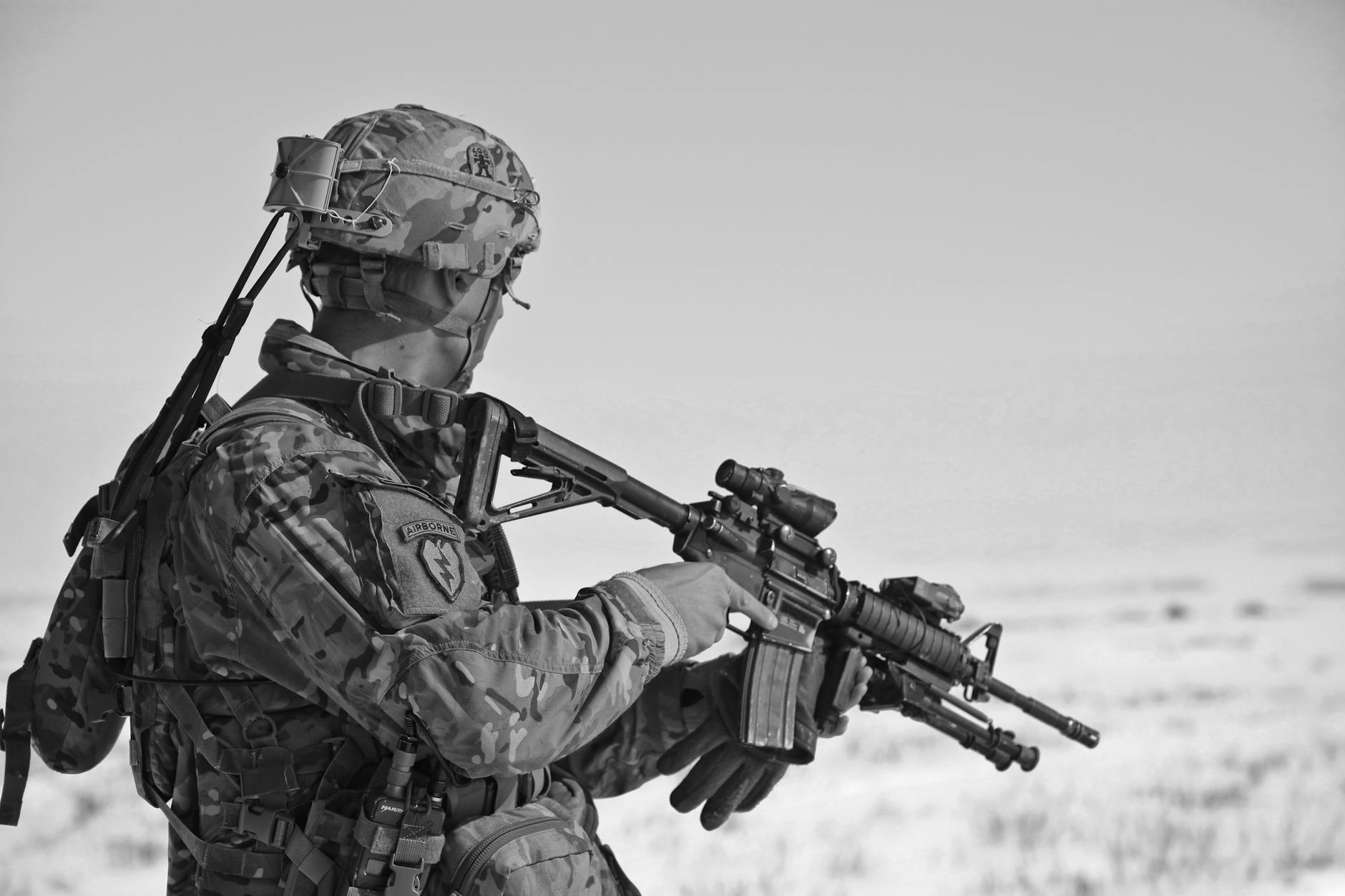
The war’s elevation to campaign centerpiece status reflects how quickly foreign military events can reshape electoral terrain when they hit voters at home. On February 28, 2026, the U.S. and Israel launched strikes against iran, resulting in the assassination of Iran’s Supreme Leader Ali Khamenei. As of March 25, 2026—26 days into the conflict—there remains no clear end in sight. Iran has responded with over 500 ballistic and naval missiles and nearly 2,000 drones, with 40% targeted at Israel and 60% at U.S. targets. This ongoing escalation, rather than a quick resolution, is what keeps the war in the news cycle and forces candidates to take consistent positions.
CNN described the Iran war as “the soundtrack of the midterm election campaign,” underscoring how pervasively it has entered campaign messaging. Unlike wars that fade from public view after initial strikes, this conflict maintains constant media presence through reports of drone attacks, ceasefire proposals, and economic ripple effects. Every day the war continues is another day voters encounter headlines about the conflict and its consequences. This sustained visibility is what makes it politically potent in a way that distant conflicts often are not. The war’s campaign salience is also driven by the fact that both parties must stake out positions on it. Republicans must choose between supporting Trump’s military action and claiming the “America First” foreign policy they have championed. Democrats can argue that the conflict represents the failed approach they predicted and point to rising energy costs as the consequence. For voters who care deeply about either fiscal conservatism or restraint in foreign military ventures, the Iran war now defines party differentiation.
What Is the Economic Toll, and How Does It Affect Voters?
The economic damage from the Iran war extends far beyond American gas pumps, though those pumps remain the most visible symbol of impact. A United Nations assessment found that the conflict has caused $63 billion in economic losses across the Arab region. Additionally, over 3,000 vessels have been stranded in the Middle East due to a near-total halt of Strait of Hormuz traffic. This disruption to global shipping means slower supply chains, delayed goods, and potentially higher prices for consumers across all sectors. However, if the U.S. can broker a ceasefire quickly, these shipping delays may resolve faster than the oil price spike, which can take months to recede even after conflict ends. For American households specifically, the cost-of-living narrative has suddenly shifted.
Before the Iran war, political candidates were debating whether the Biden administration’s inflation policies had harmed the economy or whether recovery was underway. The Iran war has overridden that debate—current conditions matter less than future ones. Every dollar per gallon of gas increase translates to roughly $30 more per month for the average driver. Over the course of the midterm campaign, voters will pump gas dozens of times while seeing headlines about the war. This repetition is what makes the economic impact politically significant. The rising energy costs also complicate the Democratic campaign message. While Democrats benefit from the perception that Republicans created a military conflict, they suffer when rising gas prices appear on voters’ credit card bills. The administration’s ability to secure a ceasefire thus becomes not just a military or diplomatic matter, but a campaign necessity. One limitation of energy policy is that even if a ceasefire is reached tomorrow, oil prices tend to remain elevated for weeks or months as markets price in future supply uncertainty.
What Do Public Opinion Polls Reveal About Voter Attitudes?
Public opposition to the Iran war is substantial and growing. According to Emerson Polling in March 2026, 47% of Americans oppose U.S. military action in Iran, while 40% support it. The AP-NORC poll paints an even more cautious picture, with 59% of Americans believing military action is excessive. These numbers suggest that the American public views the conflict as unnecessary or disproportionate, not as a justified response to Iranian aggression. This public skepticism creates political vulnerability for pro-war candidates and gives anti-war candidates an opening to campaign on restraint. The war’s impact on Republican electoral prospects is striking. A March 2026 poll found that 43% of voters say they are less likely to support Republicans because of the war, while only 31% say they are more likely.
These net numbers heavily favor Democrats. The same data reveals that while 55% of Republicans approve of Trump’s decision, 45% disapprove—indicating a fracture in the Republican coalition. Some conservatives view the military action as a necessary defense of American interests and a bold move against Iran’s nuclear program. Others view it as a foreign entanglement that contradicts the “America First” platform Trump ran on. The Democratic advantage is visible in generic ballot polling, which shows 49% of voters supporting a Democratic congressional candidate versus 42% for a Republican candidate heading into the midterm elections. This 7-point advantage is significant and suggests the Iran war is shifting electoral momentum. However, a warning: these numbers can shift rapidly if a major domestic issue emerges or if there is a sudden escalation or de-escalation in the conflict. Generic ballot polls are also early indicators, and voters’ final decisions in individual races may diverge from these aggregate numbers.

Why Is the Republican Party Divided on the War?
The Republican Party’s internal divide over the Iran war reflects a fundamental tension within modern conservatism between two competing visions of American foreign policy. On one side are Trump administration supporters and national security hawks who argue that Iran’s nuclear program and military capabilities pose a direct threat to U.S. interests and Israeli security. They point out that preemptive strikes prevented Iran from acquiring nuclear weapons and degraded their ballistic missile arsenal. On the other side are conservatives who embrace the “America First” philosophy and view military interventions abroad as drains on American resources and sources of American casualties. This split is not academic—it is visible among Republican voters. While 55% of Republicans approve of Trump’s military action, the 45% who disapprove represent a substantial portion of the Republican base.
Many of these skeptical Republicans cite the Iraq War as a cautionary tale: a military intervention launched on the promise of quick victory that resulted in decades of entanglement and enormous costs. They argue that the Iran war may follow the same trajectory. Other Republicans are motivated by fiscal concerns: they believe military spending should be redirected to domestic priorities like infrastructure or tax relief. The political difficulty for Republicans is that they must defend the decision to wage war while also defending their claim to fiscal conservatism. If energy prices remain elevated through the election and voters perceive that the war has hurt their economic situation, Republican candidates who fully embrace the war may face backlash. Conversely, Republicans who openly criticize Trump’s military action risk angering the base and inviting primary challenges. Some Republicans have attempted a middle position, calling for a ceasefire while not fully repudiating the military strikes. This balance is difficult to maintain in campaign rhetoric where clarity and conviction often win over nuance.
How Has Iran’s Reaction Shaped the Conflict’s Political Trajectory?
As of March 25, 2026, Iran has rejected Trump’s ceasefire proposal and laid out five conditions for negotiations: safeguards against future attacks, war reparations, recognition of Iranian sovereignty over the Strait of Hormuz, and assurances that the U.S. will not resume strikes if Iran complies. These conditions reveal that Iran views the conflict not as a discrete military engagement to be ended quickly, but as part of a larger geopolitical contest over regional power and the terms of future international relations. The fact that Iran refuses a ceasefire makes the war politically worse for any sitting administration, because it removes one pathway to quickly reducing gas prices and resolving the conflict. The Iranian response also shapes American domestic politics by preventing a “victory narrative.” If the U.S. had achieved a quick military victory, destroyed Iranian nuclear facilities, and secured a formal ceasefire with minimal additional Iranian attacks, Trump could have claimed decisive success and shifted voter attention elsewhere.
Instead, the ongoing exchange of missiles and drones, even if not meeting the full scale of early February attacks, keeps the conflict active and reminds voters that there is no end in sight. Each new Iranian attack or threat of retaliation reinforces the sense among the public that the war is not resolved. However, a warning worth noting: prolonged stalemate can also reduce voter attention over time. If the conflict becomes a low-level exchange of strikes without major escalations, it may recede from daily news coverage and thus lose some of its electoral salience. What drives voter perception is not the underlying military situation, but rather how the conflict appears in news coverage and how visibly it affects voters’ pocketbooks. If oil prices stabilize, the war could become background noise to other campaign issues.

What Do Cost-of-Living Concerns Mean for Campaign Strategy?
Energy prices are the most visible way the Iran war reaches voters’ household budgets, but the conflict also indirectly affects prices for goods and services. The disruption of Strait of Hormuz traffic means that goods shipped through Middle Eastern routes face delays. This can increase shipping costs, which producers pass along to consumers. For someone buying groceries, ordering online, or purchasing manufactured goods, the Iran war is a hidden factor in their prices. Democratic candidates have an opportunity to frame the war as the cause of inflation, while Republican candidates must defend the war as necessary despite its costs. For Republican candidates, the strategic challenge is explaining why the military action was worth the cost. Some argue that preventing Iran from developing nuclear weapons is worth any economic price.
Others contend that the conflict was mismanaged diplomatically and that a negotiated settlement could have achieved security objectives without war. Democratic candidates counter that the war was unnecessary and that Trump’s approach was too aggressive, driving up gas prices and destabilizing the region. The candidate who successfully convinces voters that they understand how to avoid these costs while maintaining national security will have an advantage. One comparison worth noting: the 2003 Iraq War did not become the dominant 2004 election issue, even though opposition to it was substantial. Instead, the campaign focused on terrorism, leadership, and character. The Iran war may follow a similar pattern if another major issue emerges—a terrorist attack, a new economic crisis, or a domestic scandal—that shifts voter attention. However, unlike the Iraq War, which took time to become unpopular, the Iran war faced public skepticism almost immediately, which increases the likelihood it remains a campaign issue.
What Happens If the War Escalates or Persists Until November?
The trajectory of the Iran conflict between now and November 2026 will largely determine the election outcome. If the war continues at current levels of intensity—drone and missile exchanges without significant expansion—it will remain a drag on Republican candidates and a talking point for Democrats. Each month that voters pay higher gas prices is another month of reinforcement for the “war drove up energy costs” narrative. However, if Iran launches a major attack that kills significant numbers of Americans, public opinion could shift toward supporting military action for defensive reasons. Conversely, if a ceasefire is achieved and oil prices begin falling, the political narrative shifts dramatically. Falling gas prices in the months before the election would reduce the salience of the war and remove the most visible economic burden voters face. In that scenario, Republicans could claim that the military strikes achieved their objective of degrading Iran’s military capability and forcing Iran to the negotiating table.
The Democratic advantage in current polling could evaporate if voters perceive improving economic conditions. This uncertainty about the conflict’s trajectory is part of what makes the Iran war so central to campaign calculations—its outcome is genuinely unpredictable. The long-term implications are also significant. If the Iran war becomes a defining issue of the 2026 midterms, it will shape which party controls Congress and how aggressively the next administration pursues military action. A Democratic Congress would likely constrain Trump’s military options, while a Republican Congress would enable them. Voters are effectively choosing not just their local representative, but also their country’s posture toward military intervention abroad. This higher-order choice is what elevates the Iran war from a foreign policy issue to a central campaign issue.
Conclusion
The Iran war has become a central issue in the 2026 campaign because it simultaneously affects voters’ pocketbooks through rising gas prices, reveals deep divisions within the Republican Party over military intervention, and gives Democrats a political opening on both national security and cost-of-living grounds. The conflict’s persistence—26 days in with no clear end in sight as of March 25—keeps it in the news cycle and prevents either party from moving past it to other campaign topics. The public is skeptical, with 47% opposing U.S. military action and 59% believing it is excessive.
Meanwhile, Republican voters themselves are divided, with 45% disapproving of Trump’s decision. The November 2026 midterm elections will reflect whether voters view the Iran war as a justified military action or an unnecessary entanglement that has driven up energy costs without sufficient benefit. The outcome depends on whether a ceasefire can be achieved (improving the political situation for the sitting administration) or whether the conflict persists and becomes synonymous with inflation and instability. Voters heading to the polls will be voting, in part, on their judgment of military strategy and its costs—making the Iran war not merely a foreign policy issue, but one of the defining questions of the 2026 campaign.
Frequently Asked Questions
Why did the Iran war become so politically important so quickly?
The war’s immediate impact on gas prices made it visible to every voter who fills up at a pump. Rising energy costs hit household budgets directly, making foreign military conflicts suddenly relevant to everyday economic concerns. Additionally, the war divided the Republican Party despite Trump’s support, creating internal campaign dynamics.
How much have gas prices actually increased because of the Iran war?
U.S. crude oil jumped from $67 per barrel to over $90 per barrel—a 35% increase—driving gas prices to approximately $3.38 per gallon nationally. This translates to roughly $30 more per month in gas costs for the average driver. The war is not the only factor affecting prices, but the timing makes voters connect the two directly.
Is there disagreement within the Republican Party about the war?
Yes. While 55% of Republicans approve of Trump’s military action, 45% disapprove. Many conservative voters view the war as inconsistent with the “America First” platform and worry it will become another prolonged Middle Eastern entanglement like Iraq.
What would Iran need to accept a ceasefire?
As of March 25, 2026, Iran rejected Trump’s ceasefire proposal and laid out five conditions: safeguards against future attacks, war reparations, recognition of Iranian sovereignty over the Strait of Hormuz, and assurances the U.S. will not resume strikes if Iran complies. These extensive conditions suggest negotiations will be difficult.
Could the war still become less important as a campaign issue?
Yes. If another major domestic issue emerges, voter attention could shift. Additionally, if a ceasefire is achieved and oil prices fall, the economic argument against the war weakens. However, the war’s current trajectory suggests it will remain a significant issue through the election.
Why do Democrats benefit politically from the war?
Democrats benefit because 43% of voters say they are less likely to support Republicans because of the war, versus only 31% who say they are more likely. Additionally, the generic ballot shows Democrats with a 49%-42% advantage over Republicans heading into the midterms, with the war contributing to this shift.
You Might Also Like
- What Is the Impact of the Iran War on the 2026 U.S. Election
- How Did Economists Revise Their 2026 GDP Forecasts After the Iran War Started
- Why Is the Iran War Setting a Dangerous Precedent for Attacking Nuclear Sites
For more, see NIH MedlinePlus — cognitive testing.




