Reviewed by the Help Dementia Editorial Team — our editors review every article for accuracy against guidance from the National Institute on Aging, the Alzheimer’s Association, and peer-reviewed sources.
Fatty fish sits at the center of this dementia and brain health question.
Yes, fatty fish could legitimately be one of the most important foods you can eat to protect your brain as you age. The evidence is substantial: research shows that eating oily fish reduces your risk of dementia by approximately 20 percent, and a 2026 systematic review examining 25 studies found consistent associations between fish consumption and improved cognitive function in older adults. Consider a 68-year-old who starts eating salmon three times per week—studies show participants at this consumption level had significantly higher cognitive assessment scores compared to those who rarely eat fish. The reason is biochemical. Your brain is fundamentally made of omega-3 fatty acids, particularly EPA and docosahexaenoic acid (DHA).
These compounds don’t just float around your brain tissue—they’re structural components essential to how your brain cells communicate and function. Fatty fish like salmon, mackerel, sardines, tuna, and herring are among the only food sources where these critical nutrients come in forms your body readily uses. This isn’t abstract nutritional theory; it’s about cellular architecture in the organ that defines who you are. What makes fatty fish stand out compared to other brain-healthy foods is the magnitude of the effect. A meta-analysis of 35 studies found that consuming 150 grams of fish per day was associated with a roughly 30 percent decrease in cognitive impairment and decline—a larger protective effect than most individual interventions can claim.
Table of Contents
- Why Fatty Fish Protects Cognitive Function Better Than Other Foods
- The Specific Brain Structures That Strengthen When You Eat Fatty Fish
- The 20 Percent Risk Reduction—What Does That Actually Mean?
- How to Actually Integrate Fatty Fish Into Your Weekly Diet Without Boredom
- The Supplement Question—Why You Can’t Just Take Pills
- Fatty Fish and Brain Aging at the Cellular Level
- The Case for Starting or Increasing Fish Consumption Now
- Conclusion
Why Fatty Fish Protects Cognitive Function Better Than Other Foods
The reason fatty fish has such a pronounced effect on brain aging comes down to DHA and EPA—omega-3 compounds that your brain cannot manufacture on its own. Your brain needs a steady external supply, and it preferentially extracts these compounds from the bloodstream. When your body has adequate omega-3 levels, particularly in your 40s and 50s, the protective effects compound. Research shows that higher omega-3 levels in middle-aged adults are associated with larger total brain volumes—an effect equivalent to delaying the brain cell loss that naturally occurs with aging by 1-2 years. For someone in their early 50s, this translates to biological protection that extends well into their 70s and beyond. The specificity matters. Not all omega-3 sources are created equal. Plant-based omega-3s like those in flaxseed or walnuts contain ALA (alpha-linolenic acid), which your body must convert to EPA and DHA—a process that’s inefficient and incomplete in most people.
Fish provides EPA and DHA directly, already in the form your brain actually uses. This is why supplements made from fish oil have not demonstrated the same protective cognitive effects as eating the fish itself, despite containing concentrated omega-3s. The whole food appears to offer something that the isolated nutrient cannot. Comparison to other brain foods illustrates the point. blueberries contain antioxidants that support brain health. Leafy greens offer folate and other protective compounds. But none directly provide the structural building blocks that your brain cells depend on the way fatty fish does. You cannot eat enough spinach to match the EPA and DHA you get from a single salmon fillet.
The Specific Brain Structures That Strengthen When You Eat Fatty Fish
When researchers look closely at the brains of people who eat fish regularly, they see measurable structural changes. One key finding involves the hippocampus, the brain region responsible for forming new memories and learning. In a study of over 2,000 dementia- and stroke-free participants, those with higher omega-3 levels had larger hippocampal volumes. This matters because hippocampal shrinkage is one of the earliest signs of cognitive decline and Alzheimer’s disease. A larger hippocampus, strengthened and sustained by adequate omega-3 intake, is more resilient to age-related deterioration. The 2026 systematic review found that fish consumption was associated with improved cognitive assessment scores across multiple cognitive domains, not just memory. Attention, processing speed, and executive function all showed benefit. Mortality from Alzheimer’s disease was also lower in high-fish-consumption groups.
The limitation here, however, is important: all of these studies are observational. We can show that people who eat more fish have better cognitive outcomes, but we cannot yet definitively prove that fish consumption directly causes those improvements. It’s possible that people who eat fish regularly also exercise more, manage stress better, or have other health advantages. That said, the consistency across 25 independent studies is hard to dismiss. One warning: if you’re considering fried fish as your omega-3 source, reconsider. Frying oxidizes the delicate omega-3 fats and adds calories and trans fats that may offset the benefits. The dietary guidelines specifically recommend oily fish, consumed at least once weekly, and not fried. A fried fish sandwich is not the same as a grilled salmon fillet.
The 20 Percent Risk Reduction—What Does That Actually Mean?
When you hear that eating fatty fish reduces dementia risk by 20 percent, it’s important to understand what that statistic represents in real terms. A 2023 analysis reported this 20 percent reduction applies to people who eat oily fish regularly or who take omega-3 supplements consistently. If your baseline risk of developing dementia is, say, 25 percent over the next 15 years, a 20 percent reduction brings that down to 20 percent. It doesn’t eliminate your risk entirely, but it meaningfully improves your odds. The strongest evidence comes from looking at actual consumption patterns. Research on U.S.
seniors aged 60 and older found that participants in the highest quartile of fish and shellfish consumption—eating it roughly three times per week—had significantly higher cognitive assessment scores compared to those in the lowest consumption groups. This wasn’t a tiny difference. The gap in cognitive performance between regular fish eaters and non-fish eaters was substantial enough that researchers flagged it as clinically meaningful. The current dietary guidelines recommend that adults eat 8 ounces, or about 226 grams, of fish or shellfish per week, with emphasis on oily varieties. What makes this actionable is the dose-response relationship. More isn’t always better, but the data shows a clear pattern: people who eat fish at least weekly show better cognitive outcomes than those who eat it monthly or never. Three times per week appears to be in the sweet spot, offering protection without the logistical burden of trying to eat fish daily.

How to Actually Integrate Fatty Fish Into Your Weekly Diet Without Boredom
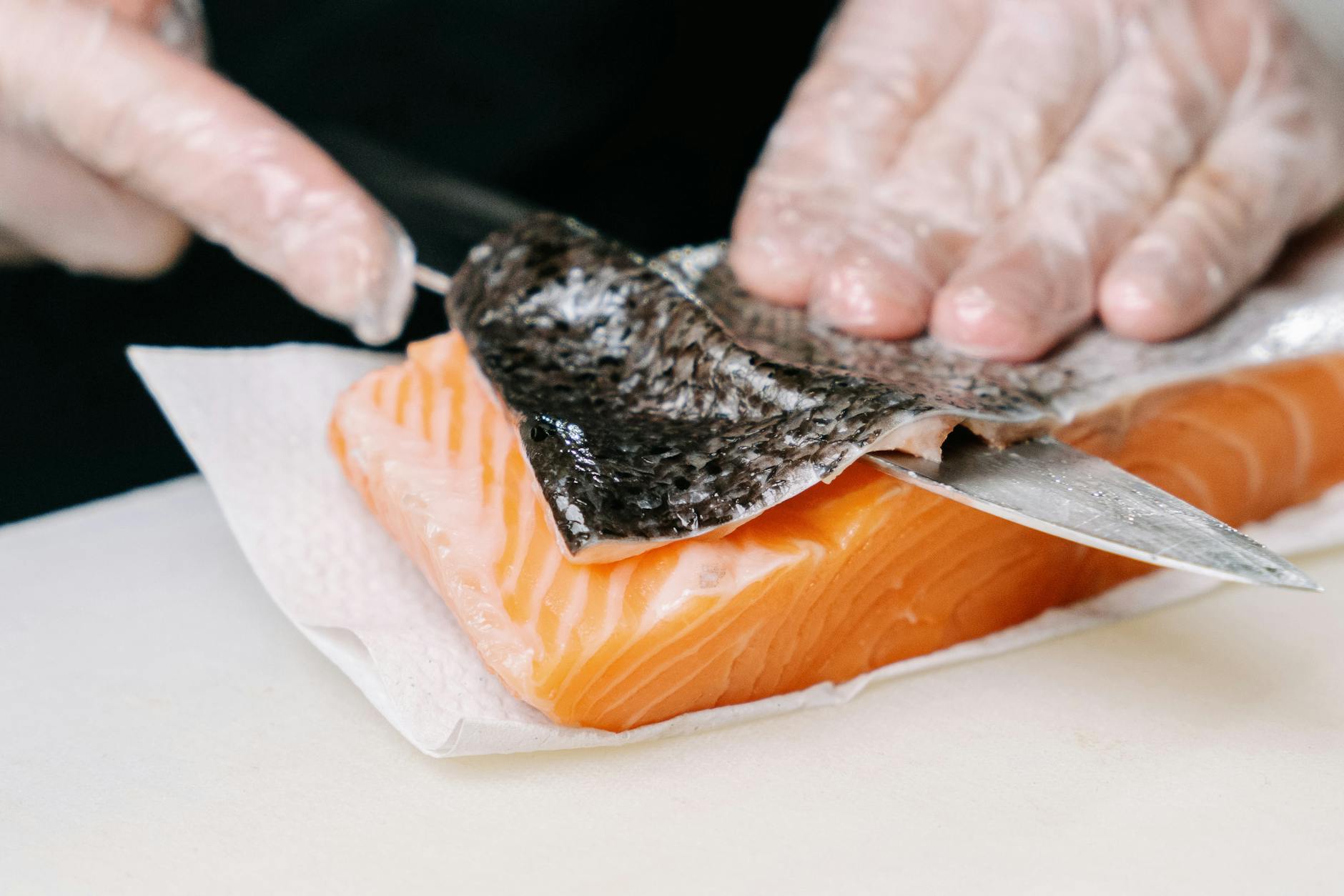
The practical challenge for many people over 50 isn’t understanding that fatty fish is healthy—it’s figuring out how to eat it consistently without getting tired of it. A reasonable approach is to think in terms of weekly rotation: salmon one day, mackerel or sardines another, tuna a third. This gives you variety and targets different omega-3 profiles. Salmon offers DHA-rich oil. Mackerel and herring are even more concentrated in omega-3s. Canned sardines and tuna provide convenience and cost-effectiveness, though canned tuna is lower in omega-3s than fresh or canned options packed in oil. The three-times-per-week guideline translates to roughly 8 ounces weekly, so you might prepare a 3-4 ounce fillet at dinner three nights a week, or use smaller portions across more meals.
Baked, grilled, or poached preparations preserve the omega-3 content. The key limitation of supplements bears mentioning again here: if you’re not eating fish, fish oil pills won’t give you the same benefit. The whole food contains other nutrients—vitamin D, selenium, B vitamins—that work in concert with the omega-3s. A supplement gives you the isolated omega-3s alone. Cost-wise, canned sardines or mackerel might run you $2-3 per serving, while fresh salmon is higher but often available on sale. Budget-conscious eating of fatty fish is entirely feasible if you’re strategic about it. The tradeoff is time investment; canned fish requires no preparation, while fresh fish requires cooking knowledge or willingness to learn simple techniques.
The Supplement Question—Why You Can’t Just Take Pills
This is the critical point where many people go wrong. The research is clear: while omega-3 supplements derived from fish oil contain concentrated EPA and DHA, they have not demonstrated the same protective cognitive effects as eating fish itself in research studies. A Harvard Health analysis concluded that people should not rely on brain health supplements, despite marketing claims. Why would fish oil pills fail to deliver the same benefit as eating fish? One possibility is that the whole food matrix matters. Fish contains not just omega-3s but also proteins, minerals, vitamins, and compounds we may not fully understand yet.
When you consume these nutrients together, in the context of whole fish tissue, they may work synergistically in ways that isolated omega-3 supplementation cannot replicate. Another possibility is dose or bioavailability—the body may absorb and utilize omega-3s more effectively from whole food sources than from concentrated supplements. Neither explanation is certain, but the empirical evidence is: eat the fish, not the supplement bottle. This is particularly important for people over 50 considering supplements as a shortcut to cognitive protection. If brain health is your goal, the research points clearly to whole foods, not supplements. This doesn’t mean supplements are harmful—they likely have some benefit—but they should be viewed as insurance, not replacement for dietary omega-3 sources.

Fatty Fish and Brain Aging at the Cellular Level
When researchers examine the brains of adults with higher omega-3 levels, they’re essentially looking at cells that age more slowly. The EPA and DHA in these cells form part of the neural membranes—the lipid layers that surround brain cells and allow them to transmit signals. These membranes become increasingly rigid with age unless they’re adequately supplied with flexible omega-3 fats.
A brain cell membrane lacking omega-3s is like a rubber band that’s been left in the sun for years: it loses its elasticity and can’t function properly. The 2026 systematic review of 25 studies involving participants aged 65 to 91 confirmed this protective pattern across diverse populations. Increased fish intake was consistently associated with improved cognitive assessment scores and lower Alzheimer’s disease mortality. This spans different countries, different healthcare systems, and different baseline diets, suggesting the benefit is robust and reproducible.
The Case for Starting or Increasing Fish Consumption Now
If you’re in your 50s or 60s and haven’t been a regular fish eater, the evidence suggests that starting now still matters. The brain is not fixed in its aging trajectory. While prevention is powerful—starting a fish-rich diet earlier is better than starting later—the research on middle-aged and older adults shows measurable cognitive benefits across all age groups studied.
You’re not repairing decades of neglect with a single fillet, but you are providing your brain with the raw materials it needs to maintain its current cognitive capacity and resist decline. The future outlook for brain health and fish consumption suggests this may become more central to clinical recommendations for dementia prevention. As the evidence accumulates and the mechanisms become clearer, eating fatty fish may shift from a “good idea” to a standard recommendation alongside exercise and sleep, the same way Mediterranean diet patterns have become cornerstone recommendations in neurology and geriatrics.
Conclusion
Fatty fish could be the most important brain food for adults over 50 because your brain is made of the very compounds found abundantly in salmon, mackerel, sardines, and other oily fish. The evidence—from the 20 percent reduction in dementia risk, to the 30 percent reduction in cognitive decline at higher consumption levels, to the measurable increases in brain volume and hippocampal size—points consistently toward a protective effect. This isn’t theoretical; it’s biochemical reality translated into cognitive resilience.
The practical path forward is simple: commit to eating 8 ounces of fatty fish weekly, at least once, in preparations that preserve the omega-3s. Whether that’s a salmon fillet, a can of sardines, or grilled mackerel is less important than consistency. Supplements won’t substitute for the whole food, but the whole food is inexpensive enough and versatile enough to fit into any budget and any diet. For someone looking for a single dietary change most likely to protect their brain over the next two decades, fatty fish deserves serious consideration.
You Might Also Like
- Why wild blueberries Could Be the Most Important Brain Food for Adults Over 50
- Why walnuts Could Be the Most Important Brain Food for Adults Over 70
- Why leafy greens Could Be the Most Important Brain Food for Adults Over 40
For more, see National Institute on Aging.