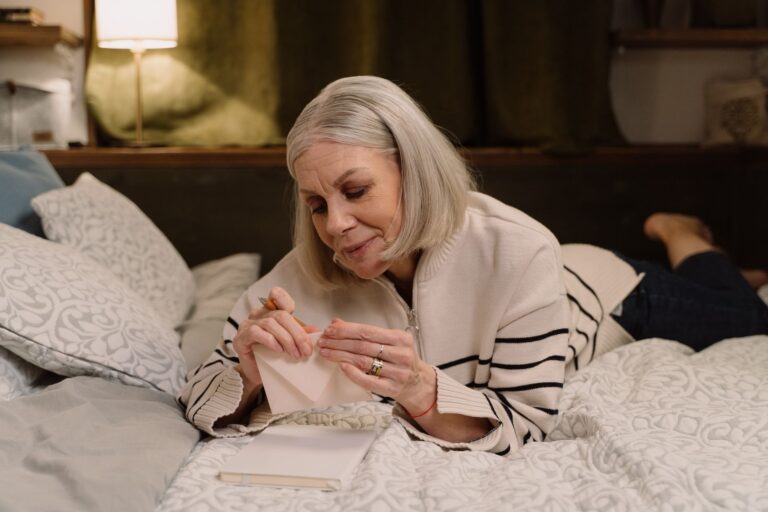
Families record stories early because dementia—cognitive loss severe enough to disrupt daily life—can make memories and communication harder to retrieve. Capturing a person's voice, identity, values, and wishes may preserve meaningful guidance before more details become difficult to express. The timing is personal and unpredictable. Recording is a voluntary family practice, not a treatment, diagnostic test, or guarantee that memories will be preserved.
Medical information disclaimer: This article is for general educational purposes only and does not provide medical advice, diagnosis, or treatment. Always consult a physician or other qualified health professional about symptoms, medications, tests, or treatment decisions.
Table of Contents
- What may change—and what cannot be predicted
- What is worth preserving
- How to record without making it a test
- Can a recording guide later decisions?
- Benefits, limits, and family safeguards
What may change—and what cannot be predicted
Dementia can affect memory, speech, understanding, and the ability to express thoughts, according to the National Institute on Aging. A person may remember an event but struggle to find a name, sequence, or word. Autobiographical memory—memory for one's own life—can decline over time.
One 18-month study found declines among people with mild cognitive impairment and Alzheimer's disease, but it included only 17 and 16 participants in those groups, respectively. Its findings support recording early, but cannot predict one person's course (Journal of Alzheimer's Disease study). Recording should not replace a medical evaluation. Dementia has multiple causes, and some dementia-like symptoms may have treatable causes.
What is worth preserving
A useful recording does more than document major milestones. It can capture how someone describes family traditions, daily comforts, personal beliefs, difficult experiences, and the people who shaped them.
Possible topics include: These details may later help relatives and caregivers understand the person behind the symptoms. A story about always eating breakfast alone, for example, may explain why a busy communal meal feels uncomfortable.
- Childhood homes, games, celebrations, and family sayings
- Work, relationships, parenthood, travel, and turning points
- Music, food, faith, humor, and routines that bring comfort
- Preferred forms of address, clothing, grooming, and social contact
- Views about independence, medical care, visitors, and important relationships
How to record without making it a test
Invite the person to lead, and keep each session short and low-pressure. The goal is to hear what matters to them, not to check whether names and dates are correct.
Revisit topics only when the person welcomes it. A brief description, song, joke, or remembered feeling can still carry meaning without a complete chronology.
- Ask permission before every recording.
- Start with one open prompt, such as, "What was Sunday morning like in your childhood?"
- Allow pauses and unfinished thoughts.
- Avoid correcting details or asking the person to prove an answer.
- Stop if the conversation causes distress, frustration, or fatigue.
Can a recording guide later decisions?
Recordings can preserve a person's own explanations of what matters. A statement such as "I want my sister included in major decisions" gives relatives context that a list of medical preferences may not provide. However, a recording is not a legal substitute for an advance directive or other formal planning document.
It also does not prove that someone had—or will continue to have—the ability to make a particular decision. Discuss care wishes early, document them through the appropriate formal process, and use recordings as supporting context. Keep dated copies, revisit preferences when appropriate, and avoid asking leading questions designed to secure a preferred answer.
Benefits, limits, and family safeguards
Life story work may support connection and person-centered care, but the evidence remains limited. A major review found a small, mixed research base and insufficient evidence for firm conclusions about its effects (BMC Nursing review).
Stories can also reveal private experiences or provoke disagreement about what happened. Respect requests to skip, erase, or restrict a recording, and do not share sensitive material merely because it may interest other relatives. If a conversation turns to future care, use the NIA Advance Care Planning Conversation Guide to identify decisions that need clearer discussion and formal documentation.