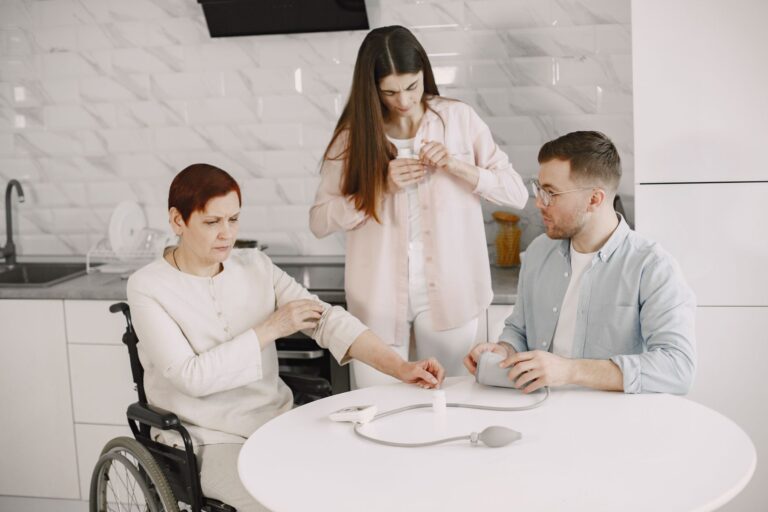
Dementia care feels like a long goodbye because the disease unfolds across years of gradual loss—not a sudden separation but a slow fade where the person you know gradually becomes someone different, and you’re living that change every day. Each small decline—forgetting your name, losing the ability to dress alone, no longer recognizing faces or voices—is its own farewell. The person is still there in the body, still breathing, still capable of some connection, but pieces of who they were keep disappearing. This isn’t a fast crisis that ends with clarity.
It’s prolonged ambiguity. Your loved one might have moments of recognition followed by hours of confusion. They might know you one day and look at you like a stranger the next. You’re not grieving one loss; you’re grieving many small ones, stacked on top of each other, while continuing to show up and provide care as if the relationship still works the way it used to. That paradox—still being a caregiver to someone who’s increasingly unreachable—is what makes the goodbye feel endless.
Table of Contents
- How Dementia Strips Away Abilities Piece by Piece
- The Particular Grief of Watching Someone Forget You
- The Communication Breakdown That Defines the Long Goodbye
- How Care Needs Shift Faster Than Relationships Can Adapt
- The Warning Signs People Miss Until It’s Too Late
- The Peculiar Torture of Moments of Clarity
- Why Some Families Feel Relieved When Death Finally Comes
How Dementia Strips Away Abilities Piece by Piece
dementia doesn’t take everything at once. The disease progresses in stages, and each stage removes different capabilities. Early dementia might mean your parent forgets appointments or repeats stories. Mid-stage dementia means they can’t cook, can’t manage finances, can’t shower without help. Late-stage dementia means they can’t eat without assistance, can’t control their body’s basic functions, might not speak recognizable words anymore. Each transition feels like losing them a little more, even though they’re still alive. The timeline varies dramatically from person to person. Some people decline rapidly over 18 months.
Others remain in a particular stage for five or even ten years. A spouse caring for someone in mid-stage dementia doesn’t know if they’re looking at three more years or twelve more years of this level of care. That uncertainty compounds the feeling of an endless goodbye—you can’t prepare for an end date you can’t see. Real example: A woman notices her husband repeating the same question about dinner plans. She’s frustrated at first—he’s clearly heard the answer. Then six months later, he stops recognizing her son. Two years later, he doesn’t recognize her. Each stage brought a new version of loss, and she kept adjusting to care for someone who was slipping further away each time.
The Particular Grief of Watching Someone Forget You
Anticipatory grief is the official term for the sadness families feel while caring for someone with dementia who’s still alive. Unlike traditional grief, which comes after someone dies, anticipatory grief happens in the present tense while you’re still providing care and the person is still there. You’re mourning the loss of them while they’re sitting across the table from you. This creates an exhausting emotional double-bind. You need to stay present and engaged as a caregiver, but your mind is already processing the loss of the relationship.
Some caregivers report feeling guilty for grieving too early, as if they’re wishing their loved one were already gone. Others report the opposite: they’ve been grieving so long by the time death finally comes that they feel relieved, which then triggers guilt about that relief. A significant limitation: grief support groups and bereavement counseling are typically built around the experience of someone who has died. Anticipatory grief while still active in caregiving is fundamentally different—you can’t move through the stages of grief if the loss is still unfolding. Many caregivers find they need to process the same loss multiple times as the disease progresses and strips away yet another piece of the relationship.
The Communication Breakdown That Defines the Long Goodbye
One of the most painful aspects of dementia is that the person can’t tell you how they’re experiencing their own decline. early on, some people with dementia have insight into their own cognitive loss and can express fear or frustration. But as the disease progresses, that ability disappears. You’re left interpreting whether their confusion is frightening, whether they know they’ve lost their independence, whether they recognize what’s happening to them at all. This communication gap reverses the power dynamic in the relationship. If your parent was once the caregiver and decision-maker, you now make all the choices for them: what they eat, when they wake up, whether they stay in their home or move to a facility, what medical treatments they receive.
They can’t consent in the way they used to. They can’t tell you if they’re content or suffering. You’re making their lives happen to them, even when you’re trying to make it as comfortable as possible. Example: A son notices his mother stops making eye contact during conversations. She still responds to her name, but she doesn’t initiate conversation anymore. He doesn’t know if she’s depressed, if she’s declining cognitively, if she’s just tired that day, or if she’s slipping into late-stage dementia. He has to guess, adjust, and hope he’s guessing right.
How Care Needs Shift Faster Than Relationships Can Adapt
At the beginning of dementia, a spouse or adult child often thinks they can provide care indefinitely at home. But dementia typically becomes a 24-hour job. The person might wander at night. They might become incontinent. They might become aggressive or sexually inappropriate, things completely unlike their personality. They might stop recognizing the person they’ve been married to for 40 years. Choosing a facility or hiring in-home help can feel like abandonment, even when it’s necessary. Many adult children move through guilt, then exhaustion, then acceptance, then sometimes guilt again when they realize they can’t handle the care anymore.
This isn’t a linear progression. Families might try to manage at home, hit a crisis point, place the person in a facility, then struggle with visiting a place that smells and feels nothing like home—a place the person often doesn’t recognize and sometimes seems to hate. Comparison: Caring for a child is demanding but moves toward independence. Caring for a parent with dementia is demanding and moves toward dependence. The endpoint isn’t growth or recovery. It’s decline. This changes the emotional calculus of caregiving entirely. There’s no light at the end of this tunnel except the person’s death, which is both a genuine loss and sometimes a relief.
The Warning Signs People Miss Until It’s Too Late
Family members often don’t realize someone has dementia until the person has already reached mid-stage disease. Early signs—forgetting words, repeating stories, struggling with new technology—are easy to attribute to normal aging or stress. Someone might retire and the family assumes they’re just adjusting. A widow might become withdrawn and everyone assumes it’s grief. Meanwhile, the dementia is advancing unchecked, and by the time there’s a formal diagnosis, the person’s cognitive abilities have declined much further than the family realized. This delay means fewer opportunities to have conversations with the person while they still understand their own situation.
Many people diagnosed with dementia in later stages can’t process what the diagnosis means or plan for their future. They can’t express preferences about end-of-life care or long-term living situations. The family has to make decisions in a vacuum, guessing what their loved one would have wanted based on outdated information or vague memories. The limitation is profound: medical communities still aren’t standardized in when and how they screen for cognitive decline. A person might see their doctor regularly and never get tested. Or they might get tested once and then not again for years, missing the progression entirely. Early detection isn’t just medically valuable—it allows the person to participate in their own care planning while they still can.
The Peculiar Torture of Moments of Clarity
In mid-stage and late-stage dementia, people sometimes have moments of clarity—brief windows where they understand their situation again. A person might suddenly realize they’re in a facility and become agitated, asking to go home. They might remember a piece of their identity and speak in a way that’s startlingly like their old self. These moments can be cruel because they remind everyone what was lost.
Some research suggests these moments might be distressing for the person with dementia too. Imagine suddenly remembering that you’ve been slowly losing your mind, or having a moment of awareness about months or years you can’t account for. The person doesn’t have the cognitive capacity to process that information effectively, then the moment passes and they return to confusion. It’s a type of suffering that’s hard to quantify and sometimes hard to witness.
Why Some Families Feel Relieved When Death Finally Comes
After years of caregiving, watching someone decline, and managing the emotional whiplash of a slow goodbye, many families report feeling relief when the person finally dies. This isn’t callousness. It’s not wishing the person dead earlier. It’s the end of an exhausting, unresolvable situation. The caregiver can stop second-guessing their decisions.
They can stop managing a care situation with no good outcomes. They can stop pretending the person is still the person they knew while simultaneously knowing that’s impossible. Some families also recognize that in late-stage dementia, the person might be suffering in ways that can’t be fixed—pain that can’t be communicated, confusion that can’t be alleviated, a kind of confinement in a body that no longer responds to intentions. Death, in this context, can feel like a merciful endpoint. Families sometimes feel they can finally let go when they reach this stage, and that release comes wrapped in grief and guilt and complicated understanding that death was, in some ways, the best possible outcome.
- —