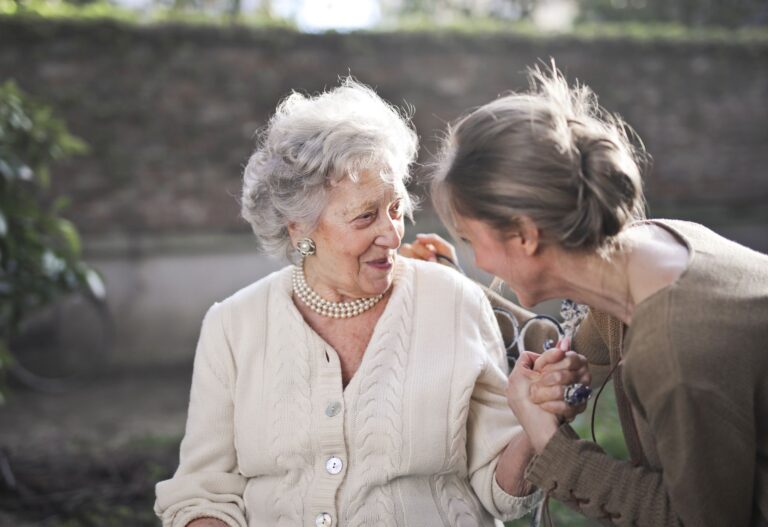
Dementia can make it difficult to recognize family because brain damage disrupts memory, reasoning, and the ability to identify familiar people. Families can respond by offering calm introductions, gentle cues, and reassurance instead of arguing, testing memory, or showing hurt. Dementia is a group of symptoms caused by diseases that affect thinking and daily functioning. Recognition problems vary widely and do not necessarily mean the person has lost every sense of connection.
Medical information disclaimer: This article is for general educational purposes only and does not provide medical advice, diagnosis, or treatment. Always consult a physician or other qualified health professional about symptoms, medications, tests, or treatment decisions.
Table of Contents
- How dementia disrupts recognition
- What nonrecognition can look like
- Does the emotional bond remain?
- How to respond in the moment
- When a sudden change needs medical attention
How dementia disrupts recognition
Diseases such as Alzheimer's progressively damage neurons and their connections. As this damage worsens, a person may struggle to connect a familiar face with a name, relationship, or shared history, according to the National Institute on Aging's Alzheimer's disease fact sheet. Recognition problems often become more apparent during moderate Alzheimer's disease, when memory loss and confusion increase.
Hallucinations, delusions, and paranoia can also occur, complicating how the person interprets familiar people. These difficulties are not universal or diagnostic by themselves. Symptoms differ by the cause and severity of dementia, while medications, infections, stroke, sleep problems, and other conditions can also affect cognition.
What nonrecognition can look like
A person may know that a face seems familiar but cannot recall the person's name or relationship. Someone might greet a daughter warmly without understanding that she is their daughter. Others specifically lose the ability to recognize familiar faces.
The Alzheimer's Society explains that some people may even misidentify their reflection or believe relatives are strangers or intruders. Nonrecognition may change from one interaction to another. families should therefore respond to the person's present understanding instead of demanding a correct answer.
Does the emotional bond remain?
Failure to identify someone does not necessarily erase emotional connection. A person may still feel safe, calm, or happy with a familiar relative even when they cannot explain who that person is. The Alzheimer's Society notes that feelings of closeness can remain despite problems with recognition.
Tone of voice, manner, and a sense of familiarity may still shape the interaction. This distinction can help families interpret the moment more accurately. "I don't know who you are" may reflect impaired recognition rather than rejection of the relationship.
How to respond in the moment
Approach the person calmly and give them information they no longer have to retrieve. Preserve dignity by making eye contact, using their name, allowing extra response time, and continuing to include them in conversation.
Helpful responses include: If the person believes a caregiver is a stranger or dangerous, arguing may deepen distress. Federal guidance recommends comfort, reassurance, distraction, and discussing hallucinations or delusions with the person's doctor because illness or medication may contribute, according to the National Institute on Aging.
- Introduce yourself by name and relationship: "Hi, Dad. It's Maya, your daughter."
- Add simple context: "I came to have lunch with you."
- Reassure them: "You're safe. I'm here with you."
- Avoid asking, "Don't you remember me?"
- Do not show offense or insist that they identify you correctly.
When a sudden change needs medical attention
Gradual recognition problems can occur as dementia progresses, but a sudden change is different. New confusion, nonrecognition, hallucinations, or unusual behavior developing over hours warrants immediate medical assessment.
Delirium is an acute state of muddled thinking that is often associated with illness and can occur alongside dementia. Families should report when the change began, what behavior they observed, and any recent medication or health changes rather than assuming dementia alone caused it.