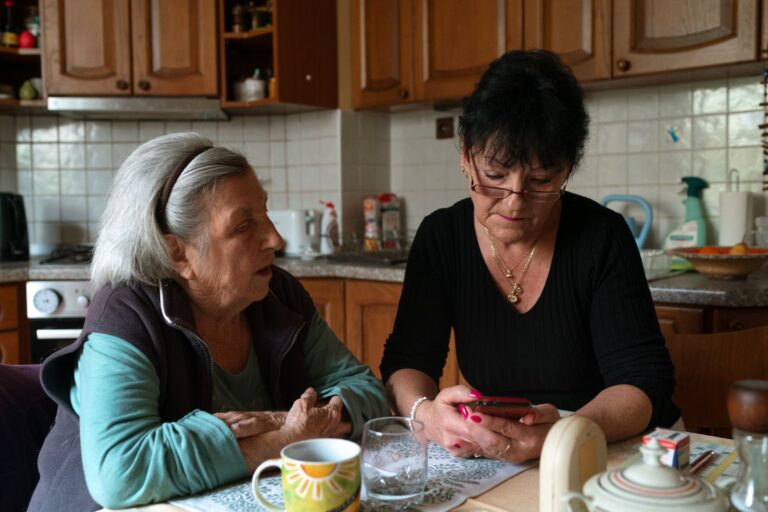
Caregiver notes prevent dementia care mistakes by creating a detailed written record of symptoms, behaviors, medications, and responses that would otherwise be lost to memory or miscommunication. When a person with dementia cannot reliably report their own experience—because of memory loss, communication difficulty, or confusion—the notes in your care journal become the primary source of truth. A single observation recorded at the right moment can stop a doctor from prescribing a medication that will interact badly, prevent a hospital admission by catching an infection early, or alert the next caregiver to a behavior change that signals something is wrong.
Without written records, caregivers rely on recall, which is fragmented under stress. You might remember that your mother “seemed off” during the previous week, but struggle to say exactly when it started, what it looked like, or whether it was preceded by a fall you forgot to mention. A doctor asking these questions three months later gets vague answers. A care note written on Wednesday says: “Mom refused breakfast, complained of abdominal pain around 11 AM, took two hours to eat lunch, normal appetite at dinner.” That specificity changes clinical decisions.
Table of Contents
- How Do Caregiver Notes Prevent Medication Errors and Drug Interactions?
- Why Written Records Are Irreplaceable When Memory Lapses Happen
- How Notes Bridge Communication Between Caregivers and Medical Professionals
- What Should a Care Note Actually Contain to Prevent Mistakes?
- Common Documentation Mistakes That Create Care Gaps
- Digital Notes vs. Paper: Which Prevents More Mistakes?
- How Care Notes Protect Against Delayed Diagnosis and Medical Liability
How Do Caregiver Notes Prevent Medication Errors and Drug Interactions?
dementia care often involves multiple medications for the original condition, pain, depression, sleep, and behavioral symptoms. caregivers are frequently the only people who see the actual effects. A person with dementia might not report that a new antidepressant is causing dizziness, or they might report it inconsistently. A care note saying “Started sertraline Monday. Tuesday and Wednesday: very unsteady, fell twice—holding furniture to walk. Thursday: back to baseline after reducing dose” gives the prescribing doctor concrete evidence of a side effect that changes the treatment plan. Notes also prevent gaps in the medication history that can cause dangerous overlaps.
If a primary care doctor prescribes a pain medication without knowing that the neurologist already started something similar, notes from the caregiver create the paper trail that catches this before the patient is on two competing drugs. Hospitals depend on medication reconciliation—comparing what was supposed to be taken against what actually was. A caregiver’s note stating “Dad stopped taking the statin in June without telling anyone because he said it made his knees hurt” means the hospital doesn’t guess whether he’s been compliant. The limitation is that notes are only as good as the person writing them. If a caregiver assumes a symptom is normal aging rather than a side effect, they might not document it at all. If they don’t know the names or doses of medications, the note becomes incomplete. Training and access matter.
Why Written Records Are Irreplaceable When Memory Lapses Happen
dementia changes memory in the person with the disease. It also changes memory in the caregiver—through sleep deprivation, stress, and the sheer volume of daily details. After weeks of managing a dementia patient’s care, caregivers commonly forget the sequence of events, confuse which week a symptom appeared, or lose track of whether a new behavior is new or has been present for months. A care journal preserves this timeline when human recall cannot. This becomes critical during medical conversations. A neurologist asking “When did the nighttime confusion start?” needs an honest, dated answer.
A caregiver working from memory might say “A couple of months ago,” when the journal shows it started three weeks ago after a UTI was treated. That difference changes the diagnostic interpretation—is this disease progression or a lingering effect of infection? A care note saying “March 12: confusion began after fever/dysuria. March 25: treated for UTI. April 2: confusion still present but less severe” tells a different story than “sometime this spring, I think.” The warning is that caregivers often underestimate how much they’ve forgotten. The act of writing things down forces precision. When you sit down to write what happened yesterday, you realize you’re uncertain about timing, and you have to check your own notes. This is a feature, not a bug—it reveals gaps in memory before they become a care mistake.
How Notes Bridge Communication Between Caregivers and Medical Professionals
A person with dementia often cannot reliably report their own symptoms to a doctor. When the neurologist asks “How have you been sleeping?” the patient might say “Fine” while the family caregiver knows sleep has been fragmented and nightmarish for weeks. Care notes create a shared language between family and professionals. Instead of the doctor relying on a fragmentary conversation with someone whose reliability is unknown, there is a dated, specific record. Care notes also solve the handoff problem. When a patient transitions from family care to assisted living, or from one facility to another, the notes go along.
Without them, critical information disappears. A person transitioning to a memory care unit might stop eating because of a specific texture issue—something the family discovered and adapted to—but if that’s not written down, the new facility tries generic solutions and documents “poor appetite” instead of addressing the actual problem. A care note saying “Dad refuses anything pureed but will eat soft solids—mashed potatoes, scrambled eggs, oatmeal. Choking risk with liquids; always thickened” changes how he’s fed and what his quality of life looks like. The comparison is sharp: with notes, information survives the transition. Without them, every new caregiver or facility starts from scratch, and the person with dementia loses hard-won adaptations.
What Should a Care Note Actually Contain to Prevent Mistakes?
Effective care notes focus on observable facts rather than interpretation. “Dad was confused” is less useful than “Dad called me by his brother’s name three times, didn’t recognize his own bedroom, asked what year it is.” The second version is specific enough that a doctor can identify whether this is baseline or a change, and specific enough that the next caregiver knows what confused behavior looks like with this particular person. The essential elements are: date and time, what you observed (symptoms, behaviors, refusals, falls, pain), what you did about it (medication given, comfort measures, who was contacted), and the outcome. A helpful note includes context—did something unusual happen today, did they sleep poorly, did they refuse meals? A medication note should say not just “gave aspirin” but “gave aspirin at 8 AM, Dad complained of wrist pain overnight.” A behavioral note should say not just “aggressive this afternoon” but “threw cup of tea at lunch when sister tried to help with eating, then calm by 2 PM.” The tradeoff is between comprehensiveness and overwhelm.
A caregiver who tries to document every detail will burn out. The practical compromise is to note changes, refusals, falls, medication responses, and anything that affects the person’s safety or well-being. Routine days that follow the baseline need less detail. Days that deviate from normal need specifics.
Common Documentation Mistakes That Create Care Gaps
Many caregivers write vague notes: “Didn’t seem like himself today.” This doesn’t tell anyone what “not himself” means. Was he drowsy? Agitated? Refusing food? Confused about time? A doctor reading this a month later cannot use it. The fix is to describe what you see and hear, not your interpretation of his mood. Another common error is inconsistent medication tracking. A caregiver might write “took meds” without noting the time, dose, or which medications, assuming they’ll remember.
Then if a side effect appears, nobody can pinpoint when the medication went in. A blank in the medication log creates doubt about compliance and makes it harder to distinguish a true drug reaction from something else. If a caregiver writes nothing on days when nothing unusual happened, then gaps appear—and a doctor can’t tell if a medication wasn’t given, or if it was given but no one bothered to note it. The warning is that inadequate documentation can be read as a missing dose. If a medication note is blank from Tuesday through Friday, a pharmacist checking compliance might assume it wasn’t taken, not that it was taken without being noted. Consistency matters even for routine days.
Digital Notes vs. Paper: Which Prevents More Mistakes?
Digital care notes offer search, reminders, and automatic timestamps. If you open an app and note that Mom refused lunch, the app records the exact time without you typing it. If you search for “abdominal pain” across months of notes, a digital system finds every instance in seconds. Paper notes require you to flip through weeks of pages. Paper notes, though, don’t require passwords, WiFi, or app updates. A caregiver can jot a quick note on a bedside pad without unlocking a phone.
Paper is harder to accidentally delete. A paper journal is also harder to ignore—it sits on the nightstand as a daily reminder to write. Digital apps work well for caregivers who are already comfortable with technology and who won’t lose the password. The practical choice often depends on the caregiver’s comfort and the care setting. A family caregiver at home might use paper for immediate notes and transfer summaries to a shared email or digital file weekly. A facility usually has a digital charting system because multiple staff need access. The mistake is choosing a method and abandoning it—a half-filled journal or an app checked once a month prevents nothing.
How Care Notes Protect Against Delayed Diagnosis and Medical Liability
Dementia progresses in ways that are subtle and easy to miss. A person’s gait might change over weeks—not a sudden fall, but a slow shuffle that the family notices if they’re looking. A documented pattern of “gait appears slower each week since May” signals decline to a doctor and might prompt earlier physical therapy or assistive device fitting. Without notes, the doctor only sees the person during an office visit and might miss the trajectory. Care notes also protect in situations where medical treatment goes wrong. If a hospital or facility makes an error—misses a medication allergy, doses a drug incorrectly, or fails to notice a serious symptom—a family’s detailed care notes become evidence.
They show what the baseline was, what the person was taking, and what symptoms were present before the error. This protects the patient from delayed diagnosis and protects the family from being dismissed when they report that something is wrong. A note dated weeks before an admission saying “Dad becomes very confused with any fever, even under 100 degrees” gives weight to a family member’s concern that a low-grade fever is significant when the patient is now severely confused in the hospital. Without that note, the medical team might attribute the confusion to age or dementia progression rather than investigate the fever as a cause. The documentation also ensures continuity when the primary caregiver cannot be present. A substitute caregiver reading the notes knows the person’s baseline, communication style, and what triggers agitation—preventing mistakes born of unfamiliarity. A family member who stepped in after the primary caregiver got sick, a respite care worker, or an ER nurse all benefit from a clear care history written down.
- —