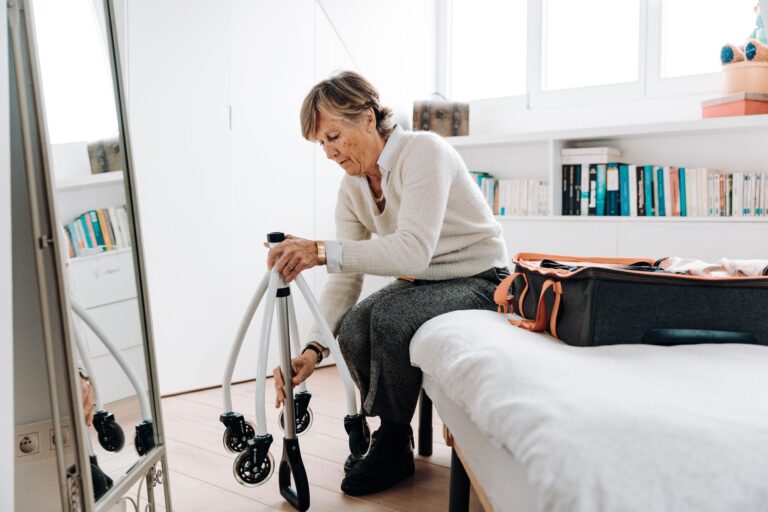
Rehabilitation facilities can provide essential care for people with dementia recovering from surgery, illness, or hospitalization, but families need to understand the specific challenges these settings present. Dementia dramatically changes how a person responds to environment, routine disruption, and unfamiliar caregivers—making rehab facility placement a high-stakes decision that requires families to know what they’re evaluating. A person with dementia admitted to a standard rehab facility without specialized protocols faces compounded risks: disorientation can lead to wandering or elopement, medication regimens become dangerous without careful monitoring, and the stress of an unfamiliar environment can accelerate cognitive decline.
For example, someone with moderate Alzheimer’s disease admitted for a hip fracture repair may seem medically stable but could become violent, refuse medication, or refuse to eat simply because they don’t recognize the staff or understand where they are. The difference between a dementia-capable rehab facility and a standard one is measurable and matters enormously. Specialized units employ dementia-trained staff, maintain consistent routines and familiar objects, manage behaviors before they escalate into safety crises, and communicate with families about changes in the patient’s baseline. Standard facilities often lack these protocols, treating dementia as a secondary consideration rather than a primary clinical factor.
Table of Contents
- What Makes Rehab Facilities High-Risk for Dementia Patients
- Understanding CMS Ratings and Quality Data for Dementia Care
- Dementia-Specific Safety Protocols to Verify
- Costs, Insurance Coverage, and Hidden Expenses
- Medication Management and Delirium Risk
- The Role of Family Involvement and Communication
- Red Flags During Facility Tours and After Admission
What Makes Rehab Facilities High-Risk for Dementia Patients
Rehabilitation facilities present a collision of two challenging realities: patients need intensive physical recovery from acute illness or surgery, while people with dementia struggle with precisely the conditions that rehab environments create. The setting is unfamiliar, the routine is rigid, staffing changes shift hourly, and medical protocols often prioritize mobility targets over the cognitive safety of the patient. A physical therapist pushing a patient with dementia to walk independently, while essential for recovery, can trigger agitation or refusal if the patient doesn’t understand why they’re being asked to move or who is moving them. Falls are the leading cause of death among older adults, and dementia increases fall risk five to tenfold. Rehab environments feature high-activity spaces, physical therapy equipment, and staff who are focused on rehabilitation goals rather than on monitoring a patient’s moment-to-moment safety.
A patient with dementia in a rehab hallway might wander into a physical therapy room, become confused by equipment, and suffer a catastrophic fall. Medication errors spike in these settings because dementia patients often cannot accurately report side effects or communicate when they haven’t taken a dose. Behavioral changes represent another critical risk. Delirium—acute confusion and agitation—is extremely common in hospitalized older adults with dementia. A person who was mild-mannered at home can become verbally or physically aggressive in a rehab setting simply because the cognitive fog worsens in a confusing environment. Staff without dementia training often respond to these behaviors with restraints or sedating medications rather than investigating root causes (pain, infection, medication interaction, need for toileting, or simple disorientation).
Understanding CMS Ratings and Quality Data for Dementia Care
The Centers for Medicare & Medicaid Services (CMS) publishes detailed quality ratings for every nursing home and skilled nursing facility (SNF), and families can access these data at CMS.gov or through Care Compare. However, CMS ratings measure broad quality metrics—overall infection rates, staffing levels, fire safety—but do not separately report dementia-specific outcomes. This is a critical limitation: a facility might have excellent overall quality ratings while having poor dementia care outcomes. Look for facilities that publicly report their dementia-specific data: cognitive decline rates among dementia residents, prevalence of behavioral incidents, medication errors involving dementia patients, and fall rates broken out by cognitive status. Very few facilities publish this level of transparency.
CMS data does show overall rates of pressure ulcers, falls, infections, and hospital readmissions; facilities with high rates in these categories likely struggle with dementia care as well, since dementia patients represent a disproportionate share of fall and readmission risk. If a facility’s overall readmission rate is above 22% for skilled nursing, it is performing worse than average, and dementia-related readmissions (for behavioral crises, medication complications, or deterioration) are a red flag that the facility lacks dementia expertise. Some state licensing boards maintain separate inspection reports for dementia-related violations. Contact your state’s Department of Health or Department of Aging directly and ask whether the facility has citations for inadequate dementia care training, behavioral management failures, medication errors in dementia patients, or elopement incidents. These reports are public record and often reveal problems that quality ratings alone do not.
Dementia-Specific Safety Protocols to Verify
When you tour a rehab facility, ask directly whether they have a dementia care unit, a specialized program, or at minimum dementia-trained staff on the units where your family member would be placed. Dementia Care Specialist certification (offered by the American Dementia Care Association and other accrediting bodies) means the staff member has completed formal training in dementia behavior, communication techniques, and de-escalation. The National Center for Assisted Living (NCAL) offers the Memory Care designation for facilities that meet established dementia care standards. These credentials matter because they indicate the facility has invested in training that actually prevents crises rather than just responding to them. Ask about their protocols for common dementia emergencies. How do they handle a patient who refuses medication? What is their approach to a patient who wanders or attempts to elope? If they answer “we use restraints” or “we use sedating medications,” that is a red flag.
Best practice involves understanding the cause of the behavior (pain, fear, need for toileting, disorientation to place or person) and addressing the root cause through reorientation, comfort measures, or medication adjustment—not chemical or physical restraint. Verify that the facility has 24-hour staff presence on dementia units and that there is a low staff-to-patient ratio. A dementia patient requiring rehabilitation supervision should not be assigned one nursing assistant to five or six patients. The Alzheimer’s Association recommends a maximum of 1:3 or 1:4 ratio on specialized units. Ask what happens during shift changes and meal times, when staffing is often at its thinnest. Also ask how they manage medication: ideally, one staff member prepares medications while another verifies, to catch errors before they reach the patient.
Costs, Insurance Coverage, and Hidden Expenses
Skilled nursing facility (SNF) rehab costs range widely by region, but average between $250 and $400 per day nationally, with higher costs in urban areas and facilities with specialized dementia programs. A one-month stay (30 days) can cost $7,500 to $12,000. Medicare Part A covers the first 20 days fully (after meeting a deductible) and days 21-100 with copayments that increase over time. After day 100, Medicare coverage ends and costs fall entirely to the patient, family, or Medicaid (if the patient qualifies). Medicaid coverage for SNF care varies by state, but most states cover SNF stays once a person qualifies (based on income and asset limits).
The catch is that Medicaid requires what is called “skilled nursing need” to be documented—simply needing dementia supervision without acute medical recovery typically does not qualify as skilled nursing, meaning Medicaid may not pay for extended dementia rehab stays. Private insurance (Medigap or supplemental plans) may cover some copayments but rarely covers the full cost after Medicare’s coverage ends. Hidden costs include: medications not included in facility fees, supplements, incontinence supplies, personal care items, specialized equipment rentals, and family travel if the facility is not local. Some facilities charge additional fees for specialized dementia programs even if the person is on Medicare or Medicaid. Always ask for a detailed fee schedule in writing before admission and understand exactly which costs are included in the daily rate and which are billed separately.
Medication Management and Delirium Risk
Delirium—acute, severe confusion with agitation or withdrawal—occurs in 50-80% of hospitalized older adults with dementia. In a rehab setting, delirium is often preventable but frequently missed or mislabeled as the patient’s baseline dementia. The difference is critical: delirium is acute and potentially reversible, while dementia is chronic. A patient with mild-moderate Alzheimer’s disease who suddenly becomes severely agitated or unresponsive may have delirium caused by a urinary tract infection, medication interaction, dehydration, or medication overdose. Families must insist that facilities track each day whether the patient’s mental status is unchanged, improved, or worsened compared to baseline. Ask staff, “Is this behavior typical for [patient’s name], or is this new?” If it’s new, ask what medical workup has been done.
Delirium is often masked by prescribing sedating medications rather than investigating the cause, and once sedation begins, families rarely see their family member wake up to their true baseline again. Request that the facility use a delirium screening tool (such as the CAM-ICU or Confusion Assessment Method) at every shift change. Medication errors in dementia patients are particularly dangerous because these patients cannot reliably report side effects. Common errors include: giving the patient their morning medications twice (once at the facility, once because family brought home medications), starting a new psychiatric medication without tapering an old one, or giving dementia medications at the wrong dosage or time of day. Before every medication is given, the patient should verify the medication name, dose, and time to whoever is administering it. If your family member cannot do this accurately due to dementia, the staff member must read the chart out loud to a second staff member—a “double-check” system that catches errors before they reach the patient.
The Role of Family Involvement and Communication
The single most protective factor for a person with dementia in a rehab facility is consistent, informed family involvement. Facilities with excellent dementia care outcomes typically require family participation in establishing the patient’s baseline behavior, preferences, triggers, and communication style. Bring photos from home, maintain the person’s preferred routine as much as possible, and ensure staff know whether your family member prefers quiet or music, how they communicate pain or distress, and what activities calm them.
Establish direct communication with the nursing staff and therapists. Ask for a daily verbal update (not just notes in the chart) and visit frequently enough that you notice changes. If staff behavior seems dismissive or if they are not implementing the plan you agreed upon, escalate to the nursing supervisor and the facility administrator. Families who communicate regularly and ask specific, detailed questions are far more likely to have errors caught and safety issues addressed.
Red Flags During Facility Tours and After Admission
During a tour, observe whether dementia residents appear calm and engaged or agitated and withdrawn. Watch whether staff greet patients by name and speak to them respectfully or talk over them as if they are not present. Notice whether the physical environment is safe (no clutter, good lighting, clear signage, secure exits if wandering is a risk). Ask whether the facility has had recent deficiency citations from state surveyors—these are publicly available reports that reveal systemic problems.
After admission, watch for sudden medication increases, especially sedating medications, without clear documentation of the reason. Watch for weight loss, which often signals that the patient is not eating (common in dementia) and staff are not monitoring intake or investigating why. Notice whether your family member’s mental status is declining significantly beyond what their dementia alone would explain—this can signal medication errors, infection, or delirium. Families consistently report that the most dangerous facilities are those where behavioral decline is met with more sedation rather than investigation, and where staff turnover is so high that your family member has a different set of aides every week, making consistent care impossible.
- —