Alzheimer’s disease damages the brain regions responsible for storing and retrieving memories, making it progressively harder for patients to recognize even the most familiar faces. As the disease advances through the cortex and into the hippocampus and other memory centers, the neural pathways that connect a face to the identity and emotional significance of a loved one weaken and eventually break down. A daughter visiting her father in the late stages might be greeted not with recognition but with polite confusion, as if she were a kind stranger—even though she has visited every week for months.
This loss of recognition is not a choice or a sign of cruelty. It is a direct consequence of brain cell death and the progressive failure of memory systems. The person with Alzheimer’s is not rejecting their loved one; their brain is no longer able to access the stored information that would allow them to know who that person is. Understanding this distinction is essential for family members who may otherwise interpret the loss of recognition as a personal rejection or a reflection of the relationship they once shared.
Table of Contents
- How Alzheimer’s Destroys the Brain’s Ability to Recognize Faces
- The Stages of Recognition Loss as Alzheimer’s Progresses
- The Emotional and Relational Impact of Being Unrecognized
- Communicating With and Caring for Someone Who No Longer Recognizes You
- The Intersection of Memory, Perception, and Other Symptoms in Late-Stage Alzheimer’s
- Distinguishing Recognition Loss From Other Behavioral Changes
- Variability and Individual Differences in the Timing of Recognition Loss
- Frequently Asked Questions
How Alzheimer’s Destroys the Brain’s Ability to Recognize Faces
The human brain recognizes faces through a complex process that involves multiple regions working together—the visual cortex perceives the physical features, the temporal lobe stores memories of past encounters, and the limbic system (particularly the amygdala) attaches emotional meaning to that face. Alzheimer’s disease attacks all of these regions simultaneously. Plaques of amyloid-beta protein and tangles of tau accumulate in and around brain cells, causing inflammation, oxidative stress, and ultimately cell death. Over time, the circuits that say “this is my daughter” or “this is my spouse” simply cease to function. In the early stages of Alzheimer’s, a person might struggle to remember the name of a grandchild or forget a recent visit, but recognition often remains intact—they know this is someone important to them, even if they cannot immediately place the relationship.
As the disease progresses, that familiarity fades. One caregiver reported that her husband, who had been married to her for 52 years, eventually saw her as a helpful woman who came by each day to help him with tasks, but without any sense that she was his wife. The recognition was gone, yet some vestigial emotional response—a small comfort in her presence—sometimes remained. This differs sharply from typical age-related memory loss, where an older adult might forget recent events but retains a clear sense of who everyone around them is. In Alzheimer’s, the specific networks dedicated to identity and facial recognition are selectively targeted by pathology, making face recognition loss one of the hallmark symptoms of advanced disease. It can occur earlier in some patients than others, depending on where the disease first takes hold in the brain.
The Stages of Recognition Loss as Alzheimer’s Progresses
Facial recognition loss follows a general progression, though the timeline and severity vary widely from person to person. In the mild or early stage, most patients still recognize family members and close friends, though they may be slow to do so or might confuse people who look similar. They may forget the names of grandchildren or misidentify a nephew as a different relative. The patient is usually aware that something is wrong with their memory and may apologize for not remembering. In the moderate stage, which often lasts the longest—sometimes several years—recognition becomes inconsistent and context-dependent. A person might recognize their spouse when visited at home but not when encountering them in an unfamiliar setting like a hospital.
They might know this is “someone important” without accessing the specific name or relationship. Some patients retain a gut-level emotional response to loved ones even when conscious recognition has faded; they may relax in the presence of a longtime partner even though they cannot say who that person is. In the severe or late stage, most patients no longer recognize anyone, including spouses and adult children. This represents profound damage to the brain regions involved in memory and identity. One important limitation to note is that not all Alzheimer’s patients progress at the same rate or in the same order. Some retain facial recognition longer than others, and a few patients—particularly those with atypical Alzheimer’s variants—may lose language or motor skills while retaining some recognition ability longer than expected. This variability means that predicting when a specific person will stop recognizing loved ones is not reliably possible.
The Emotional and Relational Impact of Being Unrecognized
Being unrecognized by a parent, spouse, or adult child is emotionally devastating for family members and caregivers. Many caregivers report feeling a profound grief that occurs while the person they love is still alive—a loss that is sometimes called “anticipatory grief” or the “long goodbye.” The person you have known your entire life is physically present but psychologically absent in the way recognition creates connection. This can trigger feelings of worthlessness, anger, depression, and exhaustion in the caregiver. Some family members find unexpected moments of connection even in the absence of recognition. A grandson plays a song that his grandmother loved decades ago, and though she does not recognize him, her face softens and she hums along—suggesting that some emotional or procedural memory remains intact.
Another wife describes how her husband, unable to recognize her by sight or name, relaxes when she takes his hand, as if his body remembers what his mind has forgotten. These moments do not restore recognition, but they can provide small islands of connection and can affirm that something of the relationship persists, even in altered form. However, caregivers should be warned that the absence of recognition does not mean the absence of the disease’s other challenges. A patient who does not recognize a family member may still become agitated or hostile if approached unexpectedly, may wander or become lost, and may require full assistance with daily living. The relief that a caregiver might feel—”at least they’re still here, still eating, still alive”—can be quickly followed by the crushing reality of the patient’s continued decline and the demands of full-time care.
Communicating With and Caring for Someone Who No Longer Recognizes You
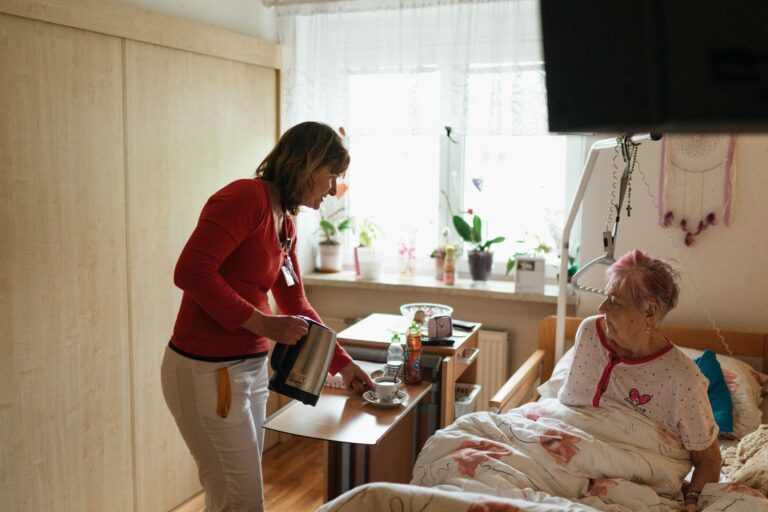
When a loved one no longer recognizes you, the approach to communication and care needs to shift. Rather than reintroducing yourself repeatedly or insisting that the person should remember you, the most effective strategy is to enter their world and work with their current reality. This means remaining calm, speaking in simple sentences, and allowing extra processing time. Approach from the front rather than from behind (to avoid startling them), and use a gentle, reassuring tone. Some caregivers find success in using objects or cues that trigger procedural or sensory memory. If a spouse loves tea, the ritual of making and sharing tea together can create a moment of ease even if conversation about the past is impossible.
If a parent loved gardening, touching plants or looking at flowers may evoke a sense of comfort. These are not substitutes for recognition, but they can reduce agitation and create windows of calm. In contrast, forcing recognition—showing photos and saying “this is your son, you know him”—often backfires, creating confusion and frustration for both parties. Respite care and support groups become particularly important at this stage because the caregiver’s own wellbeing directly affects the quality of care. A caregiver who is exhausted, isolated, and grieving is more vulnerable to burnout and health problems. Many caregivers report that accepting the loss of recognition as part of the disease process, rather than a personal rejection, helps them access a different kind of compassion—one that is less tied to being remembered and more focused on alleviating suffering in the present moment.
The Intersection of Memory, Perception, and Other Symptoms in Late-Stage Alzheimer’s
Recognition loss does not occur in isolation. By the time a patient has reached the stage of not recognizing family members, they are typically also experiencing significant difficulties with verbal communication, often using fewer words or speaking in fragmented sentences. They may lose the ability to read facial expressions correctly, seeing anger in a neutral face or fear in a smile. They may also lose the ability to recognize themselves in the mirror, adding another layer of disorientation to their experience. Additionally, Alzheimer’s disease affects sensory processing.
A person might lose the ability to recognize a loved one’s voice over the telephone or might not respond to their own name when called from another room. Vision problems, including difficulty with depth perception and color discrimination, can make facial recognition even harder. Hearing loss, which often accompanies aging and Alzheimer’s, further isolates the person and makes communication impossible. One warning for caregivers is that these combined losses mean that a person with late-stage Alzheimer’s may be far more impaired than their physical appearance suggests. They may look alert and healthy but be almost completely locked in their own internal world, unable to access memory, language, or recognition simultaneously.
Distinguishing Recognition Loss From Other Behavioral Changes
Not every instance of a person with Alzheimer’s failing to identify a family member reflects true loss of recognition. Early in the disease, when memory loss is the primary symptom, a person might have a moment of confusion and then “catch” themselves—”Oh, of course, you’re my daughter.” This is forgetfulness, not neurological loss of recognition.
Later, when a patient seems not to know who is at the door, the problem might not be facial recognition at all but rather difficulty with verbal processing or executive function—they cannot organize the cognitive steps required to answer the question “who is this?” A distinction worth noting is that some patients with Alzheimer’s, particularly in atypical presentations, may retain the ability to recognize specific highly familiar people while losing other cognitive functions. Genetic and environmental factors may influence which brain regions are affected first and how quickly recognition systems degrade. Testing and formal evaluation by a neuropsychologist is the most reliable way to understand what is actually preserved and what has been lost.
Variability and Individual Differences in the Timing of Recognition Loss
Alzheimer’s disease is not monolithic. While amyloid and tau pathology is the defining feature, the rate of spread, the affected brain regions, and the resulting symptoms vary considerably between individuals. A person with early-onset Alzheimer’s (diagnosed before age 65) might lose recognition rapidly, within months or a few years. An older person with late-onset disease might retain some recognition ability for a longer period. Genetic factors, cardiovascular health, cognitive reserve (the brain’s ability to compensate for damage through neural plasticity), and other variables all influence progression.
Some researchers have found that bilingual individuals and those with higher education levels may retain certain cognitive functions longer, possibly because their brains have built up greater redundancy. However, this does not mean these individuals will necessarily retain facial recognition—the protective effect is inconsistent and unpredictable. A person who worked as an artist or portrait painter for decades might lose the ability to recognize faces earlier than expected if their disease happens to start in the visual recognition networks, while someone with less visual training might retain some ability longer. The human brain’s response to Alzheimer’s remains partially mysterious, and individual outcomes cannot be reliably predicted from demographic factors alone. For this reason, families should avoid making firm predictions about when a particular person will stop recognizing loved ones.
- —
Frequently Asked Questions
Is it painful or upsetting for someone with Alzheimer’s when they don’t recognize a family member?
This varies. Some people experience distress when confronted with the realization that they should know someone but don’t. Others, particularly in advanced stages, may feel no particular emotion about a stranger; they simply do not have access to the memory or emotional response that would create upset. Forcing recognition or reminding them of their memory loss is more likely to cause distress than the non-recognition itself.
Can you bring back recognition if someone recognizes you one day but not the next?
Inconsistent recognition in the moderate stage does not mean the recognition can be restored or strengthened through reminding or behavioral interventions. It reflects the variable, moment-to-moment instability of a degenerating brain. However, consistent context, reduced stress, and familiar routines may make it easier for the person to access whatever recognition remains available on a given day.
Should families tell the truth if a person with Alzheimer’s asks who they are?
There is no single right answer. Some families choose to gently reintroduce themselves; others choose a more reassuring approach, such as “I’m someone who cares about you and I’m here to help.” The goal is to reduce distress. If repeated reintroductions cause confusion or agitation, a calming white lie (“I’m your friend”) may be more humane than forcing confrontation with a fact the person cannot retain.
Does a person with Alzheimer’s feel abandoned if no one visits?
A person in the late stages of Alzheimer’s who does not recognize visitors cannot experience abandonment in the way a healthy person would. However, this does not mean caregiving becomes optional. Visits, touch, and consistent care remain important for the person’s comfort, dignity, and health, even if they do not remember the visit afterward.
Can technology like photos or videos help jog recognition?
Showing photos or videos rarely restores recognition, and may increase confusion or frustration. However, some patients respond to the emotional tone of old videos—a person may not recognize themselves as a young adult in a home video but may feel moved by the music or the scenes. Proceed carefully and stop if the person becomes distressed. —