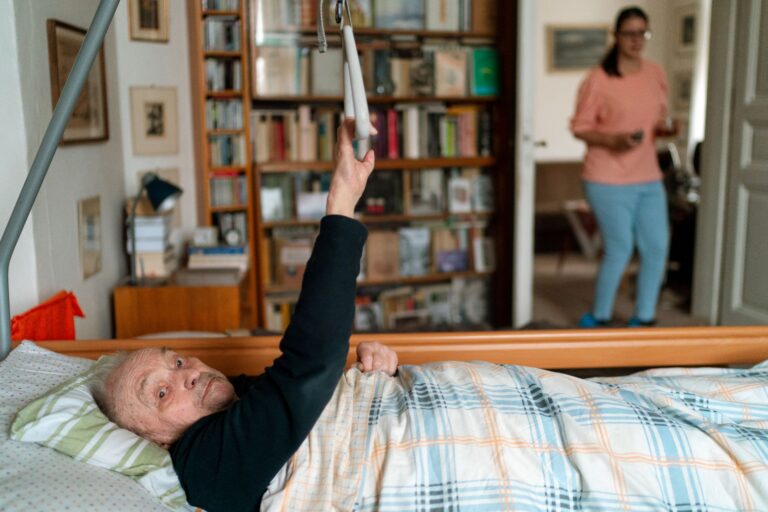
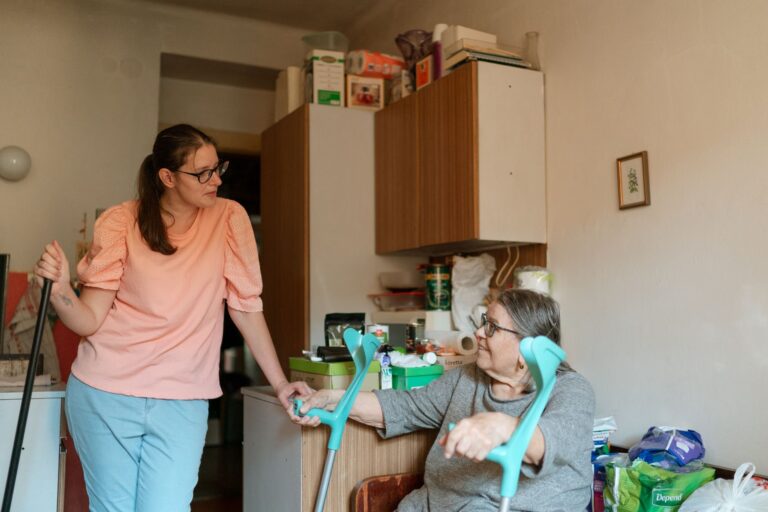
Dementia behavior becomes a safety emergency when a person with cognitive decline poses an immediate risk of harm to themselves or others, or when their actions prevent essential care or survival. This shift happens suddenly—a person who was managing well at breakfast becomes combative during afternoon care, wanders out of the house in winter clothes without understanding temperature, or refuses medications and food despite malnutrition. The line between “difficult behavior” and “emergency” is often a matter of seconds: a person with dementia who forgets where they are may drive a car into traffic, or pull out a feeding tube they no longer recognize as medical equipment. Consider Mrs. Chen, a 72-year-old with mid-stage Alzheimer’s, who was living in her daughter’s home. One evening, Mrs. Chen became convinced that her daughter was an intruder.
She locked herself in the bedroom, stopped eating, and threatened to break the window. Her family initially tried reassurance and patience—standard advice for dementia behavior. But after eight hours, Mrs. Chen was dehydrated, hadn’t taken her heart medication, and the situation was escalating. That night, her family realized that reassurance alone wasn’t going to resolve this. Mrs. Chen needed emergency evaluation because her safety needs (medication, hydration, basic care) were now at risk.
Table of Contents
- What Counts as a Safety Emergency With Dementia?
- How to Recognize When Behavior Signals a Medical or Environmental Problem
- When Wandering and Elopement Become Critical Emergencies
- How to Respond in the Moment Without Escalating
- Medication Reactions and Hidden Causes of Crisis Behavior
- Advance Planning and When to Involve Emergency Responders
- The Reality of Behavioral Emergencies and Residential Transitions
What Counts as a Safety Emergency With Dementia?
A safety emergency in dementia isn’t simply “the person is upset” or “they’re refusing to cooperate.” It’s a situation where the person’s behavior is actively preventing them from being safe or healthy. This includes: physical aggression toward themselves or caregivers, refusal to eat or take essential medications for more than a few hours, attempts to leave a safe environment without awareness of danger (driving when they have lost that ability, walking into traffic, leaving during dangerous weather), severe confusion that prevents them from understanding immediate hazards (turning on a stove and forgetting about it, attempting self-surgery), or acute changes in mental state that suggest medical crisis rather than typical dementia behavior. The key difference between standard dementia behavior and an emergency is often the *speed and severity* of the change, and whether the person’s basic survival needs are being blocked.
A person with dementia who sundowns (becomes agitated in late afternoon) is showing common behavior. A person who is sundowning, has now stopped recognizing family members entirely, has become violent, and won’t drink water is in a different category—the combination suggests something acute may be happening (infection, medication reaction, pain, stroke). Compare this to advanced directives: people often think emergencies are dramatic, like falling or a seizure. But for dementia specifically, many safety emergencies are behavioral in nature, which means they can be harder to spot. A caregiver might assume “he’s just having a bad day” when in fact the person has a urinary tract infection, a new medication side effect, or is experiencing the early signs of a stroke—all of which show up first as “emergency behavior.”.
How to Recognize When Behavior Signals a Medical or Environmental Problem
Dementia behavior that appears to come out of nowhere—sudden aggression, refusal to cooperate, or extreme confusion—is often masking an underlying problem that needs urgent attention. One critical limitation: family members and non-medical caregivers are often told “behavior is typical of dementia, just redirect them.” This can delay recognition of actual medical emergencies. A person who becomes aggressive during showering might have sundowning, but they might also have a skin infection, pain from arthritis, hypothermia fear, or a UTI that’s causing confusion and irritability. The warning here is this: any *acute change* from the person’s baseline—a shift that happens over hours or a day, not over weeks—should raise suspicion of something medical. Examples include: sudden inability to recognize close family members when they previously did, emergence of new aggression or combativeness, refusal of food or water when they previously ate without resistance, confusion that seems worse than the person’s recent norm, or inability to follow previously-managed routines (dressing, toileting) that they could still do yesterday. A specific example: Mr.
Rodriguez had moderate dementia but was still relatively cooperative with meals and basic care. Over one afternoon, he became extremely confused, stopped eating, and kept trying to pull off his clothing. His family initially thought he was having a behavioral crisis. His doctor identified the real problem: a severe urinary tract infection. Treating the infection resolved the emergency behavior within 24 hours. Had the family assumed “this is just dementia acting up,” Mr. Rodriguez would have continued to deteriorate without treatment.
When Wandering and Elopement Become Critical Emergencies
Wandering is common in dementia, especially in middle stages, but it crosses into emergency territory when the person leaves a safe environment without awareness of danger. This is different from someone who gets lost in their own neighborhood—that’s serious, but manageable with search. An emergency is when someone with dementia leaves during winter without a coat, or gets into a car despite no longer knowing how to drive safely, or walks toward a highway without understanding traffic. The distinction matters because it changes what you do.
A person who wanders the neighborhood needs GPS tracking and environmental safety. A person who is actively trying to drive in rush-hour traffic or is leaving during a snowstorm needs immediate intervention and likely a higher level of care (adult day programs, memory care facility, or in-home care during high-risk times). Unlike other behavior problems, wandering that reaches emergency level is often a sign that the current living situation is no longer safe, regardless of how good your supervision is. A person in mid-to-late stage dementia who repeatedly tries to elope, and who doesn’t understand the danger, often cannot safely remain in a home where the only safety measure is “watching them closely.” A real-world limitation: facilities and families sometimes use chemical or physical restraints to prevent elopement, hoping to keep the person in a lower level of care. But restraints introduce their own emergencies (falls, aspiration, pressure injuries) and don’t actually solve the problem—they often increase agitation and make the behavior worse.
How to Respond in the Moment Without Escalating
When dementia behavior is escalating toward an emergency, the human instinct is often to use firm language, logic, or physical redirection. All three of these typically make it worse. The practical reality is that a person with dementia cannot be reasoned with in the moment, and confrontation (even calm confrontation) frequently triggers more aggression or resistance. Immediate de-escalation means: staying physically calm and lowering your own voice (people with dementia pick up on your anxiety), not arguing about facts (if they believe their daughter is an intruder, insisting “I’m your daughter” triggers more fear), and redirecting to something concrete and immediate (offering water, sitting down together, switching to a different activity). A specific example: When Mr.
Chen became convinced he needed to “go to work” and was heading for the door, his caregiver didn’t say “You’re retired, you don’t work anymore.” Instead, she said “Let’s have lunch first,” sat with him, and once he was engaged with food, the urgency to leave faded. He never did reach the door, and no conflict happened. The tradeoff is time and patience. De-escalation takes longer than a quick directive, and it only works if you recognize the crisis early enough. If someone is already in full physical aggression, de-escalation alone won’t stop them from hurting themselves or you. At that point, you may need emergency responders—not because you failed, but because the situation has moved beyond what a caregiver alone can safely manage.
Medication Reactions and Hidden Causes of Crisis Behavior
Dementia behavior can escalate into emergencies partly because of the disease itself, but also because of medication interactions, dosing errors, or new medications that weren’t anticipated to cause behavioral changes. Antipsychotics, sedatives, and pain medications all carry risks in older adults with dementia, and behavioral worsening can be a sign of toxicity or side effect rather than disease progression. A major warning: reducing or stopping a dementia medication (or adding a new one) without a doctor’s involvement can trigger crisis behavior. Conversely, a behavioral emergency can sometimes be triggered by a medication that the doctor never imagined would cause it.
One common scenario is a urinary tract infection leading to acute confusion and aggression, which prompts a family member to give the person “something to calm them down”—not realizing the real problem is the infection. Once treated, the behavior resolves on its own, and the sedative was unnecessary. Polypharmacy (taking many medications) is common in older adults with dementia, and medication interactions aren’t always caught at the pharmacy level. A person on a blood pressure medication, a dementia medication, a pain medication, and a sleep aid might have interactions that manifest as sudden aggression, refusal to eat, or inability to stay awake. The only way to know is to have a pharmacist or geriatrician review all medications, including over-the-counter ones, together.
Advance Planning and When to Involve Emergency Responders
The time to plan for behavioral emergencies is before they happen. This means documenting what situations have triggered crises in the past, what calms the person, and what your breaking point is. A breaking point isn’t a failure—it’s a realistic assessment of what you can safely manage. If your parent has a history of severe aggression when they don’t recognize you, and you’re the only caregiver, you need a backup plan before you’re in crisis.
Many families hesitate to call 911 for a dementia behavioral emergency, worried about police involvement or further trauma. In reality, many areas now have crisis teams or behavioral health mobile units that respond to behavioral emergencies without police. Knowing your local options in advance means you can call the right resource when needed. If the person is physically aggressive, has a weapon, or poses immediate danger, 911 is appropriate—that’s what emergency responders are trained for.
The Reality of Behavioral Emergencies and Residential Transitions
Dementia behavioral emergencies often become the deciding factor in whether someone can remain at home. A person might be managing okay with memory loss and mild confusion, but if they become repeatedly aggressive, refuse care, or attempt to leave in unsafe ways, the physical and emotional load on family caregivers becomes unsustainable. This isn’t a sign of failed caregiving; it’s a sign that the person’s needs have changed.
The specific reality: many families describe the moment they realized their relative needed a higher level of care as the moment of a behavioral emergency—a crisis that clarified they couldn’t safely manage alone. A memory care facility, adult day program, or in-home care with trained dementia staff is often the only realistic option once behavioral emergencies start happening regularly. Continuing to manage at home in that situation doesn’t preserve dignity or independence; it often leads to more emergencies, more hospitalizations, and more trauma for everyone involved.
- —