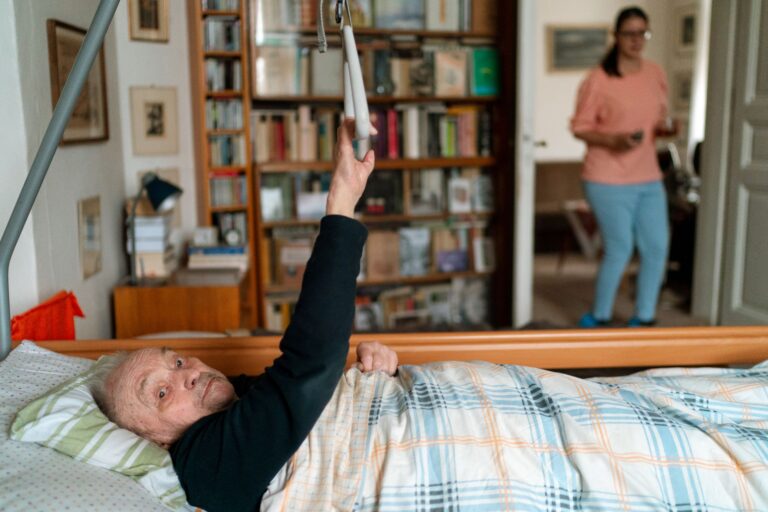
Alzheimer’s disease doesn’t announce itself as “mild,” “moderate,” or “severe”—those are clinical terms doctors use to describe how much the disease has progressed and how much it has changed a person’s ability to function. Mild (or early-stage) Alzheimer’s typically means memory lapses and mild confusion that don’t yet prevent someone from living independently, like a person forgetting they’ve already told you a story or misplacing keys more often than before. Moderate (middle-stage) Alzheimer’s involves more noticeable memory loss, difficulty with familiar tasks, and behavioral changes that usually require some assistance from caregivers. Severe (late-stage) Alzheimer’s means the person has lost most verbal ability, requires round-the-clock care, and may not recognize family members. A concrete example: a person in mild-stage Alzheimer’s might struggle to remember their grandchild’s name during a visit but recover it later in the conversation. Someone in moderate-stage might forget the grandchild entirely and repeat the same question multiple times during that same visit.
In severe-stage, the person likely wouldn’t recognize the grandchild or engage in conversation at all. The difference between stages isn’t just worse memory—it’s a progressive loss of independence and changes in how a person communicates, behaves, and responds to the world around them. Doctors and researchers use these stages because they help predict what kind of support someone will need, guide conversations about care planning, and set realistic expectations for what lies ahead. However, these stages are not rigid boxes. Some people progress quickly; others stay in one stage for years. Two people diagnosed at the same time may look very different in terms of what they can do and what they need.
Table of Contents
- How Are Alzheimer’s Stages Actually Diagnosed and Defined?
- Memory Loss and Cognitive Changes in Each Stage: What Actually Happens
- What About Behavioral and Personality Changes Across the Stages?
- Independence and Care Needs: A Comparison of What Each Stage Actually Requires
- Physical Health Changes and Complications Across Stages
- How Fast Does Someone Progress Through the Stages?
- Common Medical Scenarios Within Stages—What Families Actually Face
- Frequently Asked Questions
How Are Alzheimer’s Stages Actually Diagnosed and Defined?
There is no single blood test or scan that declares someone “moderate-stage Alzheimer’s.” Instead, doctors use a combination of cognitive tests, reports from family members about what the person can and cannot do, and sometimes imaging or spinal fluid analysis. Common assessment tools ask questions like whether someone can manage finances independently, prepare meals, or remember recent conversations. These functional abilities—what neurologists call “activities of daily living”—are what ultimately define the stage more than any lab result.
The challenge is that Alzheimer’s is a progressive disease without sharp boundaries between stages. Someone might have mild memory loss but also show moderate behavioral changes, making them hard to categorize neatly. Additionally, other conditions like depression, thyroid disease, or medication side effects can mimic early Alzheimer’s symptoms, so doctors must rule these out before settling on a diagnosis. This means staging often happens gradually, across multiple visits, rather than all at once.
Memory Loss and Cognitive Changes in Each Stage: What Actually Happens
In mild-stage Alzheimer’s, memory problems often appear in specific patterns. A person might remember events from 30 years ago clearly but forget what they did yesterday. They might misplace items frequently, struggle to find the right word during conversation, or take longer to process what others are saying. They can typically still manage bills, medications, and household tasks, though they might make occasional mistakes or need to write things down more than they used to. In moderate-stage Alzheimer’s, memory loss deepens significantly. The person may not recognize people they’ve seen regularly or forget major life events. They might become confused about time and place—asking where they are or what year it is. Personality changes often emerge: someone cheerful might become withdrawn, or someone patient might become irritable.
A critical limitation is that moderate-stage is often the longest-lasting stage, sometimes lasting years. During this time, a person typically cannot be left alone safely because they might wander, leave the stove on, or forget they’ve already eaten and eat again. In severe-stage Alzheimer’s, cognitive abilities decline to the point where someone cannot follow conversations or respond coherently. They may lose the ability to recognize even close family members, though they often still respond to tone of voice and physical touch. Speech may become limited to a few words or just sounds. At this stage, memory loss is so profound that the past and present blur completely. One important warning: people with severe Alzheimer’s are not “gone” emotionally. They may still smile at kindness, flinch at harsh voices, or show signs of contentment or distress. This is why tone, approach, and respect remain important even when conversation is no longer possible.
What About Behavioral and Personality Changes Across the Stages?
Behavioral changes often surprise and distress families because they seem to come alongside the memory loss. A person who has never been aggressive might hit or shout. Someone who was private might undress in public or make inappropriate sexual comments. These aren’t character flaws or personality defects—they result from the disease damaging the parts of the brain that regulate impulse control and emotional response. In mild-stage, behavioral changes are usually subtle.
Someone might be more suspicious than usual, repeating questions about finances or apologizing repeatedly for small mistakes. In moderate-stage, these behaviors can intensify: wandering, accusations, agitation, or changes in sleep patterns. In severe-stage, behavioral problems often decrease simply because the person has less capacity to act them out, though they may still show signs of discomfort, fear, or distress. A practical example: a person in moderate-stage might wake at 3 a.m. and insist on getting dressed and leaving, believing they need to go to work—a condition sometimes called “sundowning” when it gets worse in the evening hours.
Independence and Care Needs: A Comparison of What Each Stage Actually Requires
The clearest difference between stages is what kind of help a person needs to stay safe and manage daily life. In mild-stage Alzheimer’s, most people can live alone or with minimal supervision if they have good support systems in place. They might benefit from reminder systems, simplified finances, and someone checking in regularly, but they can still bathe, dress, and eat independently. In moderate-stage, this changes dramatically. A person typically cannot be left alone for extended periods. They may forget whether they’ve taken medications (leading to overdose or missed doses), leave the stove on, or wander away from home.
Many families transition to adult day programs, in-home caregiving, or eventually to assisted living. This stage often creates the biggest strain on family caregivers because the person looks healthy and may have periods of lucidity, yet they clearly cannot be trusted to manage safety. In severe-stage, round-the-clock care becomes essential. The person cannot feed themselves reliably, requires help with toileting and bathing, and may need assistance with swallowing. Nursing home or skilled nursing care is common at this stage, though some families manage at home with substantial resources and support. The tradeoff is significant: maintaining someone at home in severe-stage may provide emotional comfort and continuity, but it demands enormous physical and emotional labor from caregivers and may not be medically feasible if the person develops severe swallowing problems or other complications.
Physical Health Changes and Complications Across Stages
While Alzheimer’s is primarily a disease of cognition, it affects the whole body as it progresses. In mild and moderate stages, people often remain physically mobile, though they might move more slowly or have balance problems. In severe-stage, physical decline accelerates. Muscle weakness develops, reflexes change, and swallowing becomes difficult—a serious concern because food or liquid can enter the lungs, causing aspiration pneumonia.
A critical limitation to understand is that dying from Alzheimer’s itself is rare. People with Alzheimer’s typically die from complications like pneumonia, infections, falls, or other conditions that develop because the disease has compromised the body’s ability to fight illness or move safely. Additionally, many people with Alzheimer’s develop other medical conditions simultaneously—diabetes, heart disease, arthritis—that require ongoing management even as Alzheimer’s progresses. Managing multiple conditions in someone who can no longer communicate their symptoms or take medications independently becomes extraordinarily complex.
How Fast Does Someone Progress Through the Stages?
The speed of progression varies widely and unpredictably. Some people move from mild to moderate-stage over two or three years. Others remain in mild-stage for a decade.
Part of this variation depends on genetics, overall health, presence of other brain changes, and how the disease manifests in an individual brain. Someone who is otherwise healthy and young when diagnosed may progress differently than someone who is older or has heart disease. No reliable way currently exists to predict progression speed for a specific person, though researchers are working on biomarkers that might improve these predictions in the future.
Common Medical Scenarios Within Stages—What Families Actually Face
A person in moderate-stage Alzheimer’s might develop a urinary tract infection, which can temporarily make confusion and behavioral problems much worse—a phenomenon sometimes called delirium superimposed on dementia. Once the infection is treated, some of those symptoms improve, but the underlying Alzheimer’s remains unchanged. This happens repeatedly in moderate and severe stages: each new infection, medication change, or medical event can look like sudden worsening, when actually a treatable condition is piled on top of the base disease. In severe-stage, feeding becomes a significant medical issue.
Some people eventually lose the ability to swallow safely, which forces families and doctors to decide whether to use feeding tubes. This is not a clear-cut decision: feeding tubes can extend life but also carry risks of infection and may not improve quality of life. Hospitals and nursing homes differ in their recommendations, and there is no single “right” answer—only the answer that fits a specific person’s values and their family’s wishes. These decisions are made within the context of progressive disease where recovery to baseline functioning won’t happen.
- —
Frequently Asked Questions
Can someone with mild-stage Alzheimer’s still live alone?
Many can, but safety planning is essential. Some people manage independently with reminder systems, regular check-ins, and simplified routines. Others benefit from part-time in-home support or frequent family oversight. This depends on the individual’s judgment, the support available, and their specific symptoms.
How long does someone typically stay in moderate-stage Alzheimer’s?
Moderate-stage can last several years—sometimes the longest stage—though progression varies widely. Factors like age at diagnosis, overall health, and individual variation in disease course all play a role.
Does everyone with severe-stage Alzheimer’s eventually stop eating?
Not all people reach the point of refusing food or being unable to swallow safely. Some people with severe cognitive loss still eat if food is placed in front of them, though they may forget they’ve eaten and ask repeatedly for meals.
Does behavior improve in severe-stage Alzheimer’s?
Aggressive or disruptive behaviors often decrease in severe-stage simply because the person has less capacity to act them out. However, behavioral problems like agitation or distress don’t disappear—they just manifest differently, and may require medication management or specialized approaches.
Should families move someone to a nursing home during moderate-stage?
This is a deeply personal decision with no single right answer. Factors include the person’s and family’s preferences, available resources, safety concerns, and whether at-home care can be safely and sustainably provided. Some families maintain care at home; others transition to facilities.
What physical changes happen in severe-stage Alzheimer’s?
Muscle weakness, difficulty with balance and movement, changes in reflexes, and eventually problems with swallowing are common. These physical changes increase fall risk, infection risk, and can make eating and drinking dangerous if the brain’s swallowing reflex is impaired. —