
Investigators found sits at the center of this dementia and brain health question.
Investigators examining the final minutes before the LaGuardia airport collision have uncovered a cascade of critical failures that unfolded in just 20 seconds of tragic miscommunication. When the tower cleared a fire truck to cross Runway 4, it set in motion a chain of events that revealed deeper problems: a fire truck without proper safety equipment, a runway warning system that failed to activate, and radio interference that blocked urgent stop commands from reaching those who needed them most.
The investigation shows this was not a single error but rather multiple independent system failures that compounded in real time, each one contributing to a preventable disaster. What makes this incident especially significant for understanding real-world safety failures is how it mirrors patterns we see in many workplace and medical environments: operators carrying excessive cognitive load, critical communication interrupted by competing signals, and safety systems that depend on equipment not everyone possessed. This article examines what investigators found during those final seconds and what the evidence reveals about how multiple failures can align at a single point in time.
Table of Contents
- How Did the Tower Clear the Fire Truck to Cross During an Active Landing?
- Why Didn’t the Safety System Alert Anyone to the Collision Hazard?
- What Was Happening in the Control Tower During These Critical Seconds?
- How Did Radio Interference Block Critical Stop Commands?
- Why Did the First Officer Transfer Control to the Captain Seconds Before Impact?
- Could the Fire Truck Driver Have Avoided the Collision?
- What Does This Investigation Reveal About System Vulnerabilities?
- Conclusion
How Did the Tower Clear the Fire Truck to Cross During an Active Landing?
The timeline tells a startling story of reversed assumptions. Twenty seconds before the crash, air traffic control cleared a fire truck to cross Runway 4—the same runway where an aircraft was on approach. The fire truck driver acknowledged this clearance just three seconds later, believing it was safe to proceed. Neither party realized the collision hazard that was developing in real time.
This represents a fundamental breakdown in the safety system that relies on everyone having the same picture of where aircraft and ground vehicles actually are. The fire truck was operating without a transponder—equipment that would have automatically transmitted its location to the runway safety warning system. Without this signal, controllers couldn’t see the fire truck on their screens, and the aircraft crew couldn’t see it either. This equipment gap is critical: the fire truck was essentially invisible to the systems designed to prevent exactly this kind of collision.
Why Didn’t the Safety System Alert Anyone to the Collision Hazard?
The runway safety warning system, designed to be the final protection against exactly this scenario, “did not alert” despite the collision hazard developing. Investigators found that because the fire truck lacked the required transponder equipment, the system had no way to track or warn about the vehicle’s presence. A modern runway safety system can only protect against hazards it can detect—and it can only detect equipment that transmits its location. The fire truck, operating without proper technology, became invisible to the system meant to protect against it. However, if communication had functioned perfectly, visibility wouldn’t have mattered.
Nine seconds before impact, air traffic control urgently ordered the fire truck to stop. But this command was never heard clearly. Radio interference—including an unidentified transmission that stepped on air traffic control communications—blocked or garbled the most critical messages during the most critical moments. Four seconds later, with impact imminent, the tower repeated the stop order, but by then it was too late. The fire truck was still crossing, the aircraft was already touching down on the runway, and the driver had no way of knowing he needed to clear the runway immediately.
What Was Happening in the Control Tower During These Critical Seconds?
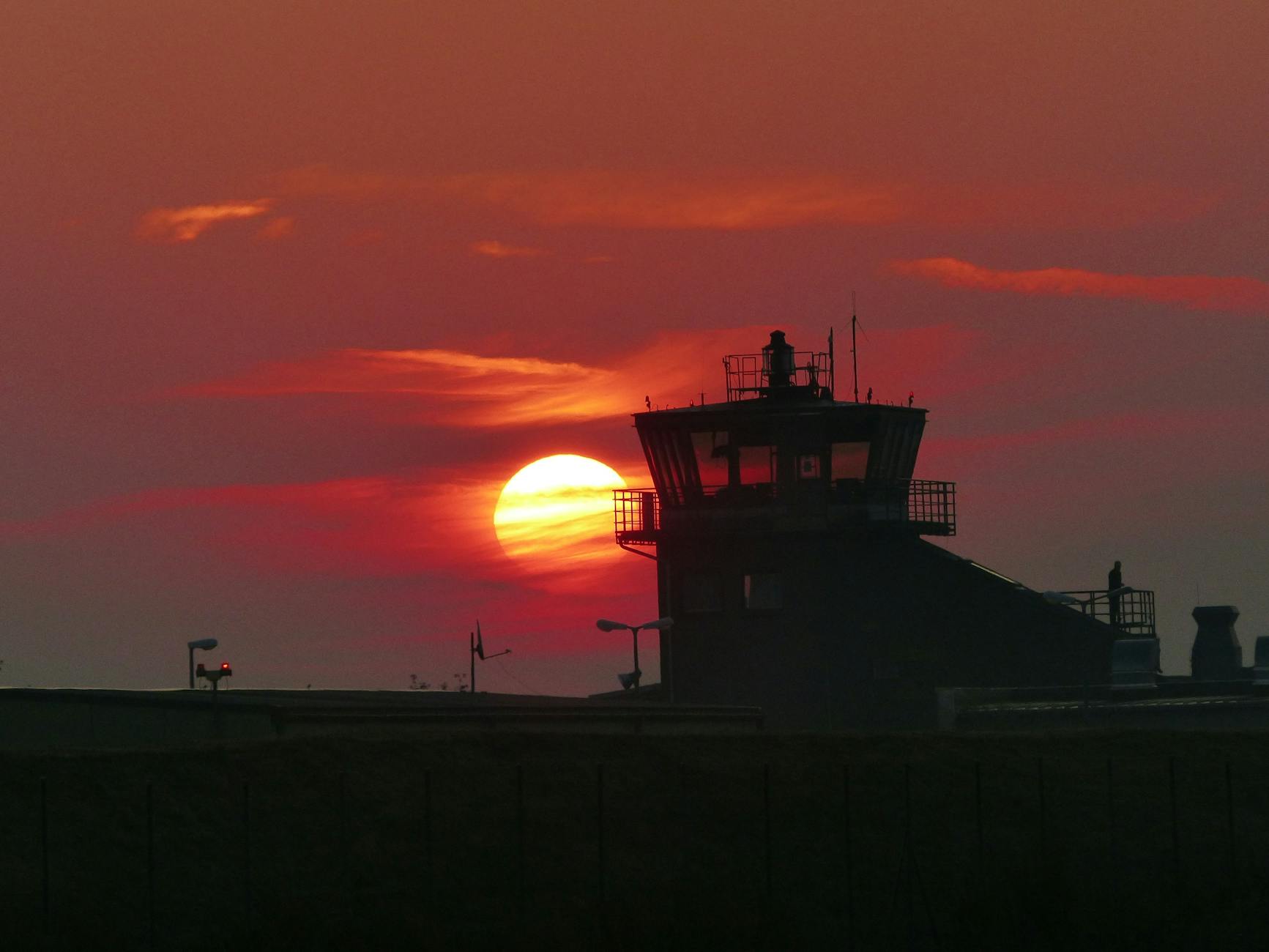
The investigation revealed that the air traffic controller was juggling multiple roles simultaneously—a common practice at busy airports but one that creates significant cognitive demands. The tower was experiencing a heavy workload due to a backlog of delayed flights, and controllers were managing competing priorities: clearing traffic, issuing runway crossings, monitoring approach patterns, and coordinating ground operations. This workload context matters because attention is a finite resource, and the controller was dividing it across multiple simultaneous tasks. When you’re managing multiple streams of information and making sequential decisions about runway operations, the margin for error shrinks dramatically.
The decision to clear the fire truck to cross seemed reasonable in isolation—it was a routine operation at a busy airport. But once made, that decision couldn’t be instantly reversed when the approaching aircraft entered the final approach phase. The controller would have needed to recognize the developing conflict, immediately shift mental focus to the ground operation, compose and transmit an urgent stop command, and ensure it was received and understood—all while managing other traffic. The system relied on perfect communication at a moment when the workload conditions made perfect communication unlikely.
How Did Radio Interference Block Critical Stop Commands?
Radio interference is one of the most insidious failure modes in aviation safety because it’s often intermittent and difficult to predict. Seconds before impact, an unidentified radio transmission stepped on air traffic control communications, exactly when the most critical messages needed to be transmitted. When two radio transmissions occur simultaneously, one or both become garbled or inaudible to receivers—a phenomenon called stepped-on transmission. The comparison is useful here: imagine two people trying to speak in a crowded room at the same time and someone yelling.
The person trying to hear one conversation hears both voices merged together, making neither intelligible. On the radio, this creates a situation where critical commands—like “Stop the fire truck immediately”—become competing noise rather than clear instructions. The fire truck driver may have heard static, a partial message, or a command from someone else’s transmission entirely, leaving them unaware that they needed to abort their runway crossing. Unlike a missed phone call you can ask someone to repeat, a radio step-on in these final seconds is often only discovered during post-incident investigation.
Why Did the First Officer Transfer Control to the Captain Seconds Before Impact?
Six seconds before impact, the first officer transferred control to the captain—a decision under investigation. In commercial aviation, control transfers typically happen according to established procedures, but the timing of this transfer during the final approach moments is unusual. The aircraft was in the landing phase, and shifting piloting responsibility seconds before touchdown introduces moments of potential confusion about who is doing what.
This highlights a critical safety principle: transitions between pilots create vulnerable moments because they involve shifting attention, hand-over communication, and assumption alignment. If the first officer and captain weren’t perfectly synchronized about what was happening on the runway, the transfer could delay recognition of the hazard. However, in this case, the fundamental problem was that the hazard wasn’t visible to either pilot at all—the fire truck was neither on their screens nor visible through the windshield until the last seconds of approach, and by then it was too late for any pilot action to prevent impact.

Could the Fire Truck Driver Have Avoided the Collision?
The fire truck driver, operating under clearance from the tower, made the reasonable assumption that he had clearance to cross. When operating as a vehicle driver at an airport, you follow explicit instructions from controllers who can see the entire operational picture. The fire truck driver had no independent way to know an aircraft was approaching; that’s why tower clearance exists. But he also had no way to know that a stop command was being transmitted, because radio interference prevented that message from reaching him clearly.
From the fire truck driver’s perspective, he had clearance, he saw no aircraft on final approach that was close enough to be a threat, and he proceeded with his assigned task. The problem wasn’t his attention to radio communications—it was that those communications were unintelligible due to radio interference he couldn’t control or predict. This is why aviation systems are designed with redundancy: if one system fails, another should catch the problem. But in this case, the fire truck’s lack of transponder equipment meant the safety system had no backup way to know he was there.
What Does This Investigation Reveal About System Vulnerabilities?
The LaGuardia investigation demonstrates that aviation safety is only as strong as its weakest link, and in this case, multiple links were weak simultaneously. A single failure—missing transponder equipment, radio interference, or high controller workload—might have been manageable in isolation. But when they align in time, they create a perfect window for disaster. One fire truck without transponder equipment might be acceptable if radio systems were completely reliable, or manageable with lower controller workload, or different if equipment was redundant.
The investigation points toward the importance of recognizing that safety systems work through multiple layers of protection, and each layer matters. When one layer fails silently—like a fire truck operating without required equipment—the other layers must perform perfectly. When multiple layers fail together, the system collapses entirely. The findings are already prompting discussions about equipment requirements, workload management, radio frequency monitoring, and whether clearing ground vehicles during active approach operations can be further restricted. These aren’t quick fixes, but they’re the kinds of operational and procedural changes that emerge from understanding exactly what went wrong in the final minutes.
Conclusion
The final 20 seconds before the LaGuardia collision contained five distinct failures that worked together to create a disaster: a fire truck without transponder equipment, a runway safety system unable to detect the invisible vehicle, radio interference blocking the most critical stop command, an air traffic controller managing multiple simultaneous priorities, and a timing coincidence that put all these vulnerabilities into effect at once. Investigators found no single point of failure but rather a sequence of compounding events, each one making the disaster more likely and the response more difficult. Understanding what happened in those final moments is essential for preventing similar incidents.
The investigation reinforces a fundamental principle of safety engineering: systems that depend on perfection are fragile systems, and systems designed for real-world conditions assume some elements will fail. When equipment is missing, when communication is interrupted, and when operators are under high cognitive load, safety depends entirely on having backup protections in place. The lessons from this incident will shape airport operations, equipment requirements, and workload management practices for years to come.
You Might Also Like
- Final Moments Before LaGuardia Crash Revealed In New Investigation Timeline
- How Did U.S. Intelligence Estimate the War Would Go Before It Started
- Why The Strait Of Hormuz Crisis Could Impact Gas Prices Worldwide
For more, see CDC — Alzheimer’s and Dementia.




