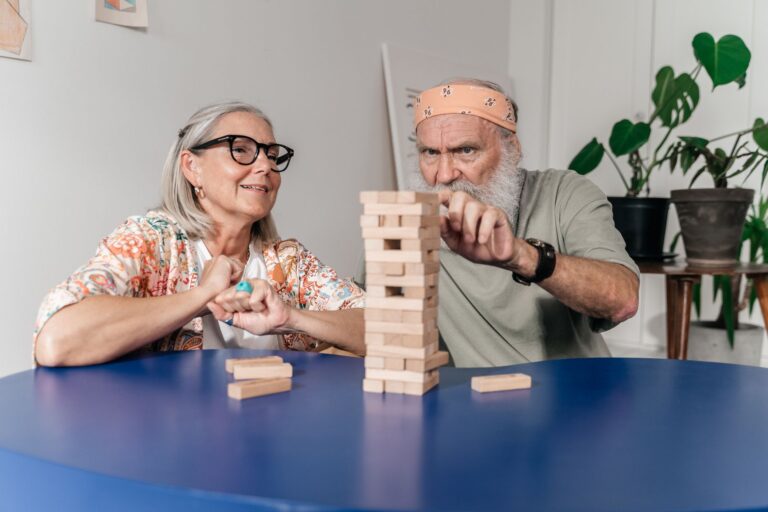
Go Fish, War, Uno, Old Maid, Crazy Eights and simple matching-pairs work best for memory loss. Memory loss here means difficulty with remembering, thinking and following steps, as seen in Alzheimer's disease.
For January, these familiar indoor games fit short, calm daily routines. Pick the game the person already knows and keep the mood relaxed. Success means enjoyment and connection, not score, speed or winning.
Medical information disclaimer: This article is for general educational purposes only and does not provide medical advice, diagnosis, or treatment. Always consult a physician or other qualified health professional about symptoms, medications, tests, or treatment decisions.
Table of Contents
- Which games should you try first?
- What does research say about play and thinking?
- How do you set up a calm January game?
- When should you simplify or stop?
Which games should you try first?
Healthline recommends familiar games with simple rules for Alzheimer's. Its list includes Uno for colorful cards and simple rules, plus Go Fish for memory and matching. It also names Crazy Eights for basic strategy and Old Maid for engaging matching, as described in Healthline's memory-game resources. Cascade Living Group finds Go Fish works well for dementia.
Repetitive asking and matching drives social interaction. Caregivers can simplify it by playing with only two suits, as explained in Cascade Living Group's dementia-friendly card guide. Cascade Living Group also finds War highly accessible. High-card-wins means almost no strategy and fast, low-stress turns. The same guide notes Uno's color-and-number matching is visually intuitive, while matching-pairs can use large-print or picture decks with fewer cards.
What does research say about play and thinking?
University of Edinburgh researchers followed 1,091 members of the Lothian Birth Cohort 1936. Regular non-digital game players scored better on memory and thinking tests. Increased play in the 70s was linked to less decline in memory and processing speed, according to the University of Edinburgh report. A French population cohort study reported board-game players had 15 percent lower dementia risk than non-players after adjusting for age, sex, education and confounders.
Authors pointed to less cognitive decline and depression as possible mediators. A Chinese older-adult study found regular cards-or-mahjong players had higher total Mini-Mental State Examination scores, with better attention, calculation and language. These findings describe associations in groups, not treatment effects for one person. Games support attention, recall, turn-taking and conversation during play. They do not reverse memory loss or prevent dementia.
How do you set up a calm January game?
The National Institute on Aging advises caregivers to adapt activities to current abilities and prioritize enjoyment over performance. It also advises stopping if interest fades, as outlined in the National Institute on Aging's guidance on adapting activities.
Use a familiar routine at the same table and time of day. Offer one choice at a time and demonstrate each turn.
- Use large-print cards and deal fewer cards
- Play Go Fish with two suits, or matching-pairs with six to ten cards
- Skip scoring, keep sessions short, and let the person handle the cards
- Keep light bright, noise low, and instructions brief
When should you simplify or stop?
Watch for frowns, restlessness, repeated questions, card sorting without playing, or wanting to leave. These signs mean the game is too long, too complex or too tiring. Simplify immediately by removing cards, playing openly on the table, or switching to matching colors.
Stop for the day if interest fades or frustration rises. Thank the person for playing and name something pleasant from the game. End while the time together is still pleasant and offer the same simple game tomorrow.