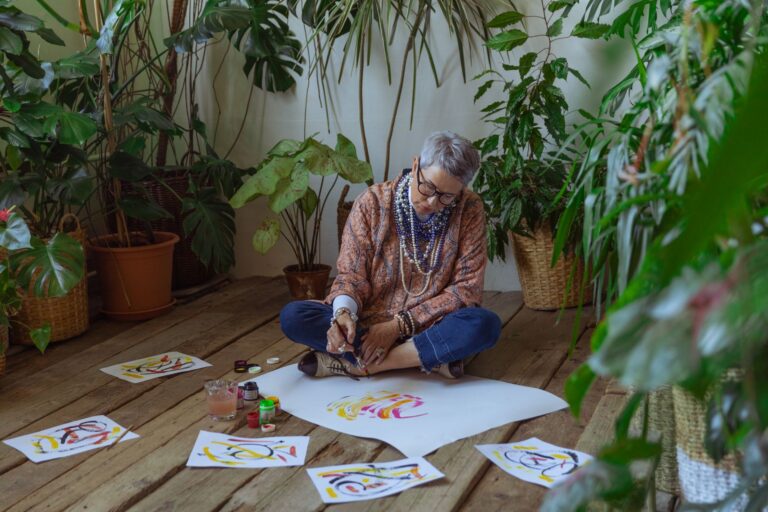
Watercolor painting can give people with Alzheimer's disease, a progressive disorder that harms memory and daily abilities, a low-mess way to create with supplies. It works best with certified non-toxic materials, a calm setup, and flexible safety steps that adapt as abilities change. Caregivers often want an activity that feels adult and satisfying without adding stress. Watercolor fits because washes are simple to start, cleanup is quick, and attention can stay on time together.
Medical information disclaimer: This article is for general educational purposes only and does not provide medical advice, diagnosis, or treatment. Always consult a physician or other qualified health professional about symptoms, medications, tests, or treatment decisions.
Table of Contents
- What supplies keep it safe and simple?
- How do you set up a calm space?
- How do you guide safely with dignity?
- What benefits and limits should you expect?
What supplies keep it safe and simple?
Start with true watercolor paints, thick paper, a soft large brush, a sturdy water cup, and an apron. Alzheimer's Orange County dementia art leaders recommend watercolor because the paints are non-toxic and wash easily from clothing, as reported by Psychology Today's account of dementia and art. Check labels for the AP seal before buying.
Mayco Colors explains the AP seal in its ACMI explainer. The seal means a board-certified toxicologist evaluated the formula under ASTM D-4236 and found no materials in quantities causing acute or chronic health problems. The Alzheimer's Association advises keeping projects adult-level rather than childlike for middle- to late-stage disease. Choose autumn leaves, sky washes, fruit, or simple landscapes rather than cartoon coloring pages.
How do you set up a calm space?
Pick a sturdy table with good light and a wipeable cover. Place only one paint set, one brush, paper, and water within reach to limit choices and spills. The Alzheimer's Association advises reducing noise to avoid sensory overload.
Its guidance recommends shutting windows and doors, turning off television, and keeping volume from getting too loud, detailed in its art and music therapy guidance. The Alzheimer's Association recommends plenty of time in a relaxing, peaceful setting for art work. Keep the routine steady, offer one color choice at a time, and sit nearby to guide gently.
How do you guide safely with dignity?
Stay with the person and adapt step by step. The Alzheimer's Association advises creativity and flexibility to adapt routines, including art and craft activities, as abilities change. Offer one step at a time, demonstrate the stroke, then hand over the brush.
If focus fades, shorten the session rather than correcting the result. Build safety into each session with the same checks. Small habits prevent most problems:.
- Use only non-toxic paints and rinse hands after painting.
- Keep paint water separate from drinking water.
- Choose unbreakable cups and wipe spills quickly.
What benefits and limits should you expect?
Art projects can create a sense of accomplishment and purpose for the person and caregiver, according to the Alzheimer's Association. Painting also gives both partners a chance for self-expression during a difficult routine. The American Art Therapy Association notes art can reduce isolation and loneliness by opening nonverbal communication when dementia limits words.
A shared page lets caregivers connect through color and gesture rather than questions. A Mayo Clinic study followed 1,929 cognitively normal adults age 70 and older for four years. Craft engagement was linked to 28% lower risk of new mild cognitive impairment, according to ScienceDaily's summary of the Mayo Clinic findings. Because participants did not have dementia, the result supports staying engaged rather than proving watercolor treats Alzheimer's.