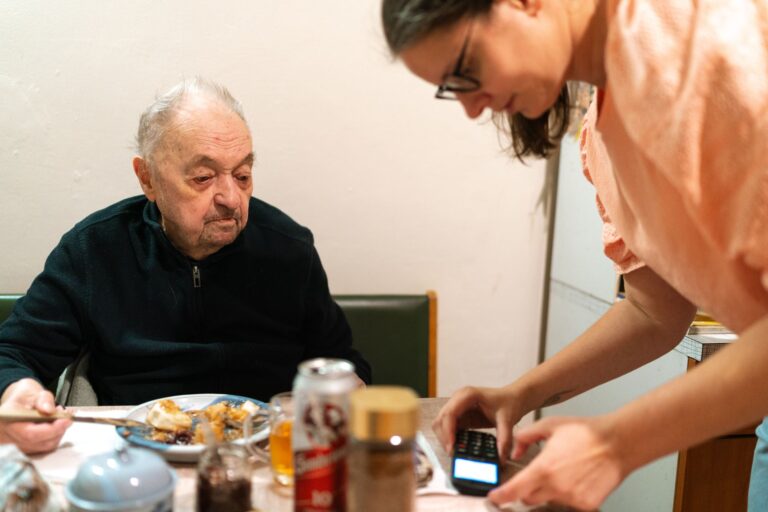
The University of Cincinnati has established a dedicated dementia research center aimed at accelerating the discovery and development of new treatment approaches for cognitive decline and dementia-related disorders. This facility brings together neuroscientists, clinicians, and researchers to focus on understanding the mechanisms of neurodegeneration and translating laboratory findings into clinical interventions. The center represents a significant institutional commitment to addressing one of the most pressing healthcare challenges facing an aging population, where dementia affects millions of people and current treatment options remain limited in their ability to slow or halt disease progression.
The opening of this research center addresses a critical gap in dementia care. While numerous research institutions study aspects of neurological disease, few dedicated centers combine the infrastructure, funding, and interdisciplinary expertise specifically oriented toward identifying and testing new therapeutic strategies for dementia patients. By housing researchers, clinical staff, and diagnostic capabilities under one roof, the University of Cincinnati’s center is positioned to move promising discoveries from initial research phases more rapidly toward patient testing and real-world application.
Table of Contents
- What Makes University Research Centers Effective for Dementia Treatment Development?
- Current Limitations in Dementia Treatment and Why New Research Centers Matter
- Research Priorities in Modern Dementia Centers
- How Research Centers Approach Patient Recruitment and Participation
- Funding and Sustainability Challenges in Dementia Research
- Technology Infrastructure and Data Sharing in Modern Dementia Centers
- Connecting Research Discovery to Patient Care
What Makes University Research Centers Effective for Dementia Treatment Development?
Dedicated dementia research centers accelerate treatment advancement by creating structured pipelines from basic science to clinical application. When a university consolidates its dementia research efforts into a single facility, researchers have direct access to patient populations, can coordinate longitudinal studies more effectively, and can share data and methodologies more easily than when work is scattered across separate departments. This integration reduces the time between discovering a potential therapeutic target in the laboratory and testing it in patient populations, a process that typically takes many years.
The collaborative model is particularly valuable for dementia research because the disease involves complex interactions between multiple biological systems—neuroinflammation, protein aggregation, vascular changes, and genetic factors all play roles. When neuroscientists, neurologists, neuroradiologists, and cognitive psychologists work in proximity and share research infrastructure, they can design studies that examine these overlapping mechanisms simultaneously rather than in isolation. A researcher studying how tau proteins damage neurons can work directly with clinicians managing patients experiencing cognitive decline, translating observations from the lab into testable hypotheses about patient outcomes.
Current Limitations in Dementia Treatment and Why New Research Centers Matter
Despite decades of research, the treatment landscape for dementia remains frustratingly limited. Medications like cholinesterase inhibitors and memantine can temporarily slow cognitive decline in some patients but do not address underlying disease mechanisms, and their effects diminish over time. More importantly, these treatments work for only a subset of patients, and individual responses are highly variable—a medication that significantly slows decline in one person may have no measurable effect in another. No current disease-modifying therapy reliably stops or reverses dementia progression, which is why research into fundamentally new approaches remains urgent. New research centers address a specific bottleneck: the “valley of death” between promising laboratory discoveries and clinical testing.
Many potential drug targets and therapeutic strategies are identified in academic research but never advance to human trials because of the high cost, regulatory complexity, and specialized expertise required to translate basic findings into clinical studies. A university-based research center with dedicated funding, clinical infrastructure, and experienced personnel can bridge this gap more effectively than isolated research groups, increasing the odds that beneficial treatments actually reach patients. The challenge of patient recruitment also cannot be understated. Dementia research requires access to individuals at various disease stages—those with mild cognitive impairment, early-stage dementia, and advanced dementia. Research centers affiliated with academic medical centers can recruit participants more reliably, maintain longer-term follow-up, and access comprehensive medical records that inform whether a treatment is working. Without this patient infrastructure, many promising treatments never move beyond small pilot studies.
Research Priorities in Modern Dementia Centers
Modern dementia research centers prioritize understanding the distinct biological pathways underlying different dementia types because Alzheimer’s disease, frontotemporal dementia, Lewy body dementia, and vascular dementia involve different mechanisms and may respond to different treatments. A patient with Alzheimer’s disease characterized by extensive amyloid plaques might benefit from amyloid-targeting therapies, while someone with frontotemporal dementia driven by tau or TDP-43 accumulation would require a different approach. By studying these distinct pathways, researchers can move toward precision medicine models where treatments are matched to individual patients based on their specific pathology.
Biomarker development has become another central focus. Blood tests that can detect amyloid, tau, and other markers of neurodegeneration now allow researchers to identify people at risk for dementia before symptoms appear and to monitor whether treatments are actually changing the underlying disease process. Centers with access to advanced laboratory technology and patient populations can validate these biomarkers more thoroughly and develop new ones that might predict treatment response or identify people who would benefit from early intervention. This represents a major shift from purely symptom-based assessment toward biology-based diagnosis and treatment monitoring.
How Research Centers Approach Patient Recruitment and Participation
Dementia research centers must balance the scientific need for rigorous patient selection with the practical reality that recruiting and retaining dementia patients in studies is substantially more difficult than recruiting cognitively intact volunteers. A patient with moderate dementia cannot provide informed consent without a surrogate decision-maker, and the cognitive changes that make someone suitable for a dementia study also make regular clinic visits and neuropsychological testing more challenging. Research centers address this by developing specialized protocols—scheduling shorter appointments, employing trained coordinators who can work with caregivers, and sometimes conducting home visits. Some centers offer compensation specifically designed to offset caregiving costs rather than pay individuals directly, recognizing that participation often requires arranging care coverage for the study visit.
The infrastructure burden of dementia research also explains why dedicated centers have advantages over dispersed research groups. Maintaining the specialized equipment needed for advanced brain imaging, cerebrospinal fluid analysis, or genetic testing requires technical staff and regular maintenance costs. Supporting a research clinic that operates alongside a treatment clinic for dementia patients requires administrative systems that handle recruitment, scheduling, medical record review, and long-term follow-up. A single research group within a large department often cannot justify these costs alone, but a dedicated center can amortize these expenses across multiple research projects and generate sufficient volume to maintain expertise and equipment quality.
Funding and Sustainability Challenges in Dementia Research
Dementia research centers depend on diverse funding sources—federal grants from the National Institutes of Health, disease-specific foundations like the Alzheimer’s Association, private donors, and institutional support from the university. However, federal research funding for neurological disease has not kept pace with the growing disease burden, meaning that even high-quality research centers face constant pressure to compete for limited grant dollars. This creates a vulnerability: a center built primarily on federal grants may struggle during economic downturns when government research budgets shrink, or if research priorities shift away from dementia.
Translating research findings into clinical practice requires not just scientific discovery but also regulatory navigation, which is expensive and time-consuming. Moving from a successful laboratory study to a clinical trial typically costs millions of dollars and requires teams with expertise in FDA interactions, study design, and statistical analysis. Many universities have learned this the hard way: groundbreaking research can be conducted with standard NIH grant funding, but bringing a treatment to patients often requires substantially more resources and commercial partnerships. A research center’s long-term success depends on its ability to attract not just research funding but also philanthropic support and industry collaboration that can support the expensive phases of clinical translation.
Technology Infrastructure and Data Sharing in Modern Dementia Centers
Advanced neuroimaging capabilities—positron emission tomography (PET) scanning, high-field magnetic resonance imaging (MRI), and emerging techniques like tau PET or amyloid PET—form the backbone of modern dementia research. These technologies allow researchers to visualize the pathological processes occurring in patients’ brains while they are still alive, making it possible to test whether a treatment is actually reducing amyloid accumulation or tau pathology or stabilizing brain volume. However, the cost of acquiring and maintaining this equipment is substantial, which is why it tends to concentrate in major academic medical centers rather than community hospitals.
A dedicated research center can justify the investment in cutting-edge imaging because it can support high-volume research use, not just clinical scanning. Data sharing between research centers has become increasingly important as dementia research has globalized. Large research networks like the Dominantly Inherited Alzheimer’s Network (DIAN) pool data from hundreds of research sites across multiple countries, allowing researchers to study rare disease variants and identify treatment targets that might not be apparent in single-center studies. University-based research centers that participate in these networks contribute patient data, imaging, and biospecimens while also gaining access to a much larger dataset for their own analyses—a mutually beneficial arrangement that accelerates discovery.
Connecting Research Discovery to Patient Care
The most direct impact of dementia research centers occurs when they systematically collect long-term outcomes data from patients enrolled in studies, creating evidence that treatments work and are safe enough for broader clinical use. A center that follows dementia patients for five or ten years, repeatedly assessing their cognitive function, brain structure, and biomarkers, generates the longitudinal data necessary to answer whether an experimental treatment actually slows disease progression compared to standard care. Without this patient follow-up infrastructure, even successful laboratory experiments remain theoretical—the proof that a strategy helps actual patients comes from patient data, not from research publications.
Research centers also serve an educational function for the next generation of dementia researchers and clinicians. Training the specialists who will eventually staff other research programs and medical centers depends on having a rich research environment where trainees can see how studies are designed and conducted, interact with dementia patients over extended periods, and learn the practical skills of clinical research. A university-based center provides this training environment naturally, as graduate students, postdoctoral fellows, and medical residents rotate through research programs and develop expertise in dementia neuroscience that they will carry forward into their future careers.