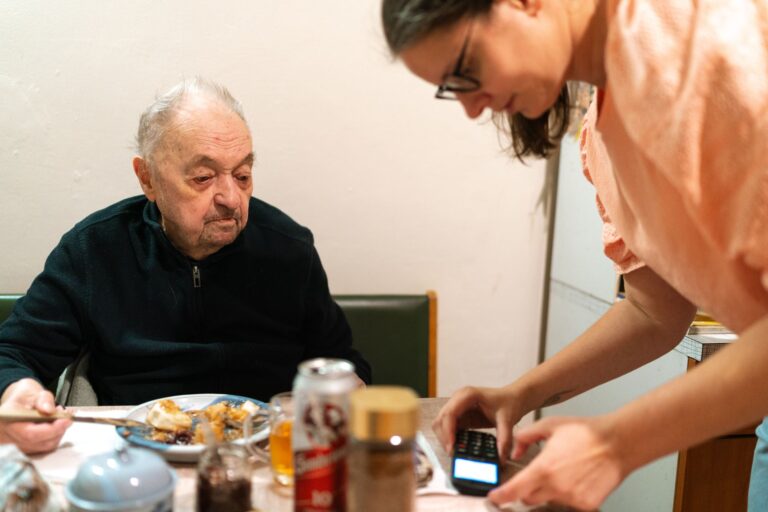
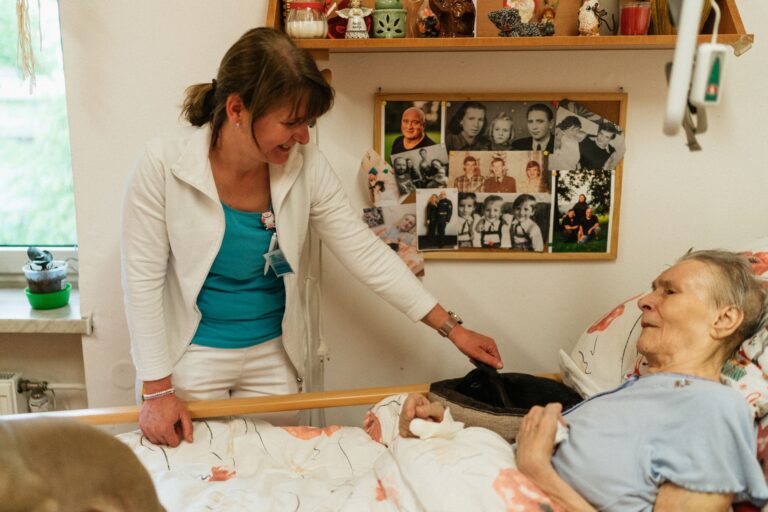
There will probably not be enough paid caregivers and dementia specialists in every U.S. community in 2026. The shortage is most acute among direct-care workers and in places with limited access to neurologists, geriatricians and geriatric psychiatrists. Consider a family whose parent begins wandering at night: even if a memory clinic confirms the diagnosis, the family may still spend months trying to find a reliable home-care aide who can cover evenings. A single national yes-or-no answer would nevertheless be misleading.
There is no formally defined “dementia workforce,” and federal projections estimate employment and job openings—not whether positions will be filled, workers will stay or patients will receive timely care. Access also varies substantially by location, income, insurance coverage and the availability of unpaid family help. The demand base is already large. An estimated 7.4 million Americans age 65 and older are living with clinical Alzheimer’s dementia in 2026, and 74% are at least 75 years old, according to the Alzheimer's Association's 2026 Alzheimer's Disease Facts and Figures. Alzheimer’s disease does not account for every dementia case, but those figures show how many households may need increasingly intensive assistance as symptoms progress.
Medical information disclaimer: This article is for general educational purposes only and does not provide medical advice, diagnosis, or treatment. Always consult a physician or other qualified health professional about symptoms, medications, tests, or treatment decisions.
Table of Contents
- Will There Be Enough Caregivers and Dementia Specialists in 2026?
- Direct-Care Demand Is Rising Faster Than the Workforce Can Stabilize
- Turnover, Pay and Job Quality Drive the Caregiver Shortage
- How Families and Care Organizations Can Prepare for Staffing Gaps
- Dementia-Specialist Shortages Are Geographic as Well as Numerical
- The Geriatrics Training Pipeline Is Not Replacing the Need
- Workforce Numbers Do Not Measure the Care a Household Can Actually Obtain
- Frequently Asked Questions
Will There Be Enough Caregivers and Dementia Specialists in 2026?
The available evidence points to inadequate capacity rather than a uniformly staffed system. dementia care extends across primary care, neurology, geriatrics, psychiatry, nursing, social work, home care, residential care and unpaid family caregiving. A community might have enough clinicians to diagnose patients but too few aides to help them remain at home. Another might have home-care agencies yet no nearby geriatric psychiatrist for severe agitation, hallucinations or complicated medication decisions. Unpaid caregivers remain the system’s largest buffer.
In 2025, 12.7 million relatives and friends supplied 19.6 billion hours of care—nearly 30 hours per caregiver each week—with an estimated economic value of $446.3 billion. A daughter who manages medications before work, answers repeated phone calls during the day and stays overnight after a fall may never appear in employment statistics, even though her labor is preventing a paid-care crisis. That dependence can conceal rather than resolve a shortage. A family may appear to have adequate “coverage” only because one person reduces work hours, postpones medical appointments or goes without sleep. Workforce assessments that count paid jobs but overlook these substitutions risk understating the amount of care people actually need.
Direct-Care Demand Is Rising Faster Than the Workforce Can Stabilize
The Bureau of Labor Statistics projects employment of home health and personal care aides to grow from 4.348 million jobs in 2024 to 5.088 million in 2034. That is an increase of 739,800 jobs, or 17%, with an average of 765,800 openings each year. Across the broader group that also includes nursing assistants, orderlies and psychiatric aides, employment is projected to increase by 774,100 and reach 6.656 million by 2034, according to the BLS occupational projections. The annual-opening figure is much larger than the net employment increase because many openings arise when existing workers leave the occupation, not only when new jobs are created.
Dementia care can involve bathing, toileting, lifting, meal preparation, behavioral symptoms and close supervision. An agency may recruit enough people to fill a training class while still struggling to cover next month’s schedule after several workers depart. A critical limitation applies to the frequently repeated claim that roughly 800,000 additional direct-care workers will be “needed.” That number describes projected employment growth; it is not a promise that those jobs will be filled. The Alzheimer’s Association also warns that projections do not incorporate existing shortages or privately paid, informal “gray-market” care. Families should not interpret national growth forecasts as proof that a qualified aide will be available in their neighborhood at the hours and price they require.
Turnover, Pay and Job Quality Drive the Caregiver Shortage
Recruitment alone cannot solve a workforce problem when workers leave almost as quickly as employers hire them. Estimated median annual turnover is 79% among home-care direct-care workers and 99% among nursing assistants in nursing homes. At those rates, continuity can become exceptional rather than routine, forcing organizations to devote substantial time to repeated hiring, onboarding and schedule repair. Compensation and working conditions help explain the instability. Median direct-care pay was $17.36 an hour in 2024; 38% of workers were employed part time, median annual earnings were $26,000, and 49% received some form of public assistance.
A home-care aide may travel unpaid between clients, receive only short shifts and lose hours when a client enters the hospital. By comparison, a retail or warehouse job may offer more predictable scheduling without responsibility for transfers, incontinence care or dementia-related aggression. Turnover has clinical consequences. A familiar aide may know that a man resists bathing when approached quickly but cooperates after breakfast when given simple choices. A replacement worker who has not learned those patterns may unintentionally escalate distress. The family then faces another search, while the person with dementia repeatedly adjusts to unfamiliar voices, routines and techniques.
How Families and Care Organizations Can Prepare for Staffing Gaps
Families should build a layered care plan before a crisis makes every decision urgent. That can include identifying two home-care agencies, asking whether workers receive dementia-specific training, documenting routines and triggers, and listing relatives or neighbors who can cover brief gaps. When interviewing an agency, practical questions about weekend coverage, minimum shift lengths, backup staffing and turnover can be more revealing than a general claim of “memory-care experience.” There is a tradeoff between consistency and redundancy. Hiring one independent caregiver may provide a stable relationship and lower hourly costs, but an illness or resignation can eliminate the entire care arrangement overnight.
An agency may provide backups and handle payroll obligations, yet rotate workers more often and charge more. Families using private workers should understand applicable wage, tax, insurance and employment rules rather than assuming that an informal arrangement carries no legal or financial responsibilities. Employers can reduce disruption by offering predictable schedules, paid travel time, adequate supervision, advancement opportunities and training tied to real dementia-care situations. Training should cover more than disease definitions: workers need practice responding to refusal of care, exit-seeking, sleep disruption and changes that may indicate pain, infection or delirium. A written one-page care profile—preferred name, communication style, mobility needs, calming routines and emergency contacts—can also help a substitute worker provide safer care.
Dementia-Specialist Shortages Are Geographic as Well as Numerical
Specialist availability differs sharply across the country. A peer-reviewed 2024 study in *Health Affairs Scholar* estimated a median of 28.8 dementia specialists—neurologists, geriatricians and geriatric psychiatrists—for every 100,000 adults age 65 and older across hospital-referral regions. Depending on the need threshold used, 34% to 59% of older adults lived in areas with a potential specialist shortfall, according to Liu and colleagues' geographic analysis. Primary care clinicians report the gap directly. In a survey cited by the Alzheimer’s Association, 55% of primary care physicians said their area did not have enough dementia specialists, while 50% said the profession was not very prepared or not at all prepared for the growing dementia population.
A rural physician may be able to identify likely dementia and manage common symptoms, yet still have difficulty obtaining a timely consultation for atypical, rapidly progressing or early-onset cognitive impairment. Head counts also have limits. A specialist may practice in a region but accept few new patients, have a long waiting list or be located hours away. Telehealth can extend consultation access, but it cannot perform every neurological examination, arrange local respite care or eliminate transportation and broadband barriers. Families should seek prompt medical attention when confusion changes suddenly; assuming that every cognitive or behavioral change is “just the dementia” can delay treatment for delirium, medication effects, dehydration or infection.
The Geriatrics Training Pipeline Is Not Replacing the Need
The geriatrics pipeline provides little reassurance. Of 382 geriatric-medicine fellowship positions available in 2025, 56% went unfilled. The Alzheimer’s Association also cites an estimate of 7,454 certified geriatricians in 2021 compared with 23,953 needed under assumptions centered on patients requiring complex care.
Geriatricians are not the only clinicians who treat dementia, and counting certifications does not capture every physician’s competence or workload. Still, an unfilled fellowship position represents training capacity that did not produce a new fellow that year. In a community without a geriatrician, a primary care practice may need to coordinate with neurology, pharmacy, psychiatry and social services separately rather than relying on one clinician trained to manage interacting cognitive, medical and functional problems.
Workforce Numbers Do Not Measure the Care a Household Can Actually Obtain
National employment totals can rise while individual families experience worsening access. A newly created aide job may be part time, located in another county or restricted to daytime shifts. Similarly, a region’s specialist count says little about whether a patient can obtain an appointment before driving becomes unsafe or a caregiver reaches exhaustion.
Households can document access problems concretely: dates agencies were contacted, quoted minimum shifts, unavailable time periods, specialist wait times and reasons referrals were declined. Such records help clinicians and care managers see the difference between a recommendation and an obtainable service. They also clarify why a nominally available option may fail—for example, an agency offering weekday visits when the actual uncovered period is overnight, or a memory clinic accepting referrals but scheduling its next new-patient appointment nine months away.
Frequently Asked Questions
Does the projected increase in direct-care jobs mean the shortage will end?
No. BLS projections describe expected employment and openings, not whether employers will successfully recruit and retain enough workers. They also do not guarantee adequate coverage in every location or account fully for existing shortages and informal private care.
Who counts as part of the dementia workforce?
There is no single official definition. Depending on the setting, the workforce may include primary care clinicians, neurologists, geriatricians, psychiatrists, nurses, social workers, therapists, pharmacists, home health and personal care aides, nursing assistants, care coordinators and other professionals. Unpaid relatives and friends provide an enormous additional share of care.
Why are annual aide openings so much higher than projected job growth?
Job growth measures the net increase in employment. Annual openings also include positions created when workers retire, change occupations or otherwise leave, which is especially important in a field with high turnover.
Can primary care clinicians manage dementia without a specialist?
Primary care clinicians diagnose and manage many dementia cases, but specialist input may be important for unusual symptoms, uncertain diagnoses, early-onset impairment, rapid progression, complex behavioral problems or treatment decisions requiring specialized evaluation. Availability depends heavily on geography and referral capacity.
What should families ask a home-care provider?
Ask about dementia training, worker turnover, minimum shift length, evening and weekend availability, backup coverage, supervision, transportation charges, medication-assistance policies and what happens when the assigned caregiver calls out.